

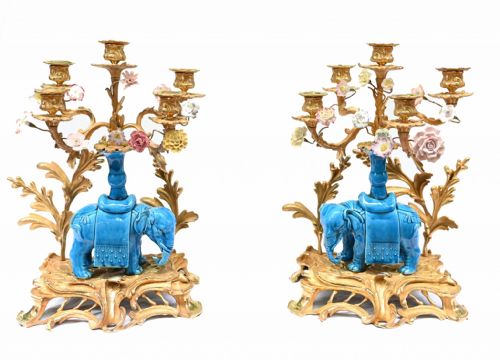


Figural Porcelain Candelabra
These figural porcelain candelabra combine sculptural figures with candle arms, bringing decorative presence and period charm to a room.

Figural Porcelain Candelabra
When you search for figural porcelain candelabra, you encounter sculptural table lighting shaped around human, animal or allegorical figures. The examples found here span the Victorian era and the late nineteenth century, reaching into the early twentieth century.
Most entries take the form of paired mantel or table ornaments, often holding multiple candle nozzles upon branched arms. Figures range from gardeners with baskets and allegorical representations to elephants and classical subjects set on floral bases.
Origin points cluster around German factories such as Sitzendorf, Meissen and Dresden, alongside English production from Royal Worcester. These workshops utilised traditional moulding and modelling techniques to shape complex multi-light candelabra and candlesticks.
How they were made
Potters shaped these figural porcelain candelabra using hard-paste porcelain, building complex compositions from multiple moulded components. Skilled modellers added delicate applied elements such as flowers and leaves by hand before firing.
Surface decoration relied on detailed enamel painting, often enhanced with gilt, gold leaf and rich gilding to highlight drapery, bases and scrollwork. Transparent glaze sealed the body, giving the porcelain its characteristic shine.
Figural Porcelain Candelabra Retail Price Guide 2026
Typical asking prices for figural porcelain candelabra among the pieces listed under this phrase on Sellingantiques today, from the lower quarter to the upper quarter. They describe what is for sale here now, not the wider market.
Object forms span candelabra, candlesticks, and multi-arm candelabras featuring figures ranging from elephants to human gardeners.
What varies in quality
The sophistication of the modelling separates standard production from finer output, particularly in the expression and detail of human and animal figures. Sculptural elements like garden figures or allegorical representations require precise hand-work to retain crisp definition.
Application of enamel colour and gold leaf varies across workshops, with superior pieces displaying careful brushwork and rich gilding on the scrollwork and floral bases. The integration of branched arms and candle nozzles into the overarching figural design also dictates the visual success of the piece.
Royal Worcester Hadley·Sitzendorf Porcelain·Helena Wolfsohn·Meissen·Dresden
The Figural Porcelain Candelabra Glossary
- Hard-paste porcelain
- A durable ceramic material composed of kaolin and petuntse, fired at high temperatures to produce a dense, vitreous body. It forms the structural foundation for many nineteenth-century European figures.
- Gilding
- The application of gold leaf or powdered gold to ceramic surfaces, used here to accent scrollwork and borders. It adds warmth and contrast to the painted enamel details.
- Rococo Revival
- A nineteenth-century design style characterised by asymmetrical scrollwork, C-scrolls and naturalistic floral motifs. This aesthetic heavily influences the bases and arms of many period candelabra.
- Enamel
- Opaque or translucent coloured glass fused to the porcelain surface during secondary low-temperature firings. It provides the vibrant palette seen on figures and floral decorations.
- Allegorical figure
- A sculptural representation of an abstract idea, season, or continent, such as Australia, cast in porcelain. These figures often hold symbolic attributes within the candelabra design.
Figural Porcelain Candelabra: Frequently Asked Questions
What periods do these candelabra date from?
The listings concentrate primarily in the nineteenth century, stretching from the Victorian period through to eighteen ninety and nineteen twenty. German and English factories produced the majority of these designs during that era.
Dates are assigned through factory marks, stylistic indicators like Rococo Revival curves, and recorded operating years of decorators and potteries.
How were figural candelabra used?
These pieces served as functional lighting and decorative ornaments on dining tables, sideboards and mantels during the nineteenth century. Multiple candle arms allowed them to cast substantial light in formal rooms.
Over time, their role shifted toward decorative display, showcasing the sculptural skill of European porcelain factories in domestic interiors.
How do I identify different factory styles?
German factories like Sitzendorf, Meissen and Dresden often employed elaborate floral bases and allegorical subjects rendered in bright enamels. English makers such as Royal Worcester featured distinct artist signatures and Hadley-style modelling.
Examining the underglaze marks, modelling techniques and the application of gold leaf helps separate one regional workshop from another.
How do I care for antique porcelain candelabra?
Keep these pieces away from direct sunlight and dust them gently with a soft, dry brush to protect delicate applied flowers and gilt surfaces. Avoid using harsh chemical cleaners or submerging them in water.
Because the branched arms and applied petals are fragile, handle the candelabra by the main body and base whenever moving them.