



Antique Porcelain Candelabra
These antique porcelain candelabra bring together painted ceramic bodies and cast metal branches to hold multiple candles in a grand room.
Antique Porcelain Candelabra
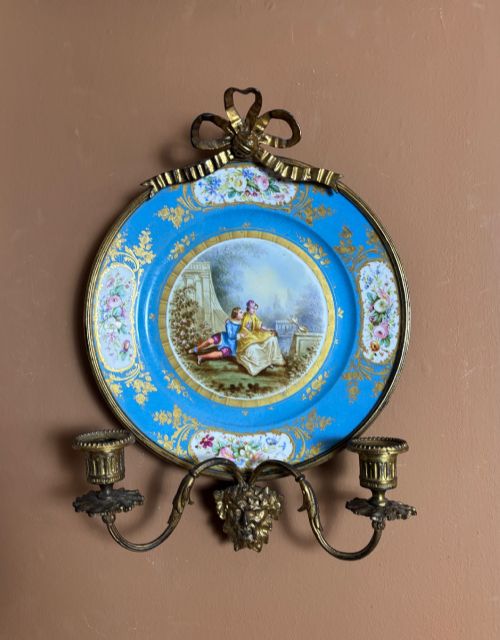
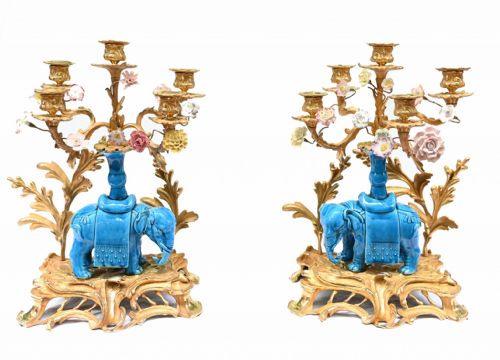
When you search for antique porcelain candelabra, you encounter multi-light branched lighting fixtures supported by ceramic figures, vases or columns. The pieces on this page span the eighteenth, nineteenth and early twentieth centuries, originating from English makers such as Royal Worcester and continental factories including Meissen, Dresden, Sitzendorf and Sevres.
You meet pairs intended for mantelpieces alongside single wall sconces and larger clock garnitures incorporating matching side pieces. The aesthetic draws heavily on French Rococo Revival and Louis XVI styles, frequently pairing painted porcelain with gilt bronze or ormolu mounts.
The forms range from figural groups depicting musicians and gardeners to classical vases in bleu de roi or bleu celeste glazes fitted with scrolling metal arms. These items served both to illuminate dark rooms and to display wealth and taste in Victorian and continental drawing rooms.
How they were made
Potters shaped hard-paste porcelain bodies on the continent and bone china or similar bodies in English factories, firing the ceramic at high temperatures before applying hand-painted enamels and gilding. Artisans then fitted these fired ceramic components into cast bronze mounts, often finishing the metal with mercury gilding or ormolu to create a bright golden surface.
The metal arms were cast in sections, chased by hand to sharpen the leaf and scroll details, and secured to the porcelain bases with threaded metal rods and nuts. Enamels were fused to the porcelain in subsequent kiln firings, while gold leaf was burnished by hand to contrast with the glossy glaze beneath.
Antique Porcelain Candelabra Retail Price Guide 2026
Typical asking prices for porcelain candelabra among the pieces listed under this phrase on Sellingantiques today, from the lower quarter to the upper quarter. They describe what is for sale here now, not the wider market.
Materials recorded across the inventory include hard-paste porcelain, gilt bronze, enamel, and gold leaf applied to figural and vase-form candelabra.
What varies in quality
Lesser items show heavier, simpler ceramic moulding with simplified painted details and thin or worn metal plating on the structural branches. The integration between the porcelain body and the metal mounts also marks quality, where superior examples fit together seamlessly without visible gaps or mismatched parts.
Royal Worcester·Meissen·Sitzendorf·Dresden·Samson
The Antique Porcelain Candelabra Glossary
- Ormolu
- Cast bronze that has been gilded with a finely ground gold-mercury amalgam, producing a rich, durable golden finish common on nineteenth-century French mounts.
- Garniture
- A set of three or more matching decorative objects, typically comprising a central clock flanked by a pair of candelabra or vases designed for a mantelpiece.
- Hard-paste porcelain
- A durable ceramic composed of kaolin and petuntse fired at very high temperatures, yielding a dense, vitreous body associated with factories like Meissen and Sevres.
- Bleu de roi
- A deep, rich royal blue enamel glaze developed at the Sevres factory during the eighteenth century and revived frequently in later nineteenth-century pieces.
- Rococo Revival
- A nineteenth-century design movement favoring asymmetrical C-scrolls, naturalistic flowers, and elaborate ornamentation inspired by the French eighteenth century.
Antique Porcelain Candelabra: Frequently Asked Questions
How do I clean antique porcelain candelabra?
Dust the porcelain gently with a soft, dry brush and avoid using water or chemical cleaners on painted or gilded surfaces.
For the metal mounts, use a clean, dry cloth to remove surface dust without disturbing the ormolu finish.
Were these candelabra originally wired for electricity?
These pieces were designed exclusively for wax candles before domestic electricity existed.
Most surviving examples retain their original configuration, though some have been professionally adapted for electric lamps without altering the ceramic body.
How can I tell Sevres style from genuine Sevres?
Pieces marked as Sevres style typically date from the nineteenth century and imitate the forms and glazes of the historic French factory.
Actual eighteenth-century pieces carry distinct factory ciphers, whereas later revival items often bear spurious marks or stamps indicating their nineteenth-century origin.
What is a clock garniture set?
A clock garniture is a matched suite consisting of a centre mantel clock accompanied by two side pieces such as candelabra or urns.
These sets were placed on drawing room mantelpieces to create a balanced, symmetrical decorative scheme.