


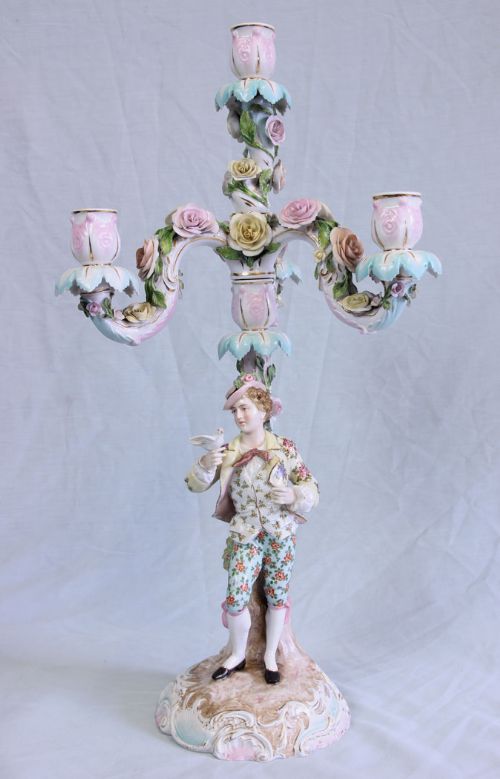


Meissen Porcelain Candelabra
These meissen porcelain candelabra combine hard-paste porcelain figures with gilt bronze or ormolu mounts, offering an ornate centrepiece for a mantelpiece.
Meissen Porcelain Candelabra
When you search for meissen porcelain candelabra, you encounter elaborate figural compositions designed to hold multiple candles, often produced in pairs as matching garnitures. The forms on this page span the eighteenth, nineteenth and early twentieth centuries, drawing heavily on Rococo Revival and French Rococo Revival styles.
The pieces typically incorporate modelled porcelain figures such as birds, musicians and allegorical characters set among scrolling metal branches. Alongside standalone candelabra, you find clock garnitures that pair a central timekeeper with matching branch supports for a unified display.
How they were made
Makers utilised hard-paste porcelain fired at high temperatures, applying detailed enamel painting and gold leaf highlights to accentuate the sculptural details. These ceramic elements were then combined with cast ormolu, gilt bronze and gilt metal mounts that formed the structural arms and bases.
Artisans built complex assemblies by securing the delicate porcelain figures and floral motifs into cast metal frames. The integration of glazed porcelain with polished gilt bronze required specialist metalworking alongside traditional ceramic firing.
Several pieces feature startled porcelain birds perched precariously among gilded bronze candle branches.
What varies in quality
The distinction between tiers rests upon the crispness of the porcelain modelling and the delicacy of the hand-painted enamel work on the figures. Superior examples display finely rendered facial expressions and intricate botanical details rather than simplified decoration.
The weight and chasing of the ormolu or gilt bronze mounts also determine the calibre of the piece. Heavier, more deeply chased metalwork provides a secure armature that complements the porcelain components.
Meissen·Dresden·Helena Wolfsohn
The Meissen Porcelain Candelabra Glossary
- Hard-paste porcelain
- A dense ceramic material composed of kaolin and petuntse, fired at high temperatures to create a durable, vitrified body. This substance forms the foundational body for the figures and branch embellishments.
- Ormolu
- An alloy of copper, zinc and sometimes tin finished with a fine gold amalgam, utilised for the decorative mounts and candle arms. It provides a warm, metallic contrast to the painted ceramic surfaces.
- Rococo Revival
- A nineteenth-century design movement characterised by asymmetrical scrolls, naturalistic floral motifs and C-scrolls. This aesthetic heavily influences the curved metal branches and decorative bases of these pieces.
- Clock garniture
- A matching set consisting of a central clock flanked by coordinating side pieces such as candelabra or urns. These ensembles are designed for symmetrical placement across a mantelpiece or sideboard.
Meissen Porcelain Candelabra: Frequently Asked Questions
How do I clean meissen porcelain candelabra?
Use a soft, dry brush to remove dust from the intricate porcelain flowers and figural surfaces without disturbing the enamel paint. Avoid harsh chemical cleaners that might damage the gilt bronze or ormolu mounts.
Take care around the joints where the ceramic components meet the metal framework. Gentle maintenance preserves both the glaze and the metallic lustre over time.
Were these candelabra used for lighting rooms?
These decorative objects served primarily as ornamental display pieces on formal dining tables and mantelpieces during the nineteenth century. While they functioned to hold wax candles, their elaborate figural designs meant they were valued equally as sculptural art.
Lighting multiple candles created ambient illumination that reflected off the gilt bronze arms and painted porcelain glazes. Today, collectors appreciate them for their decorative presence rather than practical illumination.
How can I tell nineteenth-century pieces apart?
Nineteenth-century examples often display Rococo Revival styling with heavy ormolu bases and vibrant enamel colours. Examining the modelling of the figures and the application of gold leaf helps indicate the manufacturing period.
Comparing the casting quality of the metal mounts alongside the style of the ceramic body provides further context. Archival records and historical periods help narrow down the production timeframe.
Where should I display a pair of candelabra?
Pairs of candelabra look balanced when placed symmetrically on either side of a central mirror, fireplace or clock garniture. They require a stable surface with adequate depth to support the branching metal arms safely.
Keep them away from direct sunlight to protect the enamel colours on the porcelain from fading. Positioning them at eye level allows viewers to appreciate the fine details of the figures and mounts.