


Cherub Figural Candelabra
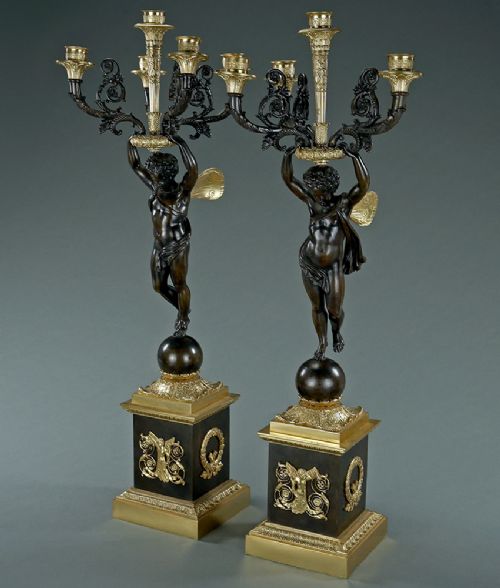
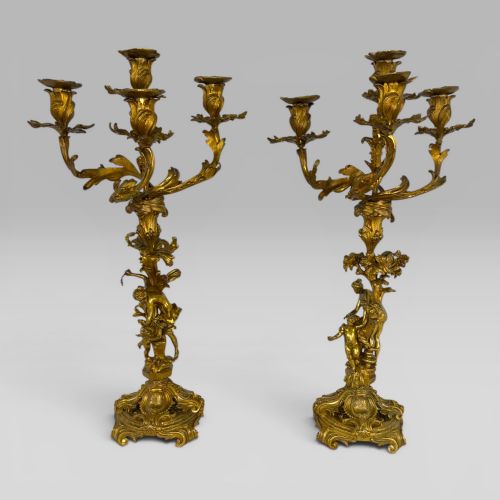
Cherub figural candelabra are decorative lighting pieces depicting winged children, bringing classical and revival charm to nineteenth-century interiors.
Cherub Figural Candelabra
Cherub figural candelabra combine sculptural figures of putti or cherubs with functional arms for multiple candles or conversion to lamps. When searching for cherub figural candelabra, buyers encounter nineteenth-century French and Victorian designs executed in various metallic finishes and occasionally porcelain.
The pieces appearing on this page span several decades of the nineteenth century, reflecting revival movements such as French Rococo Revival, French Empire, and Victorian Rococo. These items function primarily as pairs designed for mantlepieces or table settings, merging figural sculpture with illumination.
How they were made
Foundry work relied on cast bronze, patinated bronze, and ormolu, often paired with marble bases to provide weight and contrast. Makers also utilised brass, silver plate, electroplated nickel silver, and Meissen porcelain to achieve varied textures and polychrome effects across the figures and candle arms.
Surface finishes combined bright gilding with dark patination to emphasise the modelling of the cherubs and the scrolling foliage of the candelabra stems. Construction methods involved assembling distinct cast components, securing figures to stone plinths, and attaching multi-light branch systems.
Listings feature items from the nineteenth century, predominantly showcasing French Rococo Revival and French Empire styles executed in bronze, marble, and ormolu.
What varies in quality
The complexity of the form influences the piece, with multi-light candelabra and combined gilt and patinated finishes requiring greater technical skill than single candlesticks. Preservation of the original gilding and patination without aggressive cleaning also distinguishes better-surviving items.
Meissen porcelain
The Cherub Figural Candelabra Glossary
- Ormolu
- Gilded bronze produced through a mercury amalgamation process common in nineteenth-century French metalwork. This technique imparts a rich, lasting golden surface to decorative fittings.
- Putto
- A plump, often winged child figure derived from classical art and frequently depicted in Renaissance and revival sculpture. These figures form the primary sculptural focus of the candelabra.
- Torchere
- A stand or ornamental candelabrum designed to carry a light, sometimes adapted later to electricity as a lamp. Examples in this category depict cherubs holding the lighting column.
- Patinated bronze
- Bronze treated with chemical solutions to produce a controlled dark or antique surface colour. This finish contrasts effectively with gilt highlights on figures and mounts.
- Rococo revival
- A nineteenth-century design movement favouring asymmetrical scrolls, naturalistic foliage, and ornate ornamental flourishes. Many candelabra on this page adopt this stylistic vocabulary.
Cherub Figural Candelabra: Frequently Asked Questions
Are these candelabra wired for electricity?
Some pieces retain their original candle-holding configuration, while others have been adapted as table lamps over time.
Buyers should examine the specific listing details to determine whether the wiring is modern or if the piece remains purely for candlelight.
How do I clean gilt bronze?
Gilt bronze requires gentle dusting with a soft brush to protect the delicate metallic surface from abrasion.
Harsh chemical polishes should be avoided entirely, as they strip away the historic gilding and patination.
What is the difference between ormolu and brass?
Ormolu consists of gilded bronze, offering a deep, warm golden tone resulting from mercury gilding techniques applied to a bronze base. Brass is an alloy of copper and zinc that generally appears brighter and lacks the specific historical depth of nineteenth-century French ormolu.
Objects cast in ormolu typically display sharper sculptural definition and heavier construction than standard brass items.
Where were these pieces made?
The majority of these items originate from nineteenth-century French workshops influenced by Empire and Rococo revival styles.
German porcelain manufactories such as Meissen also produced notable figural candelabra during the same period.