


Rococo Porcelain Candleholders
Rococo porcelain candleholders bring sculptural flair and gilded excess to a room, combining soft ceramic forms with elaborate metal mounts.
Rococo Porcelain Candleholders
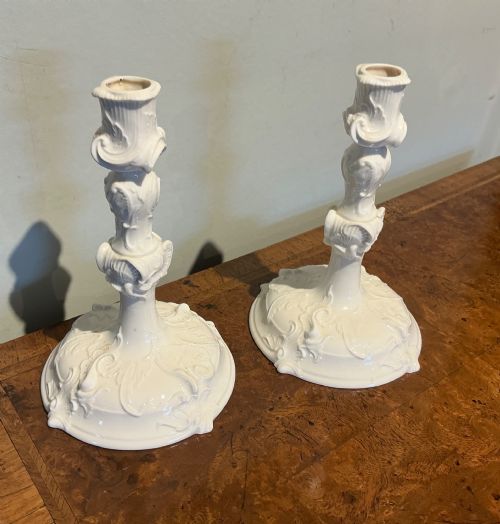
Rococo porcelain candleholders take the shape of candlesticks, chambersticks, and multi-armed candelabra designed to hold taper candles. These objects emerge in various forms spanning the eighteenth century, the Georgian era, and the nineteenth century, including later revivals.
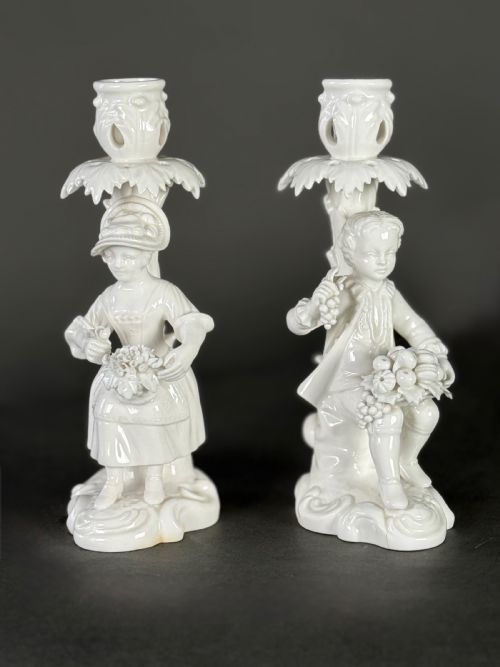
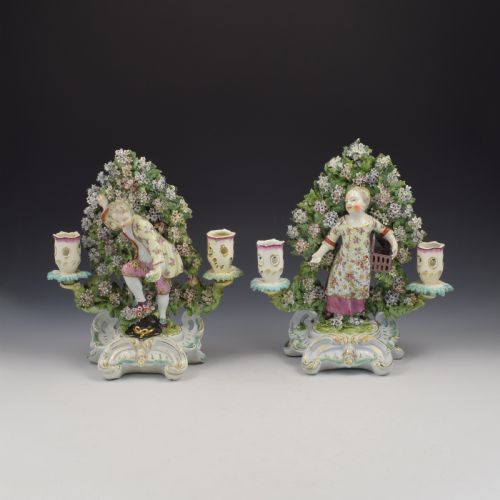
The pieces often feature figural elements such as putti, children, and figures like gardeners, shepherdesses, and musicians alongside naturalistic details such as floral bases and bocage. European factories dominate the selection, with German works from Meissen, Sitzendorf, and Nymphenburg appearing alongside English productions from Derby and Minton.
Materials and Construction
Makers utilise hard-paste porcelain and glazed porcelain as the primary ceramic body, frequently embellished with enamel paint and applied floral details. Artisans shape these components by hand, incorporating delicate porcelain figures and leafy foliage into the structural design.
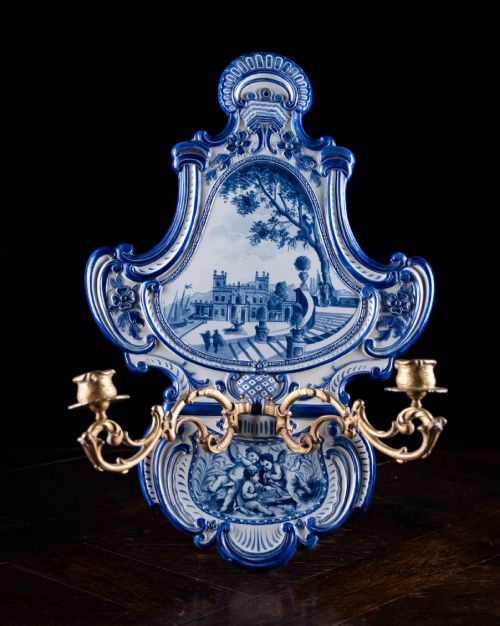
Many examples integrate metallic elements such as ormolu, gilt bronze, gold leaf, and general gilding to frame the ceramic sections. These metal mounts provide structural support for the candle sockets while enhancing the decorative impact through cast scrollwork.
Materials recorded across the inventory feature glazed porcelain, hard-paste porcelain, enamel, ormolu, and gold leaf.
Assessing the Craftsmanship
The finesse of the modelling determines the visual success of the piece, particularly in figural groups where facial expressions and hand-sculpted foliage require high skill. Crisp detailing in the porcelain petals and smooth application of enamel colours separate superior examples from simpler productions.
The integration between the ceramic body and the metal mounts indicates the standard of manufacture. Heavy, finely chased ormolu or gilt bronze that complements the organic curves of the porcelain shows a higher grade of workshop output.
Nymphenburg·Villeroy and Boch·Derby·Minton·Meissen·Sitzendorf·Triebner ENS and Eckert Volkstedt·Samson
The Rococo Porcelain Candleholders Glossary
- Ormolu
- A gilt bronze mount applied to decorative objects. This technique adds metallic highlights and structural elements to ceramic bodies.
- Bocage
- An ornamental background of carved or modelled foliage and flowers. It frequently surrounds porcelain figures in eighteenth and nineteenth-century designs.
- Chamberstick
- A short candlestick fitted with a pan and a handle. This portable form allowed users to carry a light through a house at night.
- Hard-paste porcelain
- A durable ceramic material fired at high temperatures. It uses kaolin and petuntse to create a dense, vitrified body.
- Putto
- A plump male child figure, often winged, used extensively in decorative arts. These figures appear frequently as supporters on figural candlesticks.
Rococo Porcelain Candleholders: Frequently Asked Questions
What is a go-to-bed candlestick?
A go-to-bed candlestick is a small chamberstick designed for lighting a person's way to their bedroom at night. These compact pieces typically feature a shallow tray to catch wax and a short handle for carrying.
Such items often incorporate playful figures like putti or children. They provide a domestic glimpse into nineteenth-century daily habits.
How do I identify a candelabra?
A candelabra differs from a standard candlestick by featuring multiple branching arms for holding several candles at once. These larger pieces often combine glazed porcelain figures with ormolu or gilt bronze arms.
Makers frequently arranged these branches around a central ceramic pillar or figure group. They served as significant table or mantelpiece ornaments.
What does rococo revival mean?
Rococo revival describes nineteenth-century pieces that copy the asymmetrical scrolls, shell motifs, and curving lines of the eighteenth-century movement. European factories produced many of these decorative items during the Victorian period.
These later interpretations often use bright enamel colours and lavish gilding. They reflect a nineteenth-century taste for historicism and ornate domestic display.
Where were these pieces made?
The majority of these objects originate from major European ceramic centres in Germany, England, and France. Factories such as Meissen and Sitzendorf in Germany established strong traditions of figural porcelain.
English potteries like Derby and Minton created parallel styles using soft and hard-paste porcelain bodies. Continental workshops also utilised French-style ormolu mounts.