
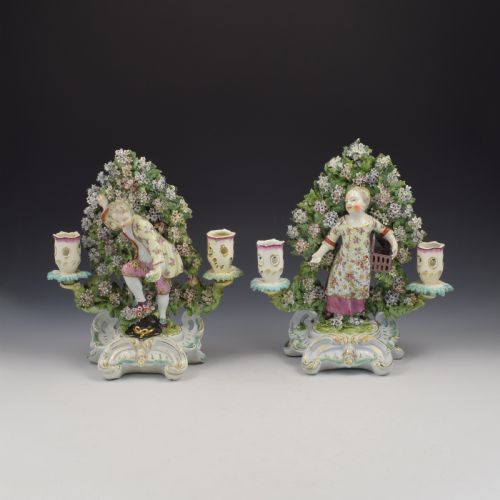


Polychrome Porcelain Candlesticks
Polychrome porcelain candlesticks bring vibrant painted decoration and sculpted detail to a table, combining function with narrative charm.
Identifying polychrome porcelain candlesticks
Polychrome porcelain candlesticks combine functional lighting with sculptural ornament, taking the form of figural groups, musician pairs, and bocage designs encrusted with foliage and flowers. These pieces emerge from the eighteenth and nineteenth centuries, spanning Georgian and Rococo revival styles.
The selection centres on pairs originating from notable factories such as Derby, Bow, Minton, and continental German works like Sitzendorf and Saxony. Figures range from allegorical children representing Liberty and Matrimony to shepherds, shepherdesses, and musicians playing mandolins and bagpipes.
Most examples rely on figural compositions where the candle nozzle rises amidst modelled bickering putti, leafy arbours, or rural characters in bright enamel colours. Buyers meet both soft-paste and hard-paste porcelain bodies finished with gilding.
Materials and construction
Potters shaped these objects using both soft-paste and hard-paste porcelain bodies, depending on the factory and period of manufacture. Moulded figures and floral elements were assembled by hand before firing.
Makers applied enamel colours by hand, often incorporating gold gilt or gold leaf to highlight drapery, scrollwork, and candle nozzles. Bocage pieces required intricate application of ceramic foliage around the central stem to create a leafy backdrop.
Retail Price Guide 2026
Typical UK retail prices for polychrome porcelain candlesticks, calculated from the Sellingantiques database of over a million retail prices indexed since 2003. This retail price guide relies exclusively on Sellingantiques data; no external sources or auction records are used, so the figures do not describe the wider market.
Listings feature items spanning from the mid-eighteenth century to the late nineteenth century, executed in both soft-paste and hard-paste porcelain with hand-applied enamel and gilding.
Assessing quality and execution
The integration of the candle socket into the overall sculptural design dictates visual success, where better pieces balance the weight of the figures with naturalistic foliage or scroll bases.
Derby Porcelain·Sitzendorf Porcelain·Bow Porcelain·Minton Porcelain·Saxony Porcelain
The Polychrome Porcelain Candlesticks Glossary
- Bocage
- A decorative background of modelled leaves and branches common in eighteenth-century porcelain figures. It creates a lush, arbour-like setting behind the main subjects.
- Soft-paste porcelain
- An artificial porcelain composition fired at lower temperatures than hard paste, used extensively by early English factories like Bow and Derby. It possesses a warm, slightly translucent glaze.
- Hard-paste porcelain
- A true porcelain made from kaolin and petuntse fired at high temperatures, yielding a durable and brilliant white body favoured by continental European potteries.
- Patch-mark period
- A phase in Derby porcelain production characterised by unglazed spots on the base left by the kiln supports. This technical feature helps date pieces from the mid-eighteenth century.
- Gilding
- The application of gold leaf or gold paint to ceramic surfaces to accent highlights, borders, and Rococo scrollwork.
Frequently Asked Questions
What are polychrome porcelain candlesticks?
These pieces are table lighting fixtures made from ceramic materials and decorated with multi-coloured painted enamels. They often feature sculpted human figures, animals, and leafy backgrounds.
The form bridges practical illumination and decorative sculpture, making them centrepieces of interior display during the Georgian and Victorian eras.
How were these candlesticks used?
Owners placed them on mantelpieces, side tables, and dining surfaces to provide ambient light from burning wax or tallow candles.
While functional, their elaborate figural designs meant they served primarily as decorative ornaments denoting taste and wealth.
How do I care for antique porcelain candlesticks?
Dust them gently with a soft brush and avoid harsh chemical cleaners that might damage the hand-painted enamel or gold gilt.
Keep them away from areas prone to knocks, as delicate bocage leaves and protruding limbs are vulnerable to chipping.
How do I distinguish eighteenth-century pieces from later revivals?
Examination of the paste, glaze texture, and base marks provides clues to the manufacturing period. Eighteenth-century pieces often show specific kiln marks like patch-marks on unglazed bases.
Later nineteenth-century revival pieces tend to use harder porcelain bodies and show different factory stamping traditions.