


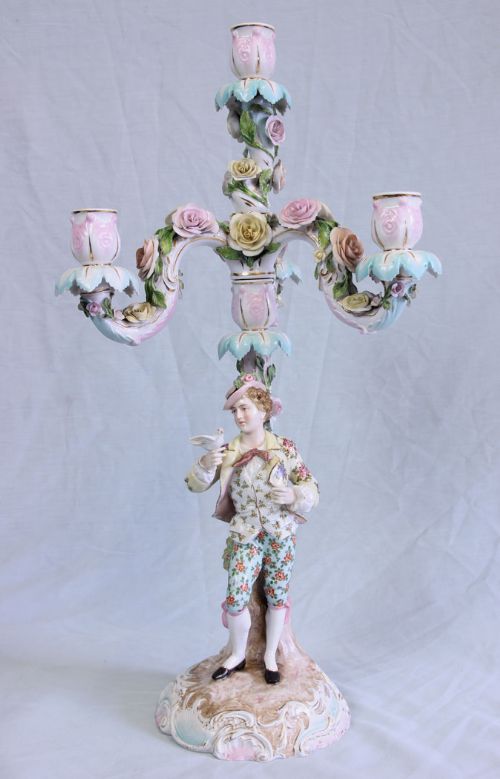


Dresden Style Candlesticks
These dresden style candlesticks bring exuberant porcelain artistry and figurative charm to a mantelpiece, fashioned by historic German makers.
Dresden Style Candlesticks
When you search for dresden style candlesticks, you are looking at ornate porcelain lighting pieces originating from German manufactories during the nineteenth century. These objects combine practical candle holders with sculptural figures, allegorical subjects, and pastoral scenes.
The versions you meet most frequently on this page date from the late nineteenth century, specifically around 1880 to 1900. They typically take the form of figural candlesticks and multi-armed candelabra rooted in the Rococo Revival style.
How they were made
These pieces are constructed from hard-paste porcelain, modelled by hand into complex figurative and botanical shapes before firing. Artisans applied detailed enamel paint to render costumes, facial expressions, and naturalistic flora with great precision.
Gilt and gold leaf accents highlight raised Rococo scrollwork and candle nozzles, adding a layer of metallic brilliance to the glazed ceramic surfaces. Enamel paint works alongside these gilded touches to define the rich visual texture characteristic of German porcelain from this era.
Shepherds, lute players, and gardeners with baskets populate these porcelain bases, bringing pastoral theatre straight to the drawing room.
What varies in quality
The refinement of the modelling separates standard production wares from superior examples. Master modellers achieved greater anatomical precision in figures like allegorical representations and shepherds, whereas lesser pieces display stiffer postures and simpler facial definitions.
The complexity of the applied decoration also dictates distinction across the range. Superior candelabra integrate intricate floral bases and multiple arms with seamless balance, while simpler items rely on more basic supports and restrained ornamentation.
Volkstedt Porcelain·Sitzendorf Porcelain·Helena Wolfsohn
The Dresden Style Candlesticks Glossary
- Rococo Revival
- A nineteenth-century design movement characterised by asymmetrical C-scrolls, shell motifs, and exuberant ornamentation. This style draws inspiration from earlier eighteenth-century French aesthetics.
- Candelabra
- A branched lighting fixture holding multiple candles upon a single base. These pieces often feature removable branches to transform them into single candlesticks.
- Hard-paste porcelain
- A dense, vitreous ceramic material composed of kaolin and petuntse, fired at very high temperatures. It forms the durable body of traditional German figural antiques.
- Enamel paint
- A glossy, vitrifiable pigment fused to the porcelain surface during a secondary kiln firing. It provides vibrant, lasting colour to garments and floral details.
- Allegorical figure
- A symbolic sculptural representation of an abstract idea, season, or continent in human form. Common examples include personifications of summer and autumn holding appropriate attributes.
Dresden Style Candlesticks: Frequently Asked Questions
What periods do these pieces come from?
The listings span the nineteenth century, with a heavy concentration in the decades between 1880 and 1900. Most items originate from historic German factories operating during the height of revivalist porcelain production.
Dates are typically attributed through factory marks, stylistic traits, and the specific modelling techniques employed by manufactories like Sitzendorf and Volkstedt.
How were these candelabra used?
These decorative objects served to illuminate formal dining tables and drawing rooms during the nineteenth century, utilising tallow or beeswax candles. Their elaborate figural designs meant they doubled as conversation pieces when unlit.
Today, they function primarily as decorative mantel or sideboard ornaments, continuing their original purpose of adding sculptural elegance to a room.
How do I care for antique porcelain?
Dust these delicate items gently with a soft, dry brush to prevent the accumulation of dirt within the intricate floral and figural crevices. Avoid using harsh chemical cleaners or submerging gilded pieces in water, as this can damage the enamel paint and gold leaf.
Display them on stable, level surfaces away from direct sunlight and high traffic areas to protect the fragile porcelain appendages and branches.