
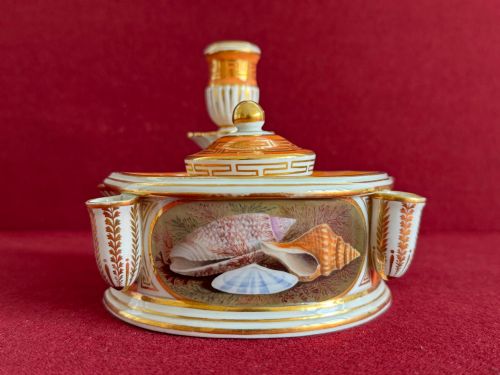
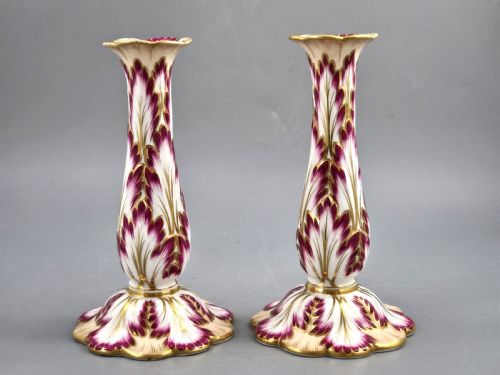
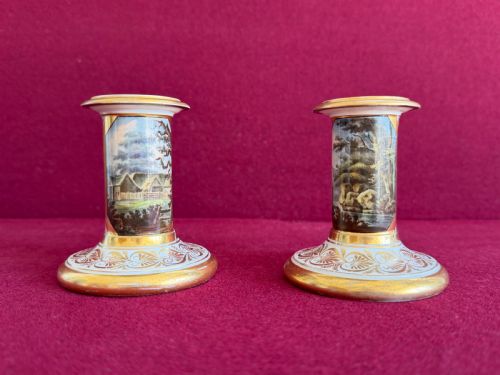


Gilt Porcelain Candlesticks
These gilt porcelain candlesticks combine gleaming metal mounts with painted ceramic forms, offering genuine table elegance.
Gilt Porcelain Candlesticks
Gilt porcelain candlesticks unite ceramic bodies with metallic embellishment, creating striking sources of illumination for formal interiors. Buyers searching this phrase encounter pairs originating from prominent European centres of production during the eighteenth and nineteenth centuries.
The selections span distinct historical movements, including Georgian, Regency, Victorian, and Rococo Revival designs. Certain examples incorporate figural elements or incorporate bronze mounts alongside the core porcelain structure.
How they were made
Craftsmen shaped soft-paste porcelain or hard-paste ceramic bodies by hand, often incorporating moulded figural components or foliage motifs. Artisans then applied delicate enamel painting and surface gilding to highlight specific architectural details.
Many creations integrate cast or chased ormolu and gilt bronze mounts, securing the ceramic sections within sturdy metal frameworks. Brass elements also appear in specific Victorian interpretations, combining structural rigidity with ornamental flair.
Musicians sit permanently frozen in brass and ceramic harmony, forever poised to serenade a quiet mantelpiece.
What varies in quality
The refinement of the painted details and the precision of the gilding set superior examples apart from standard production pieces. Artisans who achieved crisp facial expressions on figural shafts and subtle tonal transitions in the enamel created more desirable objects.
The weight and chasing of the ormolu or gilt bronze mounts dictate the overall craftsmanship level of the assembly. Heavier, deeply chased metalwork securely frames the porcelain without masking the delicate ceramic body underneath.
Barr Flight and Barr·Meissen·Ridgway
The Gilt Porcelain Candlesticks Glossary
- Ormolu
- A gilded bronze surface finish achieved through the application of a mercury and gold amalgam onto cast bronze. This technique imparts a rich, warm metallic lustre frequently seen on eighteenth and nineteenth-century mounts.
- Soft-paste porcelain
- An early ceramic composition fired at lower temperatures than true hard-paste porcelain, resulting in a slightly warmer, creamier body. It absorbs enamel colours with particular softness.
- Caryatid
- A sculpted female figure serving as an architectural support column in place of a traditional pillar. These appear on the shafts of specific nineteenth-century Grand Tour examples.
- Rococo Revival
- A nineteenth-century design movement resurrecting the asymmetric scrolls, shell motifs, and exuberant curves of the mid-eighteenth century. This style dominates many of the paired candelabra listed here.
Gilt Porcelain Candlesticks: Frequently Asked Questions
What are gilt porcelain candlesticks?
These decorative lighting objects combine fired ceramic bodies with metallic gilding and bronze or brass mounts. They served both a practical purpose on dining tables and a decorative function on mantelpieces.
Most surviving examples date from the eighteenth and nineteenth centuries, reflecting shifts in European interior taste from restrained Georgian elegance to ornate Rococo Revival.
How do I clean them safely?
Dust these objects gently using a soft, dry brush to protect the delicate enamel and surface gilding. Avoid liquid cleaners or harsh chemical solutions, which can strip the gold leaf or damage the porcelain glaze.
Metal mounts require minimal intervention beyond careful surface dusting to preserve the historic patina developed over centuries.
Were they used for dining?
Pairs and sets provided ambient illumination during formal evening meals before the widespread adoption of gas and electric lighting. They stood on dining tables, sideboards, and pier tables to catch and reflect candlelight.
Heavier multi-branch candelabra provided brighter illumination for larger rooms, while slender single-stick candlesticks suited intimate settings.
How do I identify the period?
Examine the stylistic vocabulary, noting whether the piece displays the restrained symmetry of the Georgian era or the exuberant curves of Rococo Revival. The manufacturing characteristics of the ceramic body and the precision of the metal chasing offer further chronological clues.
Certain pieces bear historical factory patterns or stylistic markers associated with specific European porcelain workshops.