


19th Century Porcelain Candlesticks
These 19th century porcelain candlesticks bring painted flora, gilt bronze mounts and figural modelling to a mantelpiece.
19th Century Porcelain Candlesticks
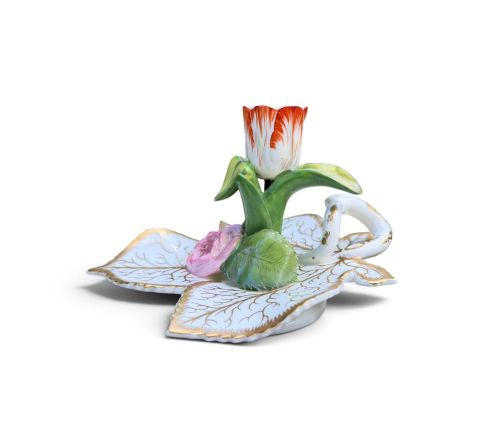
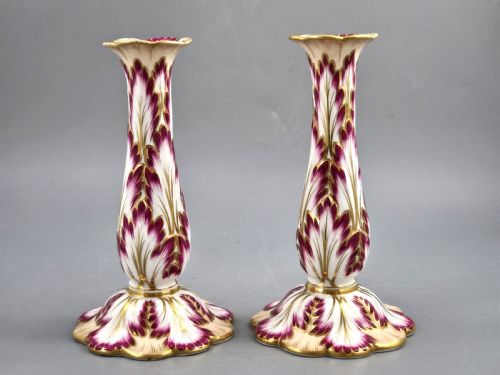
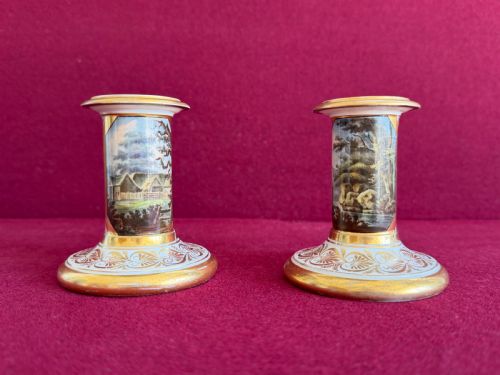
When you search for 19th century porcelain candlesticks, you find chambersticks, candelabra and figural pairings produced across Georgian, Regency and Victorian periods. These pieces combine functional lighting with sculptural ceramic forms, often enriched with enamel decoration and gilt details.
The English and continental works seen here range from simple floral chambersticks to elaborate French ormolu-mounted candelabra and German figural groups representing seasonal themes. Meissen, Sitzendorf, Worcester and Derby factories dominate the manufacturing origins recorded in the listings.
What varies in quality
The integration of metal mounts, such as ormolu or gilt bronze, influences the overall sophistication of the composition.
Listings feature hard-paste porcelain combined with gilt bronze, enamel and gold leaf across the 19th Century.
Ridgway·Barr, Flight & Barr·Volkstedt·Spode·Derby·Minton·Sitzendorf·Royal Worcester·James Hadley·Triebner, ENS & Eckert Volkstedt·Meissen
The 19th Century Porcelain Candlesticks Glossary
- Chamberstick
- A low candlestick fitted with a handle and a shallow pan to catch melting wax. These portable items were carried through houses before the widespread use of indoor gas or electric lighting.
- Candelabra
- A branched candlestick holding multiple candles on a single base. They often feature larger sculptural programmes and metal mounts.
- Biscuit
- Unglazed porcelain fired to a matte, porous finish resembling marble. It is frequently utilised for sculptural shafts and figures.
- Ormolu
- Gilt bronze mounted onto decorative objects and furniture. The technique involves applying a fine layer of gold amalgam to a bronze base.
- Hard-paste porcelain
- A durable ceramic composition containing kaolin and petuntse fired at high temperatures. It resists scratching and takes enamel painting securely.
19th Century Porcelain Candlesticks: Frequently Asked Questions
What is a chamberstick?
A chamberstick is a low, handled candleholder equipped with a saucer tray designed to catch dripping wax during transport.
People carried them through corridors at night before fixed lighting illuminated domestic spaces.
How do I clean porcelain candlesticks?
Careful dusting with a soft brush preserves the enamel and gold leaf decorations without damaging the ceramic surface.
Harsh chemical cleaners and abrasive cloths should be avoided entirely to protect the antique finish.
Are these pieces functional?
Most antique candlesticks retain their original sockets and can hold taper candles safely during evening dinners or gatherings.
Many collectors prefer to display them as decorative objects on mantelpieces or clock garniture sets rather than risk wax damage.
How do I identify factory marks?
Porcelain factories frequently stamped, painted or incised identifying symbols, numbers or patterns onto the unglazed undersides of bases.
Reference guides help match these specific ciphers to English and continental manufacturing houses from the period.