
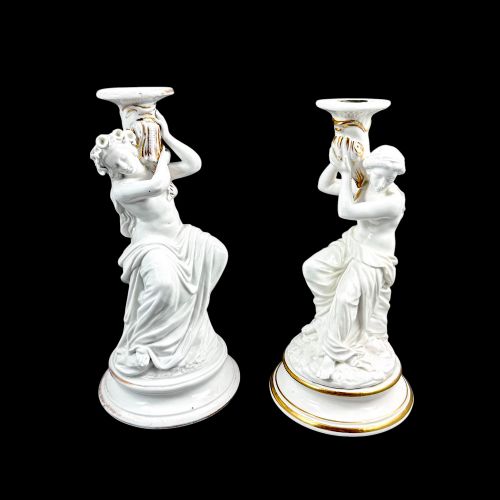


Victorian Porcelain Candlesticks
Victorian porcelain candlesticks bring sculptural elegance to a mantelpiece, combining refined ceramic figures with practical candle holders.
Victorian Porcelain Candlesticks
These items encompass sculptural table lighting and garnitures from the nineteenth century, uniting practical candle holders with decorative ceramics. The items on this page span the Victorian period alongside Edwardian examples, French late nineteenth-century pieces and specific continental manufactories.
Figural designs dominate the selection, featuring allegorical figures, shepherds, lute players and cherubs integrated into the ceramic body. Pairs appear frequently alongside single pieces, candelabra with multiple arms and related items such as clock garniture sets.
Origins range across English kilns like Royal Worcester and Minton alongside continental European works from Germany and France, including Sitzendorf, Meissen, Dresden and Volkstedt.
Materials and construction methods
Makers utilised hard-paste porcelain and blanc de chine as the foundational ceramic bodies, shaping them through detailed moulding and sculptural modelling. Enamel colours and hand-painting decorate the surfaces, often complemented by applied gold leaf and gilding.
Many examples integrate brass fittings, mounts or bases alongside the ceramic elements, particularly in pieces featuring metal candle sockets or associated clock garnitures.
Keep an eye out for ceramic sheep staring blankly into the middle distance while holding your dinner candles.
Assessing quality in the pieces
Complexity of form also dictates the tier, moving from single upright columns to multi-armed candelabra and elaborate figural groups with allegorical themes.
Royal Worcester Hadley·Sitzendorf·Meissen·Helena Wolfsohn·Triebner, ENS & Eckert Volkstedt
The Victorian Porcelain Candlesticks Glossary
- Blanc de chine
- A French term for white porcelain, denoting unglazed or clear-glazed white ceramic wares popular in nineteenth-century figural pieces. It highlights the purity of the body without relying on enamel decoration.
- Hard-paste porcelain
- A durable ceramic composition fired at high temperatures using kaolin and petuntse. This material provides a dense, vitreous body suitable for intricate sculptural forms.
- Garniture set
- A coordinated group of decorative objects, typically comprising a central clock flanked by matching candlesticks or vases. These sets formed symmetrical centrepieces for nineteenth-century mantelpieces.
- Allegorical figure
- A symbolic personification representing an abstract idea, season or virtue in sculptural form. Examples include seasonal representations like summer and autumn.
- Candelabra
- A branched candlestick designed to hold multiple candles simultaneously. They often feature central figural stems and metal or ceramic arms.
Victorian Porcelain Candlesticks: Frequently Asked Questions
How do I clean antique porcelain candlesticks?
Dust gently with a soft, dry brush to prevent the accumulation of dirt on delicate painted surfaces and gilded details.
Avoid using harsh chemical cleaners or submerging pieces in water, particularly where brass mounts or enamel colours are present.
Are these candlesticks safe for burning candles?
While these items were originally made for illumination, modern use requires caution to protect fragile ceramic bodies from heat stress and wax damage.
Many collectors prefer to display them as decorative sculptures rather than risking smoke residue or thermal cracking.
What is a figural candlestick?
A figural candlestick incorporates human or allegorical sculptures into the structural design of the candle holder.
These often depict shepherds, cherubs or symbolic representations of the seasons supporting the socket.
How can I identify the maker?
Look for underglaze blue marks, impressed stamps or painted factory ciphers on the underside of the porcelain base.
Stylistic traits such as modelling techniques and enamel palettes also help attribute pieces to specific continental or English kilns.