



Glazed Porcelain Candle Holders
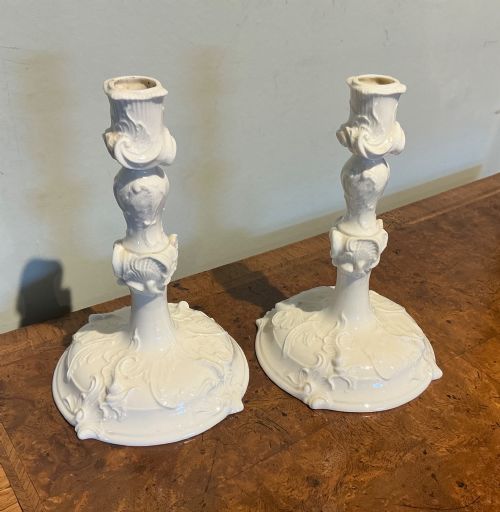
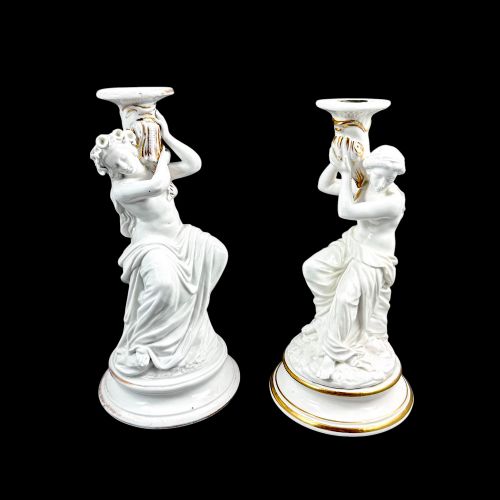
These glazed porcelain candle holders bring tactile elegance and functional charm to any table, spanning periods from the eighteenth century through the early twentieth.
Glazed Porcelain Candle Holders
When you search for glazed porcelain candle holders, you encounter vessels designed to support wax tapers, shaped as candlesticks, candelabras, chambersticks, and go-to-bed pieces. The examples on this page range widely, from figural Staffordshire and Derby pieces to Chinese export items and continental works.
You are most likely to meet pairs of candlesticks created during the nineteenth century, often reflecting Rococo Revival or Victorian Neoclassical aesthetics. These pieces combine sculptural forms - such as putti, cherubs, and animals - with practical lighting functions.
The selection also includes chambersticks and go-to-bed designs intended for bedroom use, alongside larger Chinese sang de boeuf conversions and novelty hunting themes. Each piece demonstrates how makers utilised hard-paste porcelain, bone china, and glaze to create durable domestic objects.
How they were made
Makers shaped these objects using hard-paste porcelain and bone china, applying glossy glazes to seal the ceramic body and provide a smooth, reflective surface. Many examples incorporate gilding or gilt bronze accents to highlight moulded details and structural edges.
Glazed Porcelain Candle Holders Retail Price Guide 2026
Typical asking prices for glazed porcelain candle holders among the pieces listed under this phrase on Sellingantiques today, from the lower quarter to the upper quarter. They describe what is for sale here now, not the wider market.
Putti and cherubs appear with surprising frequency, cheerfully holding up candle sockets as though illuminating a celestial party.
What varies in quality
The sophistication of the modelling separates simpler domestic items from finer sculptural works, particularly in figural pieces depicting cherubs, animals, or human figures. Crisp definition in the porcelain relief and careful placement of gilding indicate a higher standard of manufacture.
The application and consistency of the glaze also distinguish individual pieces, with smooth, even finishes representing superior workshop output. Furthermore, the presence of factory marks or attribution to known potteries elevates the interest of a piece.
Nymphenburg·Derby·Sutherland and Sons·Minton·Sitzendorf·Royal Bayreuth
The Glazed Porcelain Candle Holders Glossary
- Chamberstick
- A low candlestick fitted with a pan to catch dripping wax and a handle for carrying from room to room. It was an essential bedroom accessory before electric lighting.
- Go-to-bed
- A small, compact chamberstick or candle holder designed specifically for lighting a person's way to bed at night. These items are often whimsical in form.
- Hard-paste porcelain
- A true ceramic compound made from kaolin and petuntse, fired at very high temperatures. It yields a durable, translucent body with a glass-like finish.
- Sang de boeuf
- A rich, copper-red ox-blood glaze developed in Chinese ceramics and later emulated elsewhere. It produces deep, variegated colour effects across the porcelain surface.
Glazed Porcelain Candle Holders: Frequently Asked Questions
What is a chamberstick?
A chamberstick is a low-profile candle holder equipped with a saucer base and a loop handle for safe carriage. They were traditionally kept in hallways or bedrooms for navigating dark corridors.
Unlike standard table candlesticks, their wide pans protected furniture and carpets from falling wax. Many surviving examples date from the nineteenth century and feature elaborate decorative motifs.
How do I clean glazed porcelain?
Cleaning requires warm water, mild soap, and a soft cloth to protect the delicate glaze and any applied gilding. Avoid harsh chemical cleaners or abrasive scouring pads.
Pat the piece completely dry after washing rather than leaving it to air dry. Take particular care around painted details and gilt bronze mounts.
Are these pieces safe for candles?
Most antique candle holders function adequately with appropriately sized tapers, provided you monitor the flame closely. Ensure the candle fits snugly in the socket to prevent tilting.
Extinguish the flame well before the wax burns down to the porcelain surface. Thermal shock from a bare flame touching cold porcelain can occasionally cause stress fractures.
How do I date a porcelain candlestick?
Dating relies on examining factory marks, style indicators, and the physical characteristics of the ceramic body. Stylistic movements such as Rococo Revival or Victorian Neoclassical provide reliable chronological markers.
Base wear, glaze characteristics, and potting techniques also help establish the era of manufacture. Comparing pieces with documented examples from makers like Minton or Sitzendorf narrows the timeframe.