
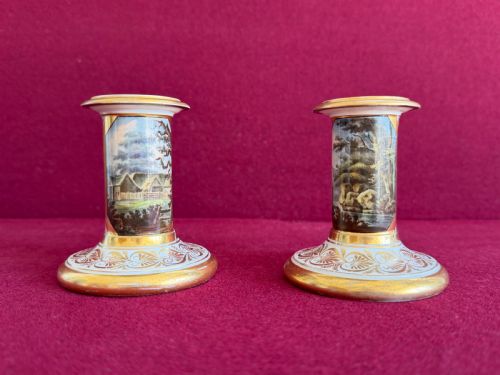


Hand Painted Porcelain Candlesticks
These hand painted porcelain candlesticks bring both colour and character to a room, offering the fine detail characteristic of Georgian and 18th-century porcelain.

What hand painted porcelain candlesticks are
When you search for hand painted porcelain candlesticks, you are looking at items designed to hold candles while displaying painted ornament and figural modelling. The pieces found here span the Georgian period, the eighteenth century, and the nineteenth century.
The forms range from simple tapered shafts to elaborate figural compositions involving musicians and parrots. English factories such as Derby and Worcester dominate the selection, alongside continental examples.
You will most frequently meet pairs intended for mantelpieces or side tables. These domestic lighting pieces combine practical function with the decorative ambitions of their makers.
How they were made
Makers utilised soft-paste porcelain shaped by hand, often incorporating delicate bocage work behind figures. The clay bodies required precise firing before artisans applied enamel colours and gilding.
Decoration relied on hand painting using enamel pigments fused to the glazed surface during secondary kiln firings. Gold leaf and gold gilt were then added by hand to highlight scrollwork, rims, and bases.
Retail Price Guide 2026
Typical UK retail prices for hand painted porcelain candlesticks, calculated from the Sellingantiques database of over a million retail prices indexed since 2003. This retail price guide relies exclusively on Sellingantiques data; no external sources or auction records are used, so the figures do not describe the wider market.
What varies in quality
The application of gilding and the preservation of enamel colours distinguish the upper tier of objects. Additionally, the complexity of sculptural elements like bocage foliage indicates the level of skill involved.
Barr Flight And Barr·Derby
The Hand Painted Porcelain Candlesticks Glossary
- Soft-paste porcelain
- An artificial porcelain composition fired at lower temperatures than hard paste, popular in eighteenth-century English factories. It produces a warm, slightly creamy body ideal for enamel painting.
- Bocage
- Applied background foliage made of clay, often resembling hawthorn or leaves, used behind figures. This technique required immense patience from the modeller to prevent distortion in the kiln.
- Patch-mark period
- A phase in early Derby production identified by unglazed patches on the base where small supports held the piece during firing. It serves as a useful indicator of eighteenth-century manufacture.
- Gilding
- The application of gold leaf or gold paint to ceramic surfaces. On these objects, it accents rococo scrolls and candle nozzles.
- Rococo revival
- A nineteenth-century style drawing on mid-eighteenth-century motifs such as C-scrolls, asymmetry, and shell-work. It frequently appears in nineteenth-century interpretations of earlier forms.
Frequently Asked Questions
How do I date these candlesticks?
Dating relies on stylistic markers such as rococo scrolls, clothing styles on figural pairs, and technical details like patch marks. Comparing the porcelain body and painting palette helps narrow the period.
Examining the underside for factory indicators or manufacturing scars also provides clues to the decade of production.
Were these used for daily lighting?
While intended for domestic illumination, surviving pairs often served a decorative function in formal reception rooms. The presence of delicate figural modelling suggests they were displayed rather than handled constantly.
Wax residue or minor wear can sometimes indicate actual period use alongside ornamental display.
What is bocage?
Bocage refers to the applied floral and leaf background surrounding figures on certain eighteenth-century candlesticks. It mimics natural foliage and creates a rich, textured backdrop for the painted subjects.
Because of its fragile nature, this work requires careful handling during cleaning and placement.
How should I clean porcelain candlesticks?
Dusting with a soft, dry brush remains the safest method to remove particulate matter from intricate areas like bocage and painted surfaces. Avoid abrasive cloths or strong cleaning solutions that might harm the enamel or gilding.
Gentle maintenance preserves the integrity of the hand-applied decoration over time.