


Antique Ceramic Candleholders
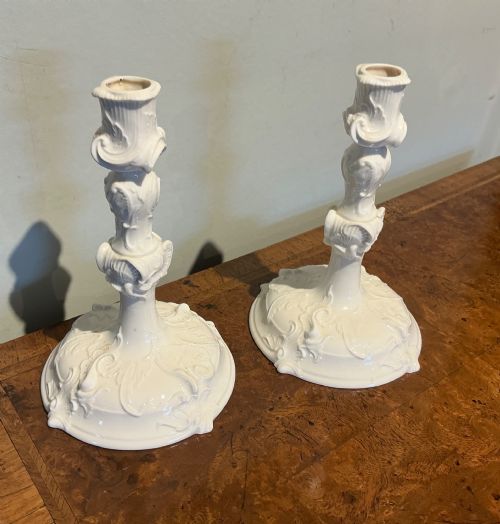
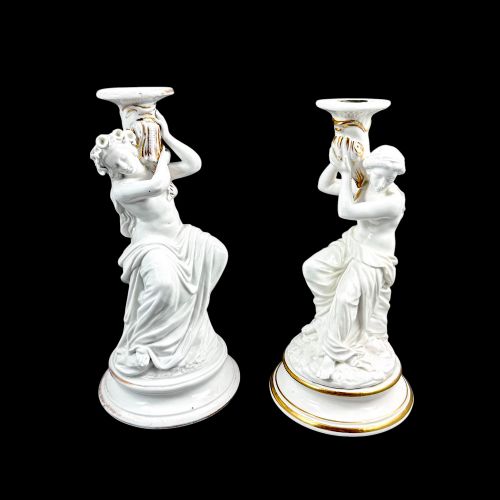
These antique ceramic candleholders bring sculpted porcelain, earthenware and glazed figural forms to any room.
Antique Ceramic Candleholders
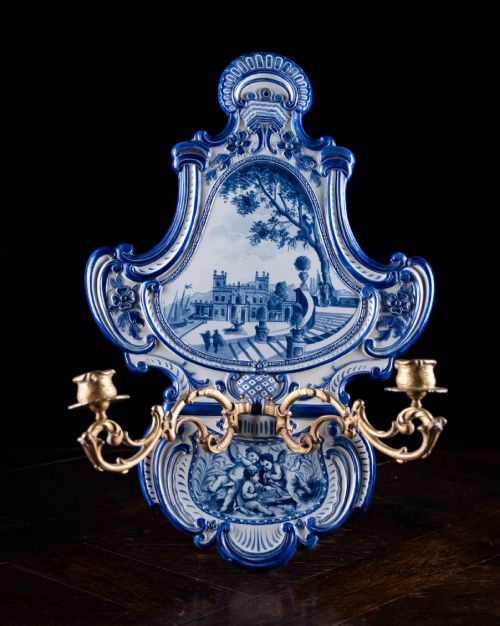
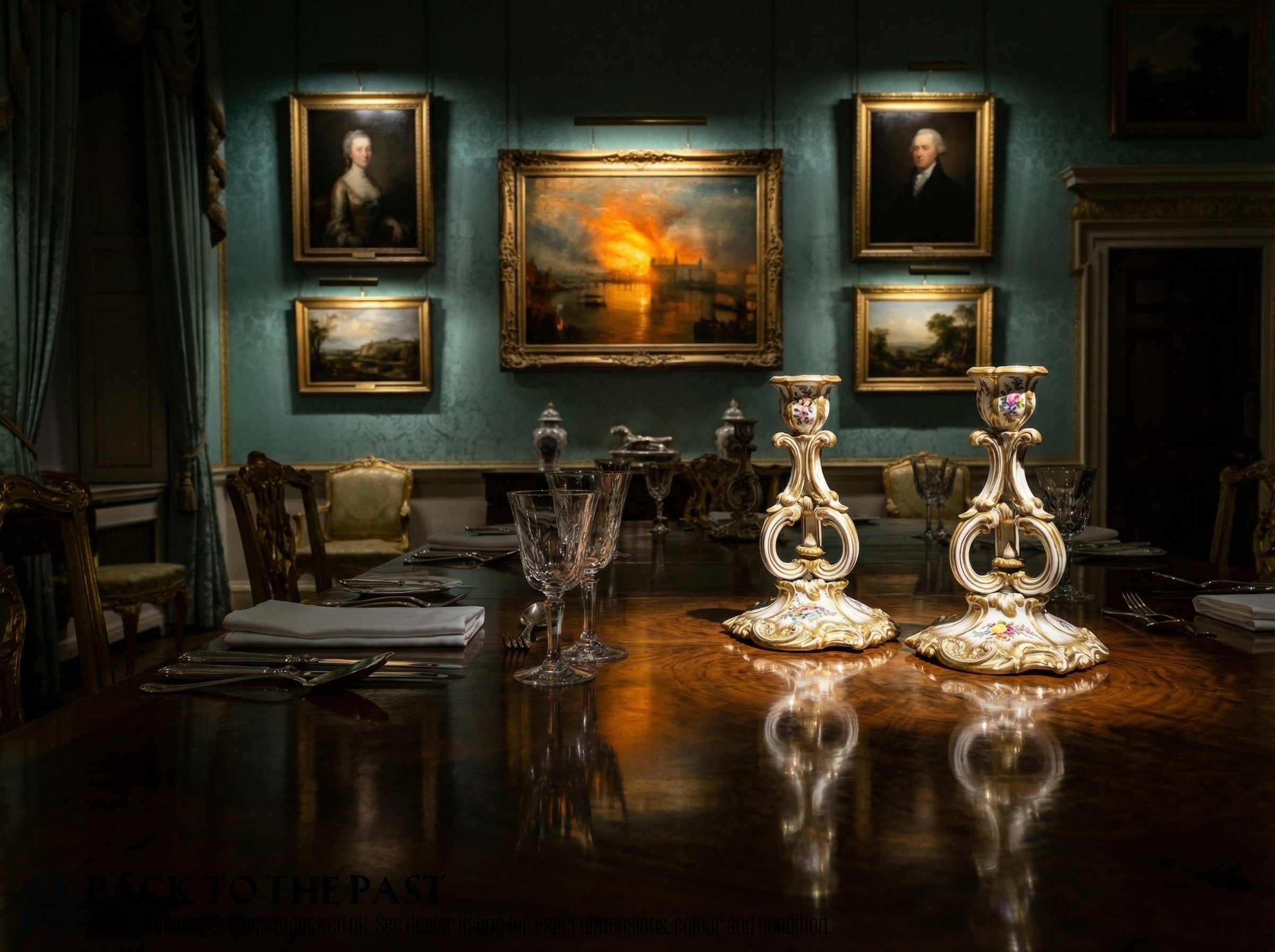
When you search for antique ceramic candleholders, you encounter a diverse range of objects designed to support taper candles safely upon tables, sideboards and walls. The selection spans single candlesticks, multi-branched candelabra, chambersticks fitted with handle pans and wall sconces meant to catch wax and reflect light.
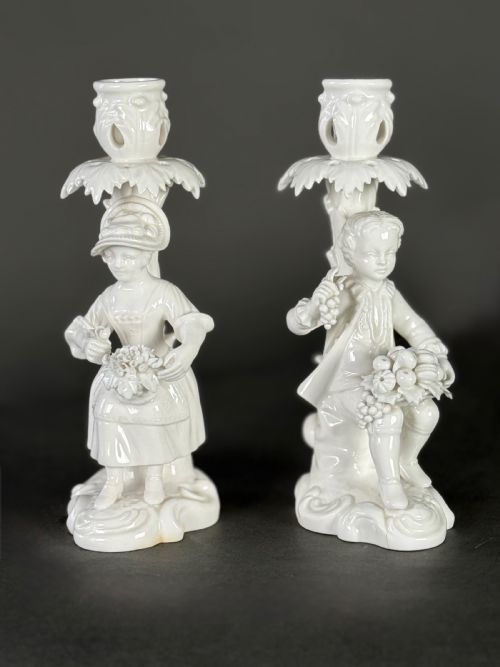
The pieces on this page originate from European potteries and factories across the eighteenth, nineteenth and early twentieth centuries. You find figures of children and gardeners, classical forms, blue and white Delft pieces, and vibrant polychrome enamels styled after Regency, Rococo and Victorian tastes.
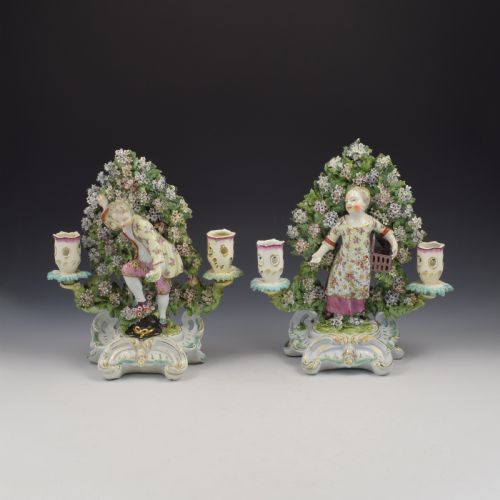
Figural pairs dominate the selection, often modelled with bocage backgrounds or resting on floral bases. English factories like Derby, Minton and Wedgwood sit alongside continental works from Meissen, Sitzendorf and Nymphenburg, offering a wide array of decorative domestic lighting.
Materials and Manufacture
Potters shaped these candleholders using hard paste porcelain, soft paste porcelain, ironstone, jasper and delftware, often building complex figural models by hand in separate moulds before assembly. Artisans then applied underglaze and overglaze enamel colours, polychrome paints, and gilding with gold leaf.
Many items incorporate mixed media, pairing ceramic bodies with cast brass mounts, ormolu fittings and metal sockets to secure the candles and add structural weight. Firing techniques varied from traditional Delft kilns to the refined porcelain kilns of Meissen and English bone china works.
Hunting foxes and kneeling Delft bishops share shelf space here with children dressed as Liberty and Matrimony.
Judging Quality and Finish
The integration of materials also defines the tier of a piece, seen in the clean weight of brass or ormolu mounts fitted securely to porcelain bases. Consistency in the glaze, rich polychrome saturation, and well-preserved gilding separate high workshop standards from standard production ware.
Villeroy and Boch·Derby Porcelain·Wedgwood·Spode·Royal Doulton·Minton·Meissen·Sitzendorf·Nymphenburg·Triebner, ENS and Eckert·Royal Worcester·Mason's Ironstone·Royal Bayreuth
The Antique Ceramic Candleholders Glossary
- Bocage
- A decorative background of applied porcelain leaves, branches and flowers framing figural pieces. This technique originated in eighteenth-century European factories to mimic natural foliage.
- Chamberstick
- A low candleholder equipped with a pan to catch dripping wax and a loop handle for carrying from room to room. They frequently include a small conical snuffer resting in the tray.
- Candelabra
- A branched candlestick holding multiple lights from a single central stem. These larger fixtures often feature ornate figural columns and removable arms.
- Jasper
- A fine-grained, unglazed stoneware developed by Wedgwood, most commonly found in pale blue or yellow with contrasting white cameo reliefs applied to the surface.
- Hard Paste Porcelain
- A dense, durable ceramic composed of kaolin and petuntse, fired at very high temperatures. It resists scratching and takes a bright, glassy glaze.
Antique Ceramic Candleholders: Frequently Asked Questions
What is a go-to-bed candlestick?
A go-to-bed candlestick is a small chamberstick designed for evening use when retiring to a bedroom. They were compact enough to carry safely up dark staircases.
These pieces usually feature a wide drip pan and a short stem, sometimes accompanied by a matched snuffer to extinguish the flame before sleep.
How do I clean ceramic candleholders?
Cleaning requires warm water, mild soap and a soft cloth to remove accumulated dust and wax residue safely. Avoid harsh scouring pads that can scratch delicate overglaze enamels.
Fitted brass mounts should be polished separately with care to prevent metal cream from staining porous ceramic bodies or unglazed porcelain areas.
Were these candleholders meant for daily use?
Many nineteenth-century chambersticks and table candlesticks served practical lighting needs in homes before widespread gas and electric installation. Figural candelabra and bocage pairs often functioned primarily as decorative mantel ornaments.
Heavily gilded or delicate porcelain examples likely saw sparing use during formal dinners and evening gatherings rather than routine daily lighting.
How do I identify Sitzendorf porcelain?
Sitzendorf pieces often feature marked or unmarked characteristics typical of nineteenth-century German figural traditions, such as applied floral bases and pastel palettes. Examining the paste, glaze and modeling style helps distinguish them from other Thuringian works.
Many bear blue factory marks underneath, though nineteenth-century items rely heavily on stylistic attribution through their distinctively ornate Rococo revival forms.