
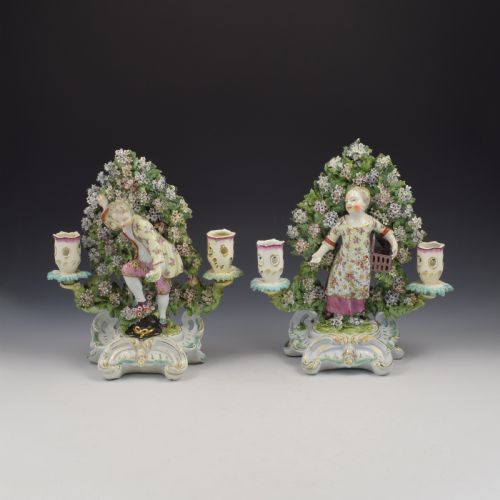


English Porcelain Candlesticks
English porcelain candlesticks bring the refined craft of Georgian and nineteenth-century ceramic workshops straight to the tabletop.
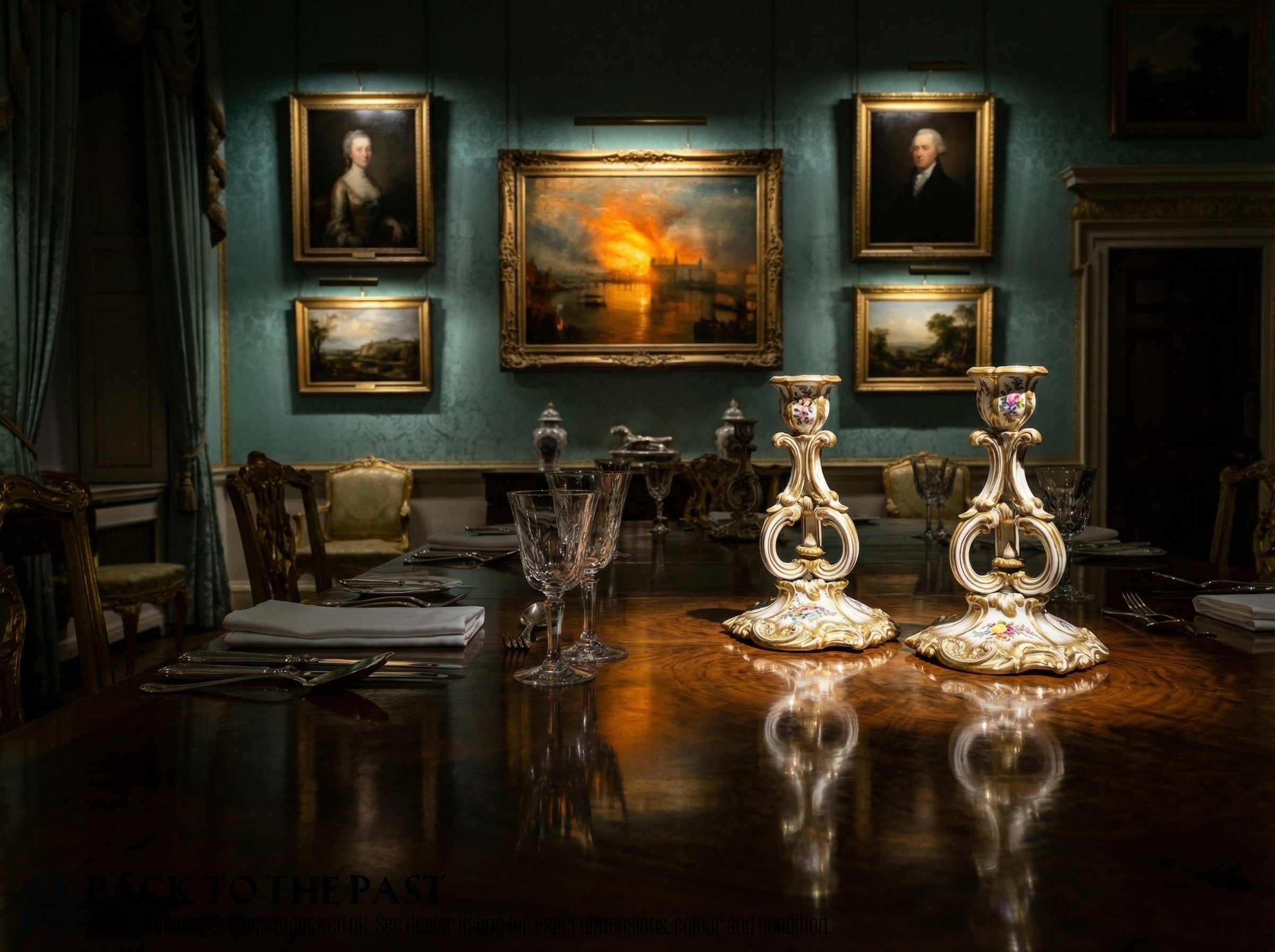
English Porcelain Candlesticks
When searching for english porcelain candlesticks, collectors encounter a diverse array of forms ranging from simple chambersticks to elaborate figural compositions featuring bocage and musicians. These pieces hail from foundational periods including the eighteenth century, the Georgian era, and the nineteenth century.
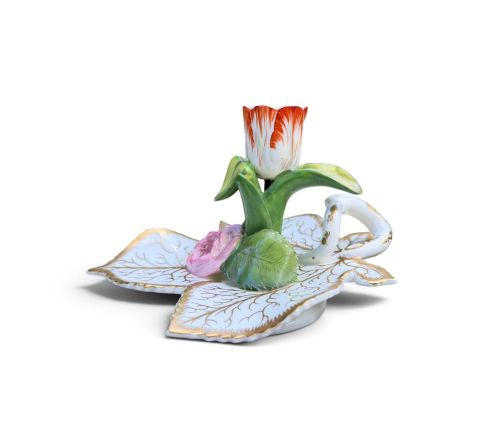
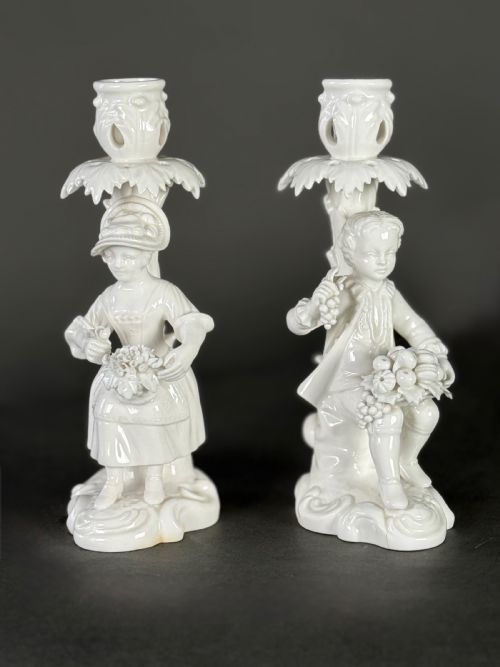
The selection frequently includes chambersticks, go-to-bed candlesticks, and sculptural pairs depicting figures like children, dancers, or musicians amidst applied foliage. Factories such as Derby, Spode, Minton, and Bow dominate the offerings, spanning utilitarian lighting forms to highly decorative Rococo Revival mantel ornaments.
Buyers will most commonly meet pairs originating from the Derby factory alongside occasional chambersticks and botanical or figural designs. The grouping bridges practical domestic illumination and high-status ceramic artistry from historical British kilns.
Materials and Making
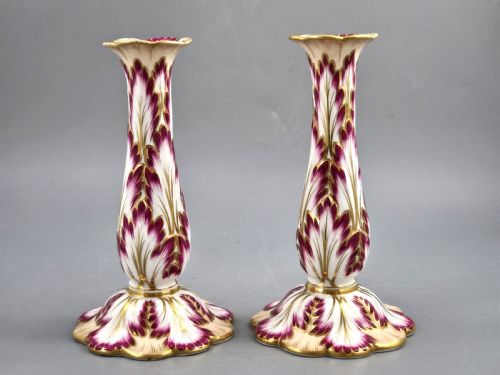
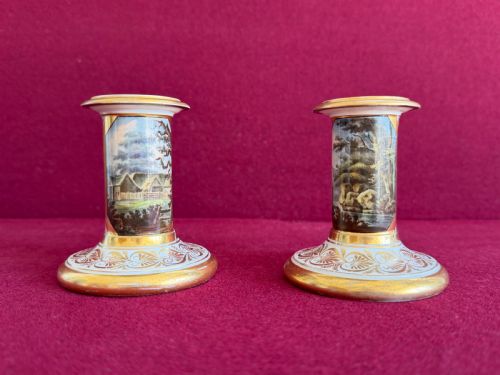
Potters utilised soft-paste porcelain, hard-paste porcelain, and ceramic enamel, shaping the bodies by hand or in moulds before firing. These ceramic bases were then enriched with hand-painted enamels and gilding, including gold leaf and gold gilt highlights.
Figural models incorporated intricate bocage work, which required the delicate manual application of applied leaves and flowers around the central figures. Sconces and drip pans completed the structures, merging functional metalwork sockets with porcelain stems.
Listings feature items spanning the eighteenth century through the nineteenth century, including Georgian and Regency periods.
Judging Quality and Execution
Quality rests primarily on the crispness of the moulding and the finesse of the hand-painting across the enamel and gilding details. Superior examples maintain the intricate integrity of delicate bocage leaves and facial expressions on figural pieces without heavy restoration.
The sophistication of the pattern work, such as distinct floral motifs or specific factory numbering like Ridgway pattern 1070, elevates an item above standard production. The preservation of original gilding and the absence of clumsy repairs distinguish finer cabinet pieces from heavily handled domestic survivors.
Ridgway·Barr, Flight & Barr·Spode·Derby·Minton·Bow·New Hall
The English Porcelain Candlesticks Glossary
- Bocage
- An ornamental background of applied porcelain leaves and foliage, popular on eighteenth-century figures. It frames the central subject in imitation of leafy bowers.
- Chamberstick
- A low candlestick fitted with a pan to catch dripping wax and a loop handle for carrying from room to room. They were essential for lighting bedchambers before electricity.
- Soft-paste porcelain
- An artificial ceramic paste fired at lower temperatures than hard-paste, common in early English factories like Derby and Bow. It yields a warm, slightly translucent body ideal for enamelling.
- Gilding
- The application of gold leaf or gold paint to ceramic surfaces to highlight decorative borders and mouldings. On better pieces, it is burnished to a soft shine.
- Patch-mark
- Small unglazed spots on the underside of eighteenth-century porcelain caused by the kiln supports used during firing. These marks are a useful indicator of period authenticity.
English Porcelain Candlesticks: Frequently Asked Questions
What is a go-to-bed candlestick?
A go-to-bed candlestick is a small chamberstick designed specifically for lighting a person's way to their sleeping quarters at night.
These compact pieces usually feature a small candle socket attached to a flat saucer base with a ring handle for easy carrying.
How do I spot bocage on porcelain?
Bocage appears as a dense, leafy thicket or arbour made of applied porcelain behind figural subjects. Artisans individually formed and attached these delicate leaves to create a naturalistic backdrop.
It is most frequently found on eighteenth-century Derby and Bow figures.
What is the patch-mark period?
The patch-mark period refers to an era of Derby porcelain production identified by small unglazed marks on the base left by kiln props. These scars show how the items were supported inside the kiln during firing.
Recognising them helps date pieces securely to the mid-eighteenth century.
Can I still use antique candlesticks?
While these ceramics were originally created to hold burning candles, most collectors prefer to display them as decorative art objects. The fragile nature of soft-paste porcelain and delicate bocage means modern use carries a risk of heat damage or wax staining.
Gentle display preserves the historic enamel and gilding for the future.
How do I tell Derby from Bow?
Distinguishing between Derby and Bow porcelain involves examining the paste consistency, glaze pooling, and base construction under magnification. Derby pieces often feature specific potting traits and patch-marks, while early Bow bodies display distinct translucency characteristics.
Comparing known factory patterns and stylistic handling of figures clarifies the attribution.