


Pair of Porcelain Candlesticks
When you search for a pair of porcelain candlesticks, you uncover light-bearing ceramic sculptures shaped by centuries of European kiln tradition.
Pair of Porcelain Candlesticks
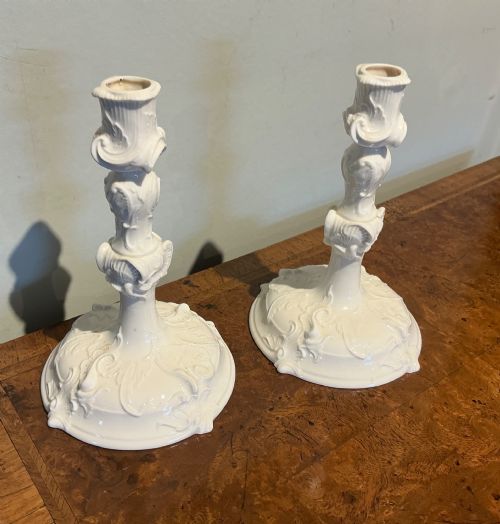
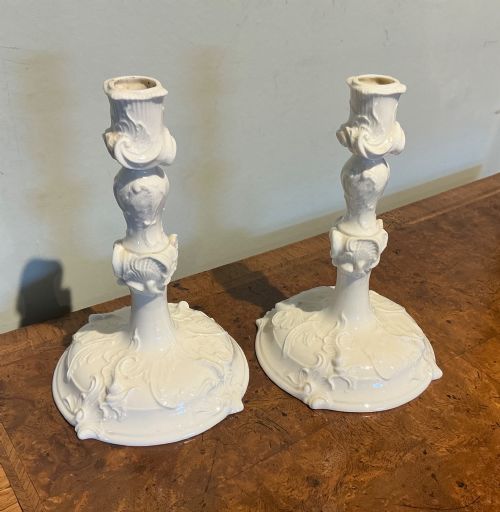
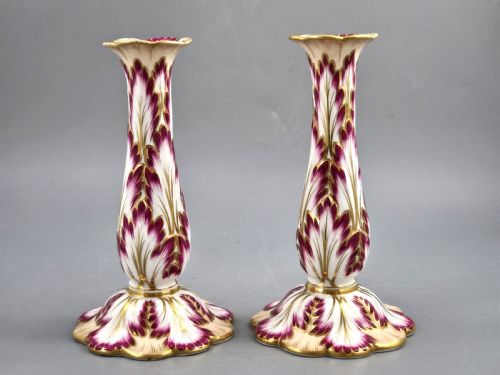
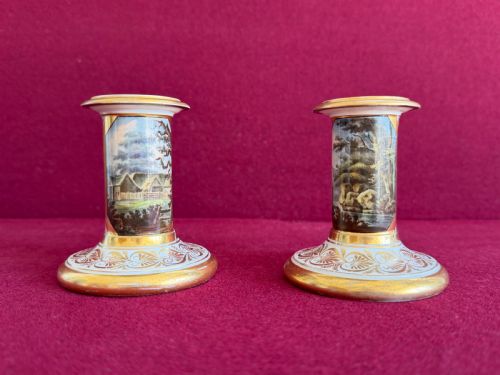
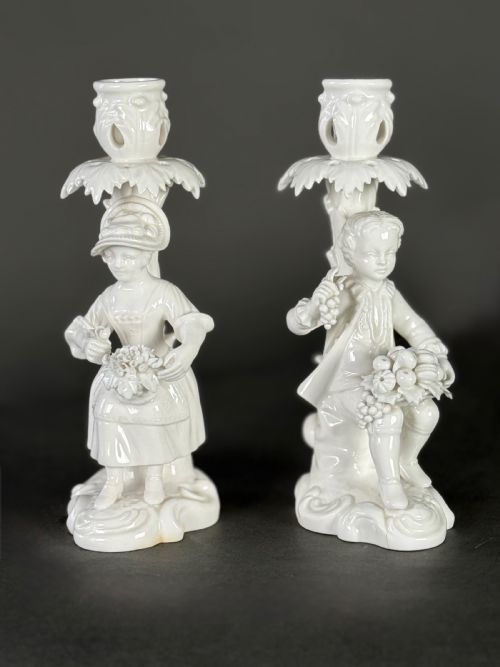
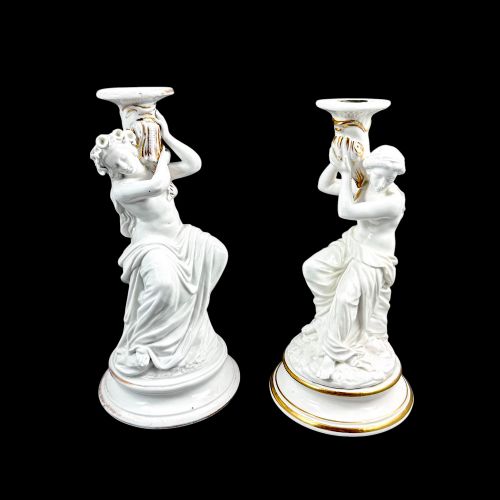
A pair of porcelain candlesticks bridges functional table lighting and sculptural ceramic art, appearing across 18th-century Georgian periods up to early 20th-century manufacture. English factories like Derby, Bow, and Worcester offer botanical motifs alongside figural subjects such as musicians and children.
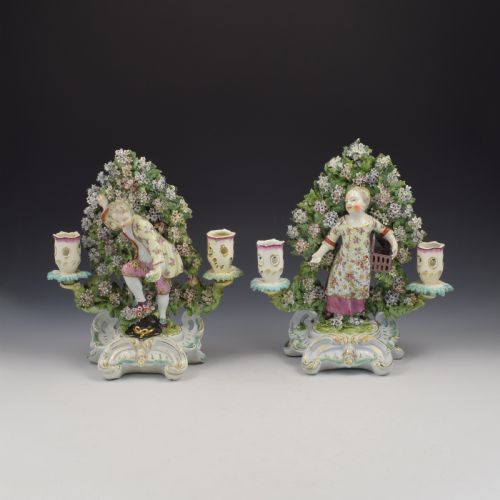
Continental output from Meissen, Sitzendorf, and Dresden frequently introduces elaborate bocage backgrounds, ormolu mounts, and tiered figural groups. Buyers frequently encounter both pure floral foliage designs and complex multi-figure allegorical compositions on this page.
Materials and construction methods
Hard and soft paste porcelain bodies form the structural base of these pieces, shaped through handmoulding and detailed figure modelling. Applied foliage and floral boscage elements require meticulous individual assembly before the initial firing.
Glaze applications seal the ceramic surface, often accented with hand-painting, gold leaf, and gilt details. Certain examples integrate cast brass or ormolu sconces and metal fittings to support the candle sockets securely.
Listings feature 18th-century, Georgian, Victorian, and 20th-century periods, utilising porcelain, enamel, gold leaf, and brass.
Elements defining standard and execution
The survival rate of fragile applied bocage and delicate extremities heavily influences the integrity of the piece. Integrated metal mounts, where present, reveal differing standards of bronze casting and gilding quality that match the ceramic standard.
Nymphenburg·Ridgway·Barr Flight and Barr·Derby·Royal Worcester·Sitzendorf·Chelsea·Minton·Meissen·Bow·Sevres·Dresden·Royal Bayreuth·Karl Richard Klemm·Samson·New Hall
The Pair of Porcelain Candlesticks Glossary
- Bocage
- An applied background of leaves and flowers modelled around figures. This sculptural foliage technique is common in 18th-century English and German manufactories.
- Blanc de Chine
- A white porcelain glaze finish originating from Chinese traditions and adopted by European makers. The term denotes pieces fired without added surface enamel colour.
- Ormolu
- Gilded bronze used for decorative mounts, bases, and candle sconces. It provides structural support and metallic contrast to the porcelain body.
- Patch-mark
- Base scars left by fireclay supports inside the kiln during manufacture. These characteristic marks assist in dating early English pottery.
- Sconce
- The metal or ceramic cup at the top that holds the candle. It protects the main body from dripping wax.
Pair of Porcelain Candlesticks: Frequently Asked Questions
How were pair of porcelain candlesticks used?
These dual lighting fixtures stood upon mantelpieces, dining tables, and sideboards to illuminate rooms by candlelight. Their reflective glazed surfaces amplified the flickering glow of evening flames.
Beyond illumination, they served as decorative centerpieces that displayed the wealth and artistic taste of the household during formal gatherings.
How do I clean these antique candlesticks?
Dust accumulation requires gentle removal using a soft, dry brush to protect delicate painted details and fragile applied floral elements. Moisture and chemical cleaning agents can damage vulnerable gilding and historic ceramic bodies.
Professional restoration advice should be sought if structural instability or heavy grime affects the glazed surfaces.
Are these items safe for daily lighting?
Historic ceramic and metal components react poorly to sustained heat and dripping wax from modern candles. Collectors generally preserve them as decorative display objects rather than functional light sources.
When utilised, appropriate candle sizing prevents wax spillage onto delicate hand-painted enamel and gold leaf decorations.
How can I identify the factory origin?
Makers mark the undersides with painted or impressed symbols, factory stamps, and pattern numbers corresponding to specific kiln archives. Examining the paste composition, glaze texture, and modelling style provides additional clues for attribution.
English factories often exhibit distinct clay characteristics compared to continental European counterparts such as Meissen or Sitzendorf.