

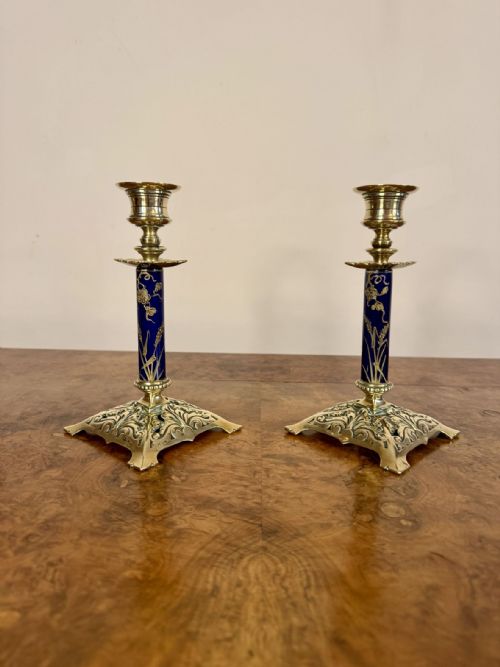
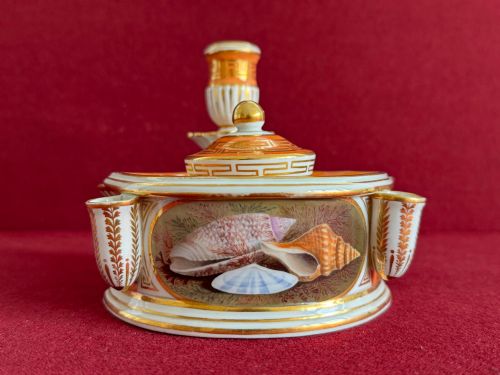
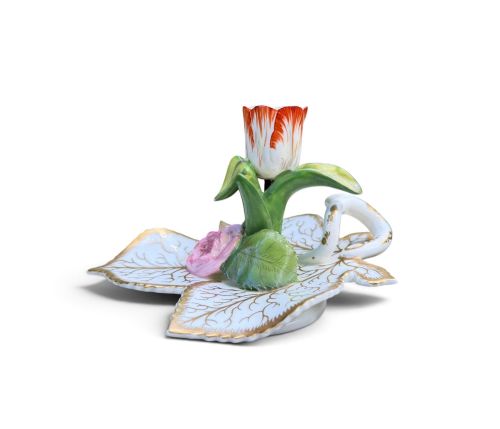

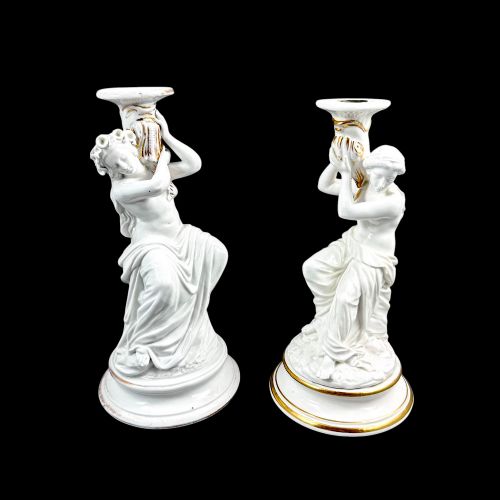
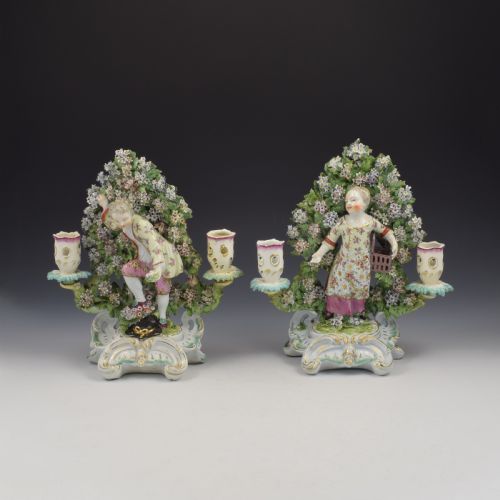


Gilded Ceramic Candlesticks
These gilded ceramic candlesticks combine soft-paste and hard-paste porcelain with rich leaf and gilt decoration to illuminate historic interiors.
Gilded Ceramic Candlesticks
When you search for gilded ceramic candlesticks, you look at a diverse group of light-bearing objects produced across the eighteenth and nineteenth centuries. These pieces encompass chambersticks, wall sconces, candelabra, and figurative porcelain groups incorporating sockets for candles.
The objects frequently take the form of figural compositions, including allegorical representations of seasons, musicians, and children framed by bocage foliage. They span Georgian, Regency, and Victorian aesthetics, with a strong representation of Rococo Revival and Neoclassical styles.
You are most likely to meet English and continental European porcelain examples dating from the mid-eighteenth century through to the late nineteenth century. These wares range from single chambersticks to substantial pairs modelled with elaborate floral and architectural details.
Materials and Construction
The bodies of these pieces utilise hard-paste and soft-paste porcelain, shaped through moulding and hand-modelling to create complex figurative and botanical forms. Enamel colours provide the underlying palette for figures, garments, and naturalistic bocage backgrounds.
Gold leaf and gold gilt are applied to highlights, scrollwork, and bases to catch the flicker of candlelight. Ceramic enamel fixes the painted details through firing, ensuring the metallic and coloured surfaces adhere securely to the porcelain body.
Gilded Ceramic Candlesticks Retail Price Guide 2026
Typical asking prices for gilded ceramic candlesticks among the pieces listed under this phrase on Sellingantiques today, from the lower quarter to the upper quarter. They describe what is for sale here now, not the wider market.
Listings feature porcelain works spanning the Georgian, Victorian, and Regency periods, utilising gold leaf, enamel, and hard-paste ceramic.
Markers of Quality
The application and preservation of the gold leaf and gilt outline the tier of production. Rich, well-burnished gilding that retains its depth and coverage across complex Rococo scrolls indicates superior workshop standards.
Meissen·Derby Porcelain·Spode·Chelsea·Bow·Minton·Dresden·Volkstedt
The Gilded Ceramic Candlesticks Glossary
- Bocage
- An arbour or background of applied porcelain leaves and flowers that frames figural candlesticks. This decorative technique requires meticulous hand-assembly before firing.
- Hard-Paste Porcelain
- A dense, vitrified ceramic compound composed of kaolin and petuntse, fired at high temperatures. It produces a durable body that resists scratching and absorbs glaze evenly.
- Soft-Paste Porcelain
- An artificial ceramic paste containing glass frit and white clay, fired at lower temperatures than hard-paste bodies. It possesses a warm, slightly creamy appearance beneath the glaze.
- Chamberstick
- A low candlestick fitted with a handle and a drip pan, designed for carrying from room to room. These portable pieces often feature matching snuffers.
- Candelabra
- A branched candlestick holding multiple lights from a single central stem. They provide greater illumination and showcase more elaborate moulding than single candlesticks.
Gilded Ceramic Candlesticks: Frequently Asked Questions
How do I clean gilded ceramic candlesticks?
Dust the porcelain and gilt surfaces gently with a soft, dry brush to remove accumulated particles without abrasion.
Avoid liquid cleaners, as moisture can weaken old repairs or tarnish sensitive gold leaf areas.
Were these candlesticks used for daily lighting?
Many of these decorative figural and bocage pieces served as formal ornaments on mantelpieces and tables rather than everyday illumination. Chambersticks, however, saw practical nightly use for lighting bedchambers.
Their fragile porcelain bodies and gilt decoration meant they were handled with care even in period interiors.
How do I distinguish eighteenth-century pieces from nineteenth-century revivals?
Eighteenth-century examples often display the lighter, more fluid paste characteristics and hand-painted palette typical of early factory production. Nineteenth-century revivals frequently utilise heavier moulding and brighter, more uniform enamel colours.
Examining the base and any underglaze factory marks helps clarify the specific period of manufacture.
Can I still burn candles in these candlesticks?
Burning candles in antique porcelain is generally discouraged due to the risk of wax staining the ceramic or heat damaging old repairs. If you choose to use them, ensure the candle fits securely without forcing it into the nozzle.