
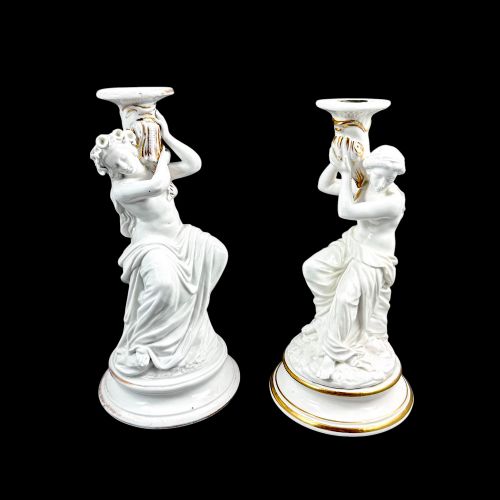


Antique Porcelain Candleholder
An antique porcelain candleholder brings warmth and decorative brilliance to a room, ranging from simple chambersticks to elaborate figural candelabra.
Antique Porcelain Candleholder
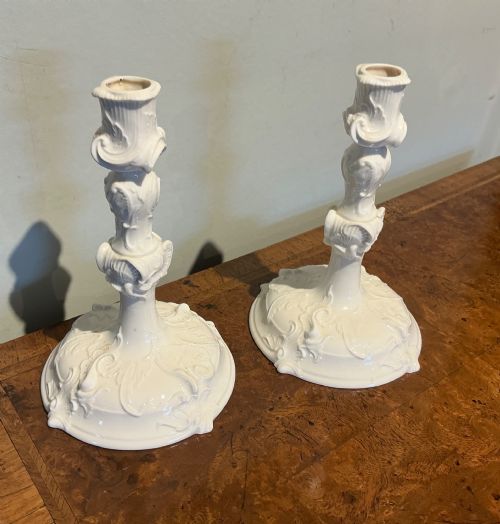
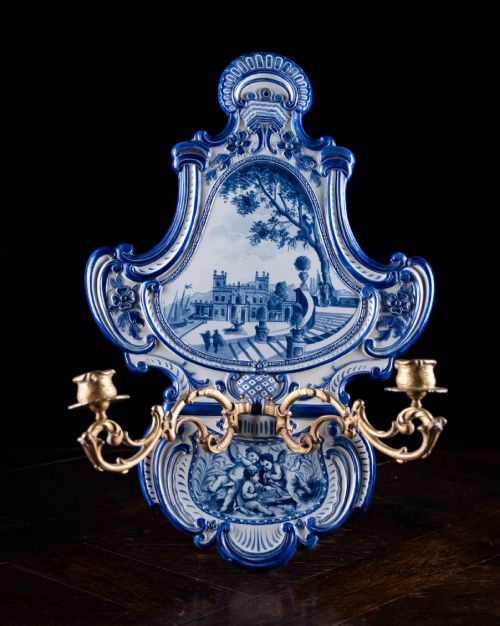
When you search for an antique porcelain candleholder, you encounter candlesticks, chambersticks, wall sconces and multi-armed candelabra spanning the eighteenth, nineteenth and early twentieth centuries. The selection includes English factories such as Derby, Spode, Minton and Royal Worcester, alongside continental European porcelain from Meissen, Sitzendorf, Nymphenburg and Villeroy & Boch.
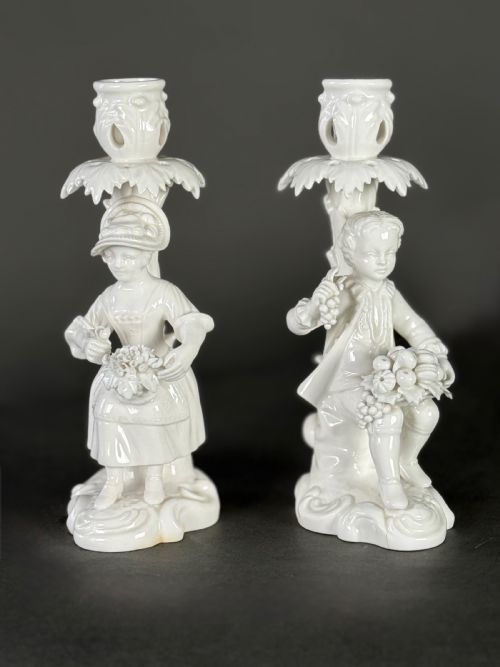
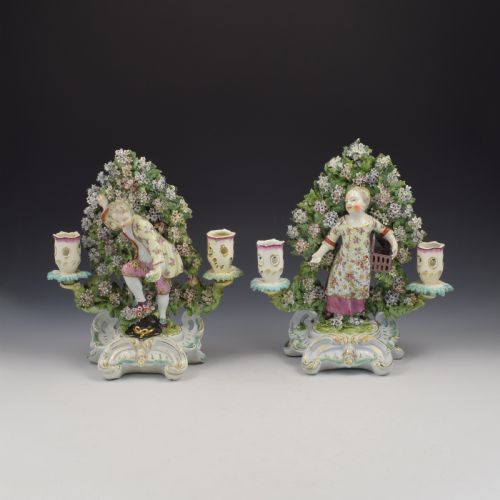
The most common forms on this page are pairs of figural candlesticks and candelabra executed in styles from Rococo Revival and Victorian to Chinese Export and Edwardian Novelty. Many incorporate modelled figures, bocage foliage, or animals alongside traditional socket and base designs.
Dated examples stretch from mid-eighteenth-century Chinese export pieces through Regency and Victorian periods up to the 1920s and 1930s. The forms vary from utilitarian go-to-bed candlesticks to elaborate sculptural centrepieces involving putti, children, birds and mythological subjects.
Materials and construction
The body of an antique porcelain candleholder relies on hard paste or soft paste ceramic formulas, frequently finished with a translucent glaze or enamel decoration. Many European examples combine ceramic components with cast or chased ormolu, gilt bronze, and brass mounts.
Makers integrated decorative details such as applied gold leaf, hand-painted polychrome enamel patterns, and intricate bocage floral elements fashioned around the candle socket. Metal mounts secure the porcelain sections while adding structural weight and decorative contrast to the composition.
Listings feature periods from Georgian and Regency eras through Victorian design, incorporating materials like enamel, gold leaf, and ormolu.
Distinguishing quality
Quality in these pieces rests upon the crispness of the porcelain modelling and the delicacy of hand-painted enamel work. Superior examples display finely sculpted figural details, secure joins between porcelain and ormolu, and well-preserved gilt highlights.
The execution of secondary elements, such as leaf-wrapped arms or floral bases, separates standard production wares from pieces produced by prominent European factories. Finer items maintain proportional harmony across complex multi-figure compositions without losing the structural integrity required to hold a taper.
Nymphenburg·Villeroy and Boch·Derby·Spode·Minton·Meissen·Sitzendorf·Triebner ENS and Eckert·Royal Worcester·Royal Bayreuth
The Antique Porcelain Candleholder Glossary
- Bocage
- An applied background of leaves and flowers modelled around ceramic figures. It is common in eighteenth- and nineteenth-century English and continental porcelain.
- Candelabra
- A branched candlestick designed to hold multiple tapers simultaneously. These often feature central figures or ormolu mounts.
- Chamberstick
- A low candlestick fitted with a saucer base and a loop handle for carrying from room to room. These are frequently accompanied by a small extinguisher cone.
- Hard Paste
- A true porcelain composed of kaolin and petuntse fired at high temperatures. It yields a durable, vitrified body resistant to scratching.
- Ormolu
- Gilded bronze or brass mounts applied to furniture and ceramics. It provides structural support and decorative enrichment on nineteenth-century pieces.
Antique Porcelain Candleholder: Frequently Asked Questions
How do I clean an antique porcelain candleholder safely?
Use a soft, dry brush to remove surface dust from intricate modelling and bocage elements. Avoid harsh chemical cleaners that might damage hand-painted enamels or degrade gilt leaf highlights.
For stubborn grime, use a slightly damp cloth with mild soap, testing a small hidden area first. Ensure the piece dries completely before returning it to display.
What is the difference between a candlestick and a candelabra?
A candlestick is a single-socket holder designed for one taper or candle. These often feature figural or decorative shafts rising from a stable base.
A candelabra incorporates multiple branches or arms extending from a central stem to support two or more candles. They generally appear in larger sizes and more elaborate compositions.
How were go-to-bed candlesticks used?
Go-to-bed candlesticks were small chambersticks designed for domestic use at bedtime. Servants and homeowners carried them down darkened corridors to light their way to bedrooms.
Their compact saucer bases caught stray wax drips while protecting hands from heat and falling debris during transit.
Are these candleholders safe for modern use?
While historic pieces were built to hold wax tapers, fragile materials like nineteenth-century porcelain and delicate bocage require careful handling. Using modern candles that fit securely prevents wax from spilling onto the ceramic surface.
Many collectors prefer to display them as decorative sculptures rather than risking heat damage or accidental impact.