


Dark Bronze Candlesticks
Dark bronze candlesticks bring heavy presence and deep patinated tone to a room, offering functional candlelight framed in rich metalwork.
What dark bronze candlesticks are
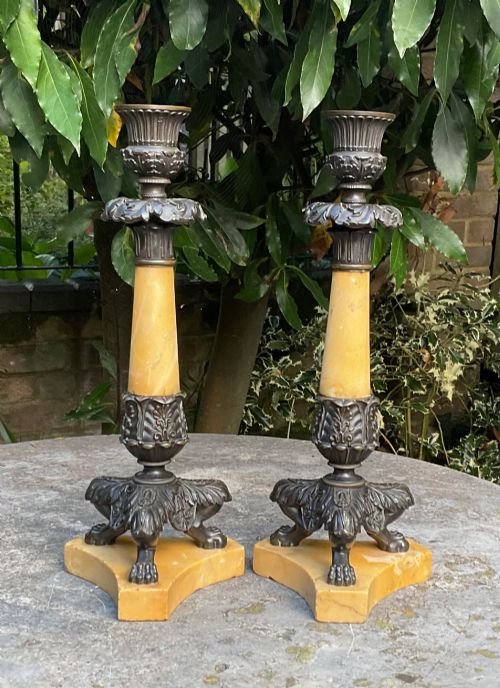
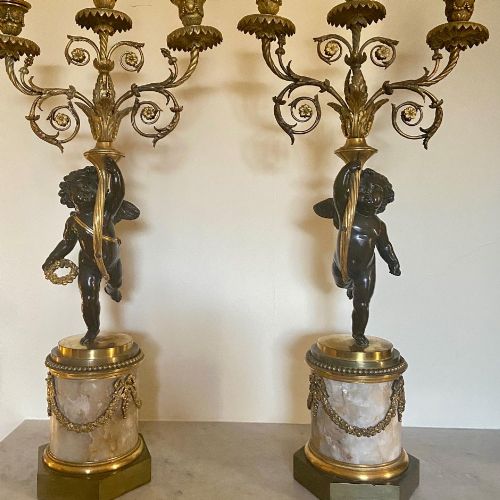
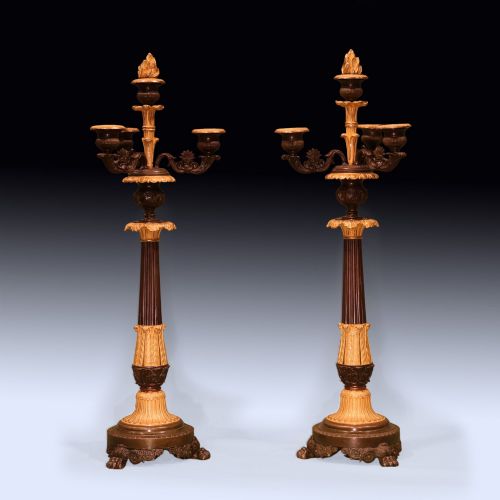
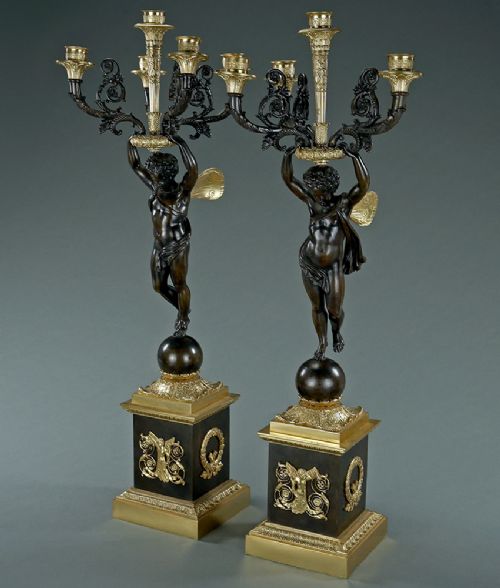
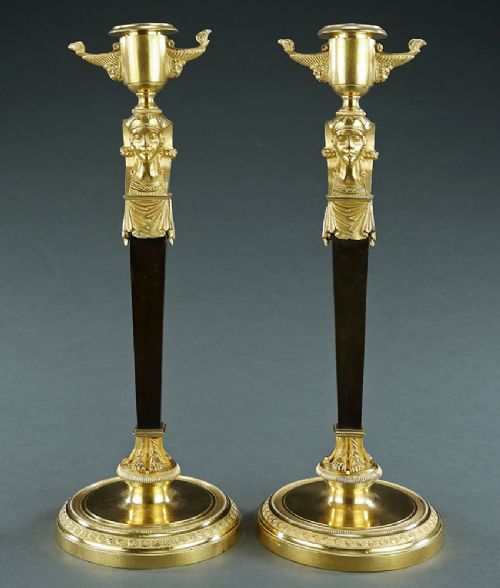
Dark bronze candlesticks encompass nineteenth century pairs configured as candlesticks and candelabra, drawing upon French Neo-Grec, Rococo, Chinoiserie, Empire, and Regency styles. These decorative items frequently combine dark patinated bronze with contrasting materials such as ormolu, onyx, marble, and gilt metal.
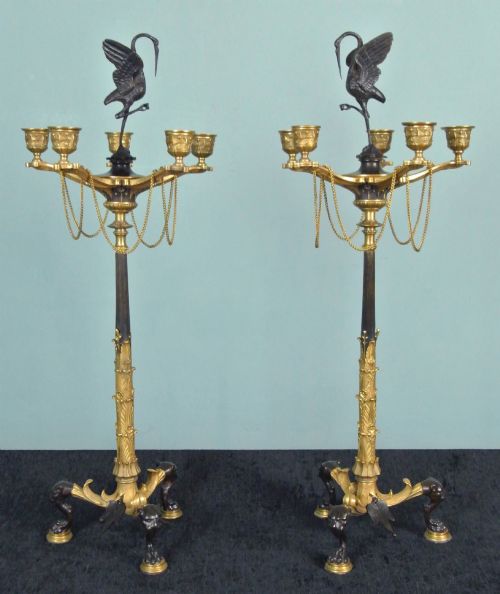
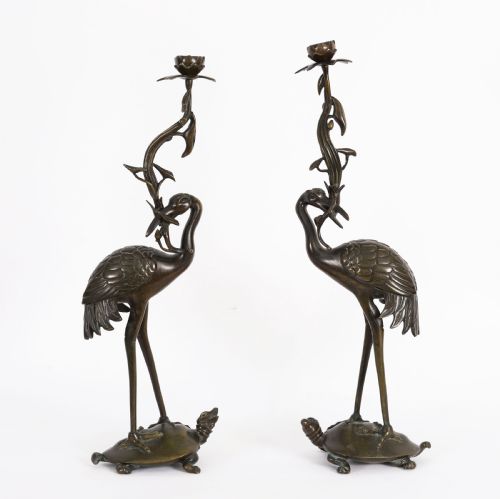
The versions most commonly met on this page span the Victorian and Regency eras, showcasing varied sculptural forms ranging from classical columns to figurative motifs like Chinese figures, Carolean cavaliers, mermen, and storks. Each pair reflects the eclectic decorative taste of the nineteenth century, merging utility with expressive ornamentation.
How they were made
Maker workshops utilised traditional foundry methods, casting bronze to achieve durable structural forms before applying chemical patination to darken the metal surface. Fine detailing was often enhanced through chasing and carving directly into the metal.
Many examples integrate mixed media, uniting cast bronze with carved onyx or white marble bases, and enriching the design with bright ormolu and gilt metal mounts that highlight the deep, dark bronze bodies.
Retail Price Guide 2026
Typical UK retail prices for dark bronze candlesticks, calculated from the Sellingantiques database of over a million retail prices indexed since 2003. This retail price guide relies exclusively on Sellingantiques data; no external sources or auction records are used, so the figures do not describe the wider market.
Storks and mermen stand shoulder to shoulder with Carolean cavaliers to hold your candles.
What varies in quality
Material selection and integration also separate grades of work, with top examples balancing heavy bronze components against genuine marble or onyx plinths and retaining harmonious proportions between base, stem, and drip pan.
The Dark Bronze Candlesticks Glossary
- Ormolu
- Gilded bronze, usually produced by applying a mercury and gold amalgam to the bronze surface and firing it to leave a rich golden layer. It provides a bright contrast to dark patinated bronze.
- Patinated bronze
- Metal treated with chemical solutions to produce a controlled, darkened surface coloration instead of leaving the bright raw metal exposed. This finish protects the bronze while creating deep tonal qualities.
- Neo-Grec
- A nineteenth century revival style drawing inspiration from ancient Greek architecture and decorative arts. It favours geometric precision and classical motifs.
- Athenienne
- A classical tripod form of decorative stand or candleholder popular during the Regency and Empire periods. It mimics ancient Greek braziers and ritual vessels.
Frequently Asked Questions
What periods do these candlesticks come from?
These pieces predominantly date from the nineteenth century, covering the Regency and Victorian eras.
Specific production years span from around eighteen-fifty through to eighteen-ninety, reflecting prevailing nineteenth century stylistic revivals.
How were these candlesticks used originally?
They served primarily to hold wax candles for interior illumination in parlours, dining rooms, and drawing rooms.
Beyond simple lighting, paired candelabra and candlesticks functioned as prominent decorative mantelpiece ornaments that displayed the owner's taste and wealth.
Are these pieces sold in pairs?
The listings on this page consist entirely of matched pairs designed for symmetrical placement on furniture surfaces.
Symmetry was central to nineteenth century interior arrangement, making balanced pairs the standard format for decorative lighting.
What materials accompany the bronze?
Makers frequently paired dark bronze with contrasting ormolu, gilt metal, carved onyx, and marble bases.
These supplementary materials added textural variety and structural weight to the finished lighting devices.
How do I identify French pieces?
French origin is often indicated by distinct stylistic vocabularies such as French Rococo, Neo-Grec, and Empire designs.
These pieces frequently employ refined figural subjects like Chinese motifs and mermen executed with characteristic continental foundry techniques.