
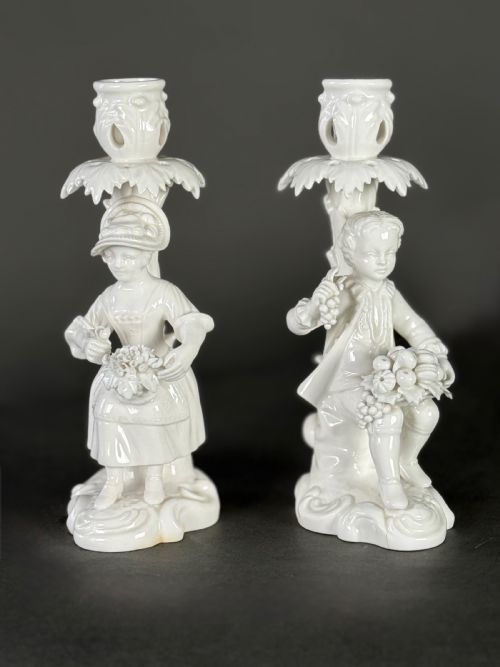
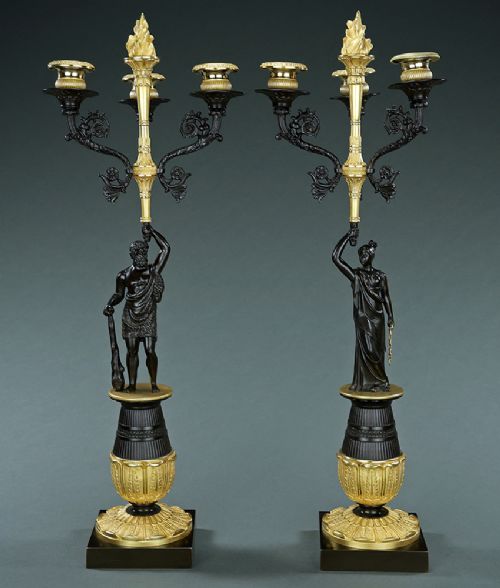
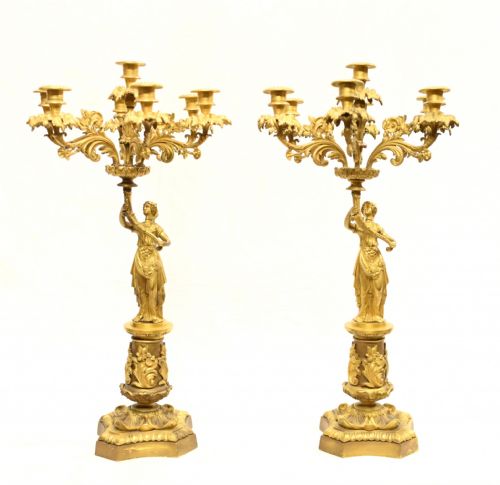
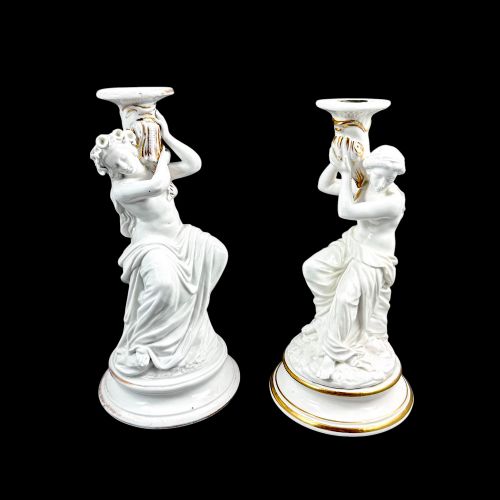


Antique Figural Candle Stands
These antique figural candle stands combine sculpture with illumination, bringing sculptural presence and period character to any room.
Antique Figural Candle Stands
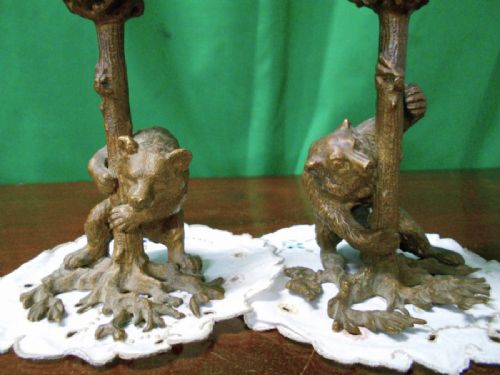
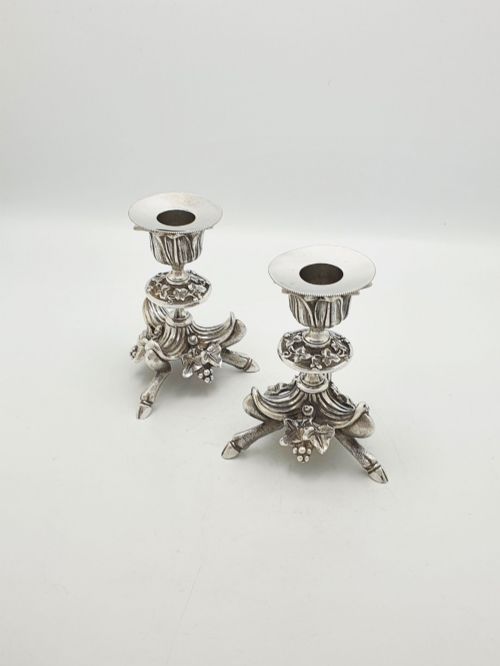
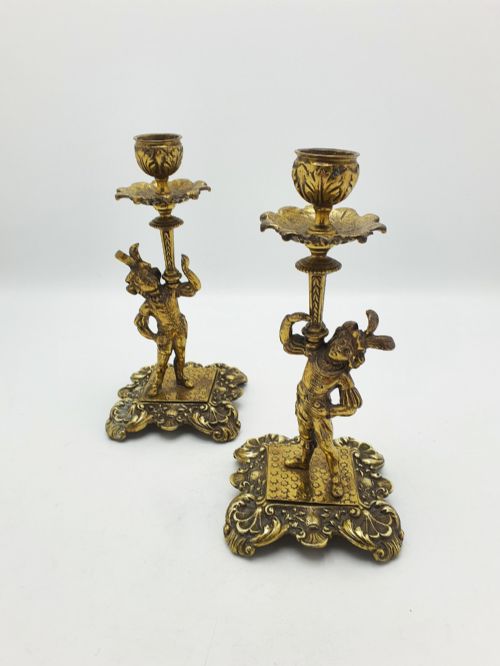
Antique figural candle stands encompass candlesticks, candelabra, and torcheres shaped around human, animal, or mythological forms. When you search for antique figural candle stands, you encounter pieces designed to hold taper candles while doubling as miniature sculptures.
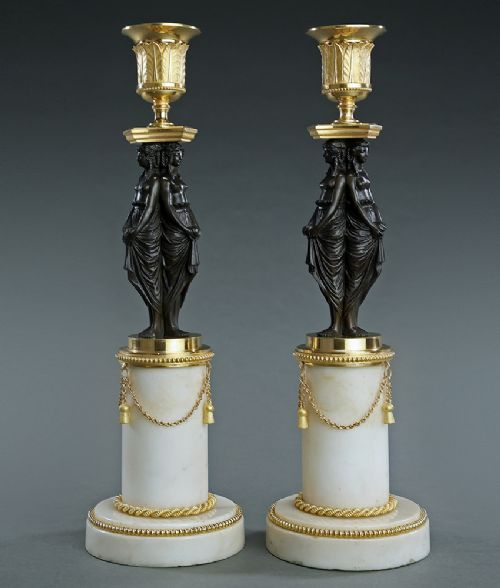
The selection here draws primarily from the nineteenth century, alongside Regency, Georgian, and Art Deco examples. Common forms range from bronze puttis and caryatids to porcelain gardeners and cavaliers.
Origin points span English, French, German, and Russian workshops, uniting domestic lighting with decorative sculpture. Most examples survive in pairs, designed to balance mantelpieces and side tables.
How they were made
Ceramic examples rely on hard paste porcelain, blanc de chine, and earthenware, shaped in moulds by factories such as Derby, Chelsea, and Dresden. Artisans then hand-painted these figures with enamel colours and applied floral or architectural bases.
Carved wooden figures demonstrate traditional joinery and sculpture, mounting timber figures upon turned socle bases.
What varies in quality
Ceramic quality shows in the delicacy of the moulding and the control of the enamel painting. Superior porcelain figures display fine hand-painted details and clean, well-fired glazes without pooling or distortion.
Material integration also separates tiers of production. The best examples combine contrasting materials, such as bronze figures mounted onto solid marble bases, with secure original fittings.
Humphrey Hopper·Royal Worcester Hadley·Helena Wolfsohn·Alexandre Clerget·Triebner, ENS & Eckert Volkstedt
The Antique Figural Candle Stands Glossary
- Caryatid
- A sculpted female figure serving as an architectural support or pillar. In lighting, these figures form the upright shaft of the candle holder.
- Ormolu
- Gilded bronze produced by applying a mercury and gold amalgam to cast bronze. This technique imparts a rich, lasting golden finish typical of French decorative arts.
- Spelter
- A zinc alloy utilised as a less costly alternative to bronze. It takes fine detail well but requires patination or plating to mimic heavier metals.
- Putto
- A plump, naked male infant figure, frequently depicted as a cherub or mythological attendant. These figures often appear clustered around the candle sockets.
- Torchere
- A tall stand or candlestick designed to elevate a light source. They originate from lighting stands used in large interiors.
Antique Figural Candle Stands: Frequently Asked Questions
How do I clean antique figural candle stands?
Dust metal and porcelain gently with a soft, dry brush to preserve patination and enamel. Avoid chemical polishes, which can strip historic gilding or damage soft ceramic glazes.
For stubborn residue inside candle nozzles, apply gentle warmth to soften old wax rather than scraping with metal tools. Care should be taken around painted porcelain surfaces to prevent moisture damage.
How can I tell the period of a figural candlestick?
Examine the casting quality, material composition, and stylistic cues such as Regency neoclassical lines or Art Deco geometric forms. Nineteenth-century examples often utilise cast bronze, spelter, or Staffordshire porcelain, while eighteenth-century pieces display earlier soft paste porcelain characteristics.
Factory marks, where present on the base, provide definitive chronological reference points.
Where should I display figural candle stands?
Place pairs symmetrically on mantelpieces, sideboards, or console tables where their sculptural profiles remain visible from multiple angles. Ensure they sit on stable, level surfaces away from heavy foot traffic or direct sunlight.
Pairing them with neutral backgrounds allows the bronze patination or hand-painted porcelain colours to stand out.