


Pair of Figural Candlesticks
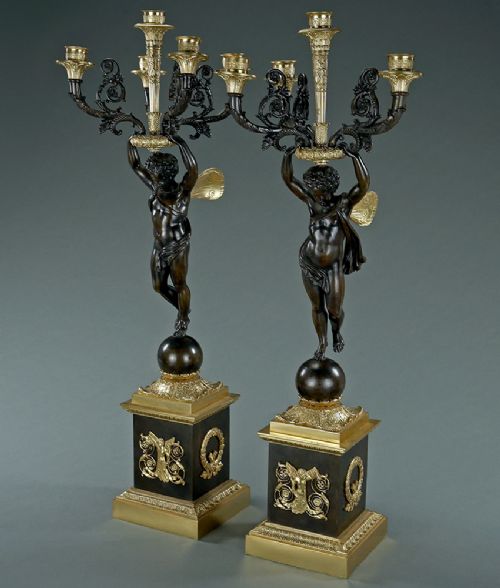
These pair of figural candlesticks combine sculpture and illumination, bringing character, history, and sculptural form to mantelpieces and tables.
Pair of Figural Candlesticks
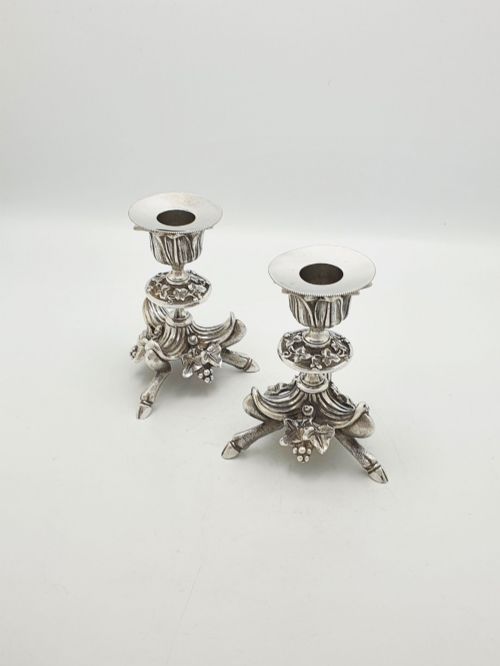
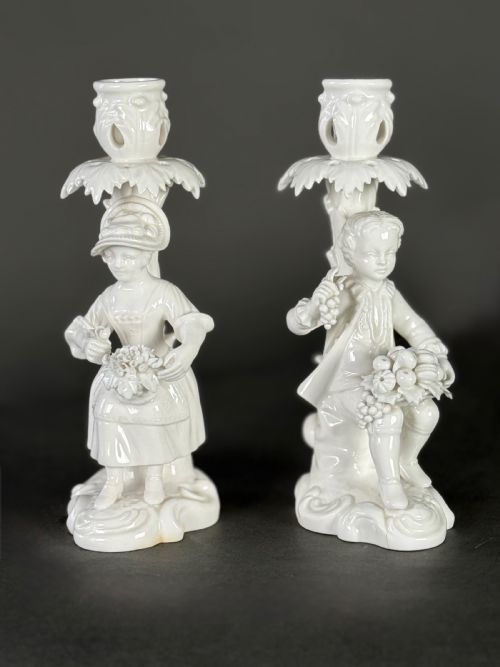
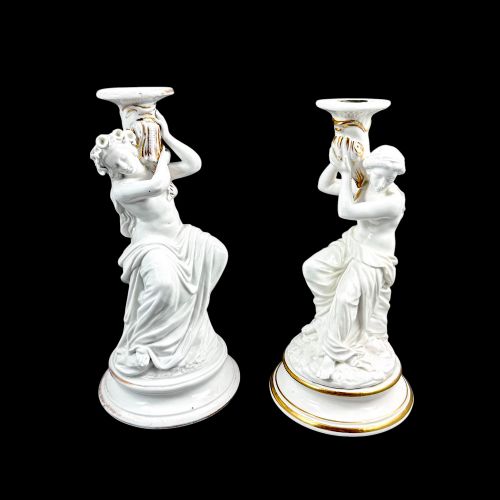
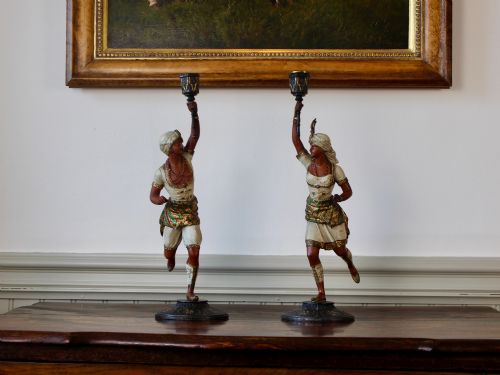
When searching for a pair of figural candlesticks, buyers encounter sculpted human, mythical, or allegorical figures supporting candle holders. These pieces span from the Georgian period through the nineteenth century into the early twentieth century.
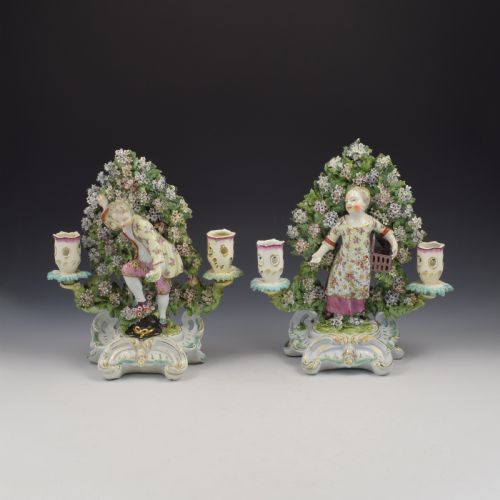
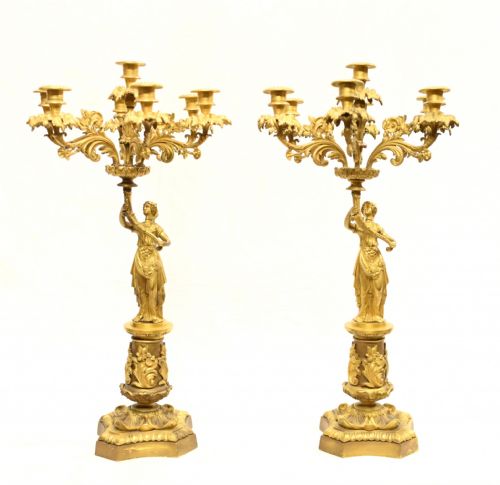
Porcelain examples frequently showcase pastoral figures, children, or dancers from factories like Derby, Sitzendorf, and Minton. Metal versions lean towards bronze, brass, or spelter, often adopting classical, Renaissance Revival, or Rococo styles.
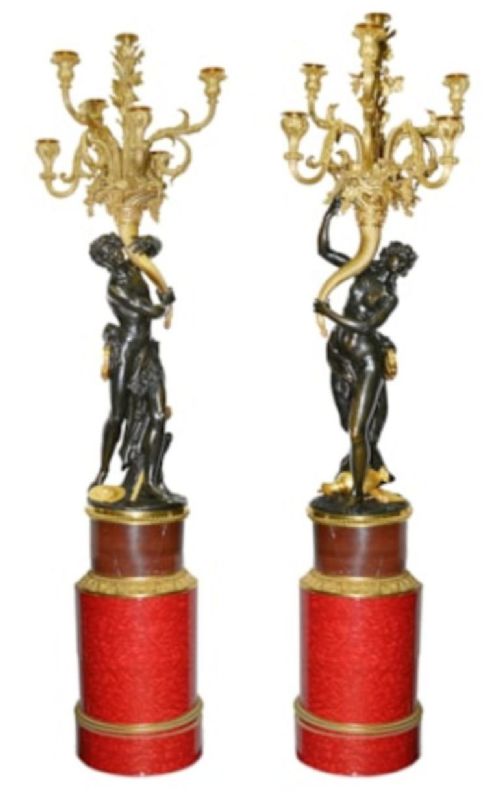
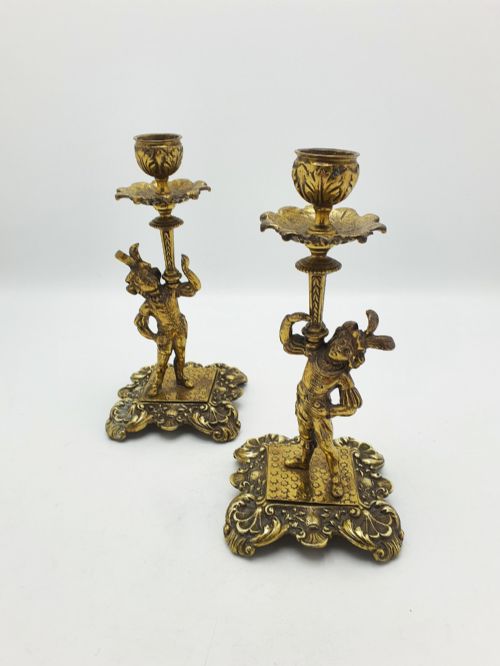
The selection here ranges from grand multi-light candelabra with marble bases to smaller mantel pieces modelled as cavaliers, puttis, and allegorical characters.
What varies in quality
Proportion and stability also differentiate the work, as finer examples maintain a balanced architectural harmony between the sculptural figure and the candle sconces above.
Listings feature periods spanning from Georgian and Regency eras through the nineteenth-century Victorian age into the early twentieth century.
Derby·Sitzendorf·Royal Worcester·Minton·Chelsea·WMF·Meissen·Samson
The Pair of Figural Candlesticks Glossary
- Caryatid
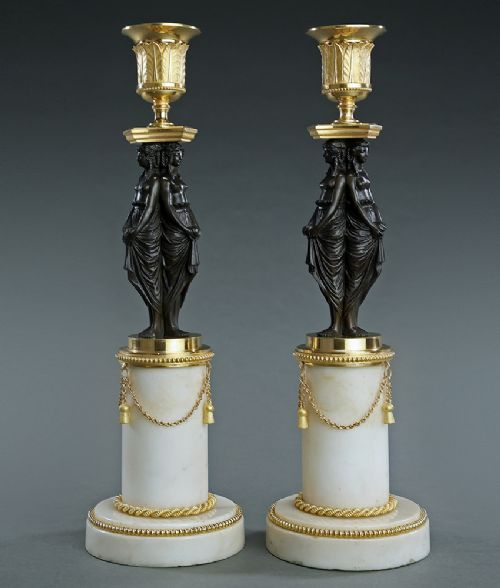
- A sculpted female figure serving as an architectural support. In these pieces, the figure often forms the main shaft holding the candle socket.
- Bocage
- An ornamental background of carved or modelled foliage and flowers made of porcelain. This technique is frequently seen on eighteenth-century figures.
- Ormolu
- Gilded bronze produced by applying a mercury-gilding process to cast bronze. It gives metal mounts a rich golden lustre.
- Spelter
- A zinc alloy used as a cheaper alternative to bronze for sculptural figures. It is often painted to resemble bronze or other metals.
- Sconce
- The socket or cup at the top of a candlestick that holds the candle in place. They are often detachable or decorated with drip pans.
Pair of Figural Candlesticks: Frequently Asked Questions
What are figural candlesticks?
Figural candlesticks are decorative lighting supports moulded or cast in the shape of human figures, animals, or mythological characters. They combine sculpture with functional candle holders.
These pieces were designed to be displayed on mantelpieces, side tables, and dining surfaces, serving as ornamental art objects even when unlit.
How do I date these candlesticks?
Dating relies on identifying the materials, manufacturing marks, clothing styles, and the specific artistic movement of the period. Nineteenth-century pieces often reflect revivals like Rococo or Renaissance styles.
Porcelain items frequently feature factory stamps, pattern numbers, or characteristic baseline marks that help narrow down the decade of production.
How were they used historically?
In past centuries, pairs of candlesticks were placed on mantelpieces, often flanking clocks or mirrors to reflect candlelight around the room. They provided necessary illumination during evening hours before electric lighting.
Grand houses utilised larger candelabra for dining tables and formal reception rooms, where the figurative designs demonstrated the owner's taste and wealth.
How do I care for antique candlesticks?
Care depends entirely on the material composition of the specific piece. Porcelain requires gentle dusting with a soft brush, avoiding harsh chemical cleaners that can damage hand-painted enamels.
Metal items such as bronze or brass benefit from occasional cleaning with dry cloths to preserve their patina, taking care to avoid abrasive polishes on gilded or cold-painted surfaces.