

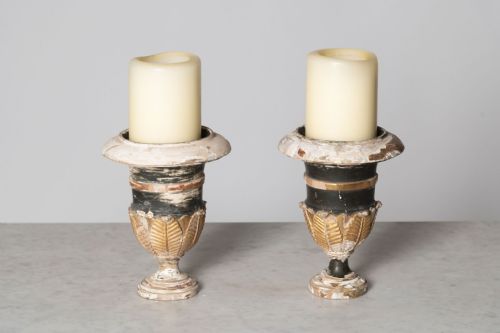
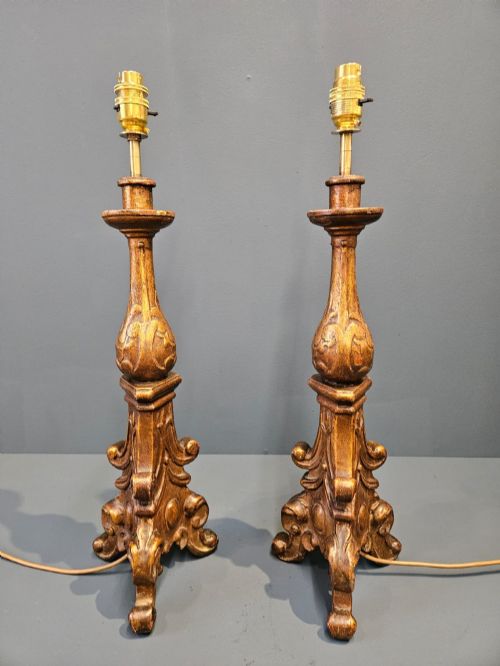


Vintage Altar Candlesticks
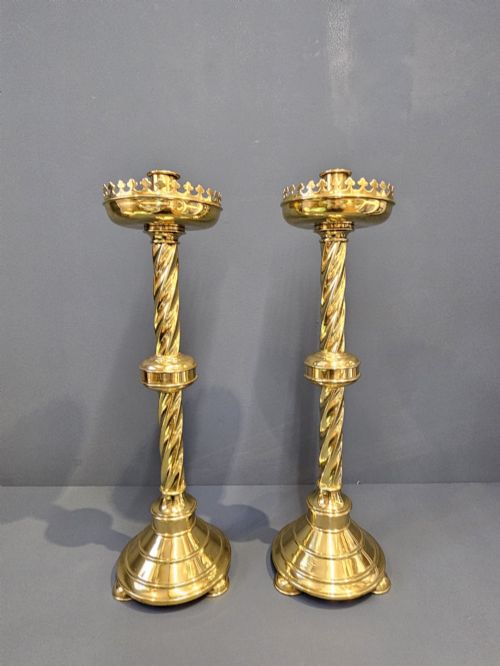
These vintage altar candlesticks bring monumental proportions and ecclesiastical character into domestic interiors through heavy metalwork and carved timber.
Vintage Altar Candlesticks
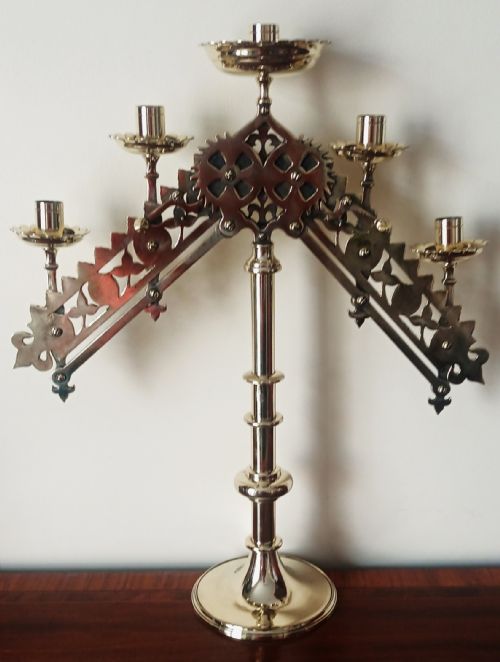
When searching for vintage altar candlesticks, buyers encounter substantial ecclesiastical lighting created primarily during the nineteenth and early twentieth centuries. These pieces originate from church furnishings and chapel interiors, translating solemn architectural styles into functional household objects.
The selection on this page leans heavily toward brass and bronze church candlesticks, alongside carved wooden examples and items adapted into table lamps. Most specimens date from the Victorian era through the Edwardian period, often reflecting Gothic Revival designs or seventeenth-century stylistic revivals.
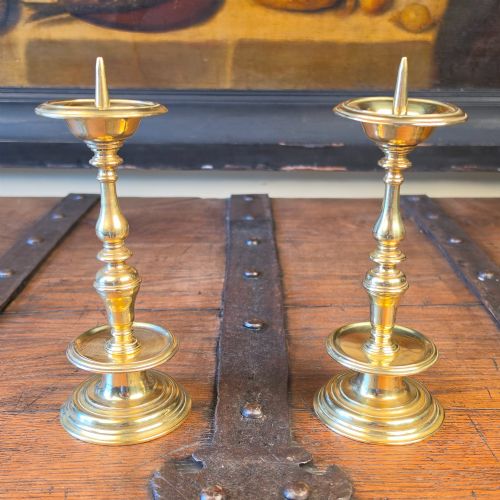
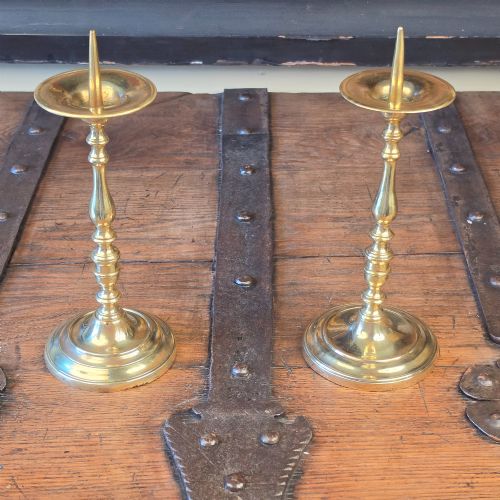
Forms vary from standard socket candlesticks to pricket designs designed to impale large beeswax tapers. Buyers also find matched pairs and graduated sets that once stood upon holy tables.
How they were made
Foundry casting dominates the metal pieces, utilising heavy brass, bronze and copper to achieve monumental heights and structural stability. Many brass components receive turned detailing and applied surface chasing, while other metal items display silver plating.
Wooden examples rely on traditional joinery and lathe turning, shaping timber into columnar shafts and stepped bases. Artisans frequently embellished these wooden foundations with gesso, paint, silver leaf and gilded finishes to mimic solid precious metals.
Some graduated Masonic candlesticks served lodge rituals rather than church altars, proving that heavy brass columns enjoyed secret lives.
What varies in quality
Weight and gauge of metal separate utilitarian church items from exceptional commissions, where thick brass or bronze castings provide substantial heft. Superior turned wooden pieces show crisp profiles and precise symmetry along the shaft without excessive filler in the gesso.
The integrity of decorative details, from deeply struck Gothic mouldings to the fidelity of Amsterdam School or Baroque styling, determines the visual impact. Patina and surface preservation dictate whether the original finish survives beneath decades of ecclesiastical use.
The Vintage Altar Candlesticks Glossary
- Pricket
- A metal spike on top of a candlestick designed to hold a candle in place. This form appears frequently on church and altar lighting.
- Gothic Revival
- An architectural and decorative style popular during the nineteenth century that mimics medieval forms. Pieces often incorporate pointed arches and heavy ecclesiastical motifs.
- Amsterdam School
- An early twentieth-century architectural and design movement characterised by expressive forms and rich surface textures. Metalwork from this style displays robust craftsmanship.
- Treen
- Small handmade wooden household objects turned on a lathe. These items showcase traditional woodworking techniques from past centuries.
Vintage Altar Candlesticks: Frequently Asked Questions
Were these candlesticks originally wired for electricity?
Almost all pieces began life holding wax candles for church services or chapel rituals. Many later receive conversion into table lamps to suit modern domestic lighting needs.
Conversions often preserve the original metal or wooden shaft intact. Wiring usually runs through the centre or alongside the main stem.
What is the difference between a candlestick and a pricket?
Standard candlesticks feature a socket cup that cradles the base of a candle cylinder. Pricket candlesticks utilise an upward-pointing metal spike that secures a large pillar candle directly onto the top plate.
Prickets are particularly common on church and altar pieces due to the heavy liturgical tapers used in services.
How can I tell a Victorian piece from a 17th century style piece?
Nineteenth-century items often carry manufacturing marks, typical Victorian brass compositions, or proportional adjustments suited to nineteenth-century revival interiors. The evidence shows many pieces made in the 1800s merely mimic seventeenth-century aesthetics.
examine the base construction, tool marks and wear patterns to confirm the actual period of manufacture. True seventeenth-century metalwork differs significantly in alloy and casting texture from nineteenth-century revivals.