





Church Brass Candle Stands
These church brass candle stands bring solemn ecclesiastical height and heavy metal weight directly into domestic rooms.
Church Brass Candle Stands
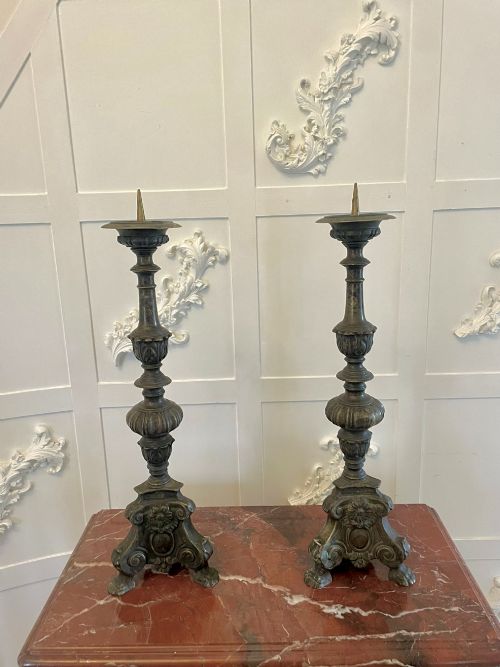
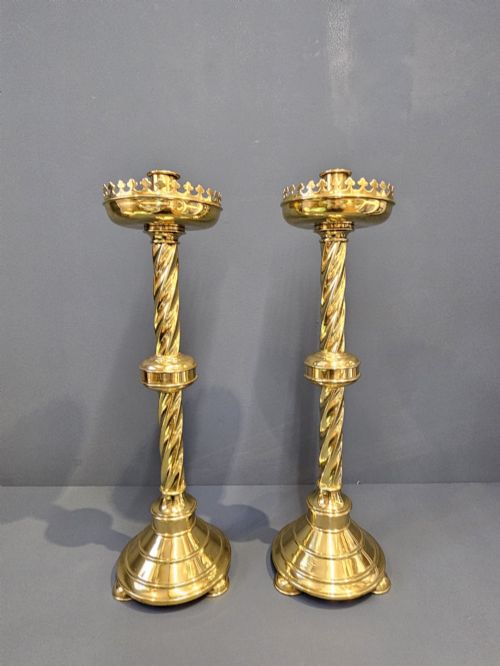
Church brass candle stands are ecclesiastical lighting fixtures designed for altars and floors, appearing here primarily as pairs and tall floor-standing examples. The pieces on this page span from the seventeenth century through the Victorian period and into the twentieth century, with nineteenth-century Gothic Revival designs predominating.
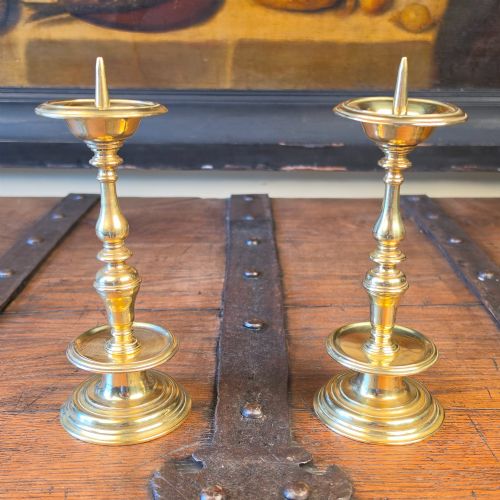
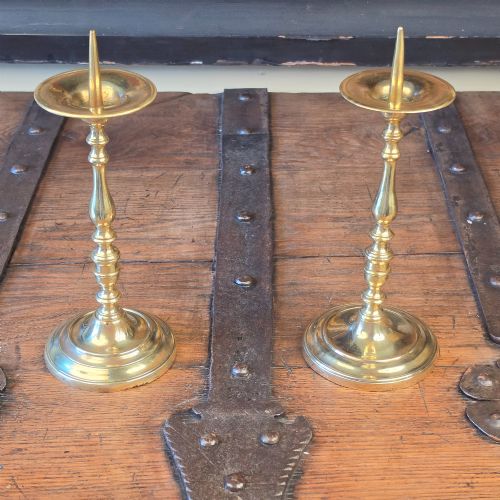
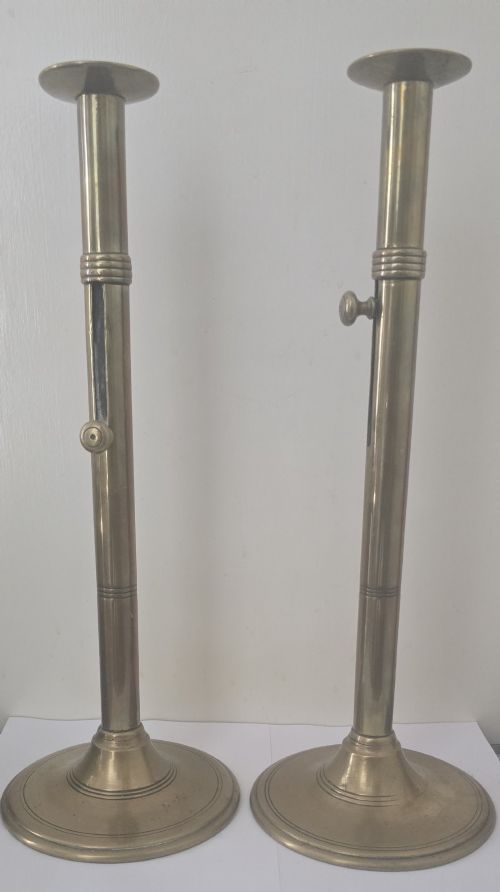
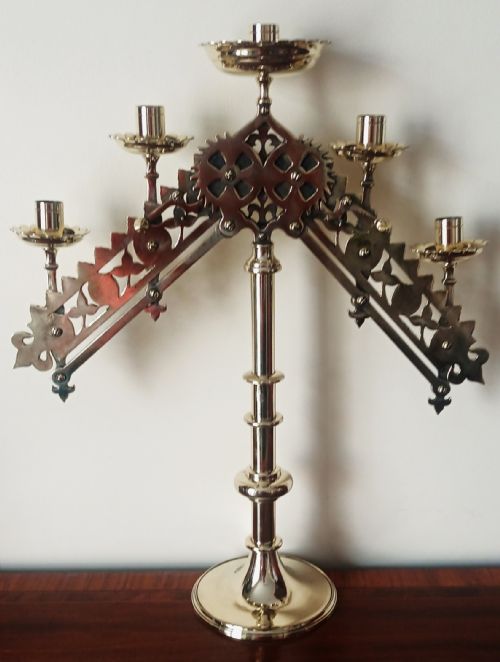
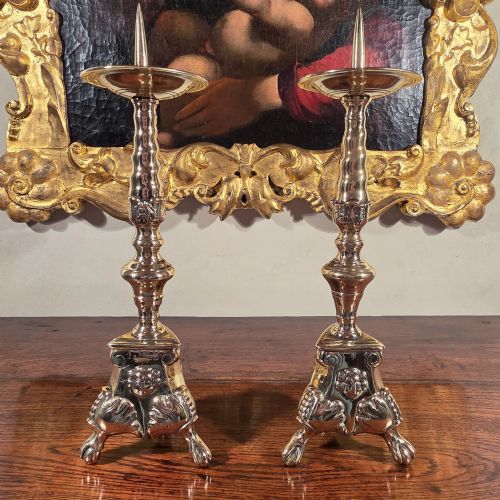
Buyers encounter candlesticks, candelabras, and floor-standing candle holders fashioned in brass, bronze, and iron. Many feature pricket spikes to hold large candles, alongside domestic adaptations such as side ejectors and articulated arms.
Stylistic influences range from seventeenth-century Baroque and revival forms to Amsterdam School and Art Deco interpretations. Most examples demonstrate substantial height, designed originally to stand upon altars or sanctuary floors.
Materials and construction
Foundry-cast brass forms the primary structural substance of these pieces, often combined with iron, bronze, or wood elements. Makers utilised heavy casting techniques to support the considerable height and weight required for altar service.
Surface decoration frequently involves turned mouldings, Corinthian columns, and painted metal details applied to standard ecclesiastical shapes. Articulated joints and screw-threaded assemblies allow mechanical movement in complex candelabra variants.
Listings incorporate brass, bronze, wrought iron, iron, painted metal, hardwood, fabric, and wood across multiple centuries.
Judgement of quality
The distinction between standard ecclesiastical production and superior work rests upon the crispness of the casting and the weight of the metal. Heavier gauges of brass and deeply articulated turned details elevate certain pairs above simpler utilitarian items.
Design ambition separates basic altar furniture from exceptional pieces, particularly where Amsterdam School influences or complex Gothic Revival ornamentation are executed with architectural precision.
T Thomason & Co
The Church Brass Candle Stands Glossary
- Pricket
- A sharp metal spike upon which a candle is impaled. This mounting method appears frequently on altar candlesticks.
- Candelabra
- A branched candlestick holding multiple lights. These pieces often feature articulated arms for adjusted placement.
- Ecclesiastical
- Relating to the Christian Church or its clergy. Items bearing this description were made specifically for liturgical use.
- Corinthian column
- A classical architectural column style featuring ornate acanthus leaf capitals. This form appears decorated upon nineteenth-century Masonic and church columns.
- Side ejector
- A mechanical lever fitted to a candlestick to raise or remove remnants of wax. This mechanism helps clear the socket efficiently.
Church Brass Candle Stands: Frequently Asked Questions
What is a pricket candlestick?
A pricket candlestick uses an upright metal spike to secure the candle rather than a traditional socket. This design was standard for large church altars.
Such spikes held wide candles firmly in place during long services and ceremonies.
How tall are church candle stands?
These pieces generally measure taller than standard domestic candlesticks, often reaching substantial heights for floor or altar placement.
Floor-standing examples and large pairs were built to project light above church congregations and furnishings.
Where were these pieces used?
They originated in churches, chapels, and occasionally Masonic lodges for ceremonial lighting. Their robust construction suited heavy liturgical use.
Today they transition into large domestic interiors as statement floor or table pieces.
How do I identify Gothic Revival pieces?
Gothic Revival items display architectural motifs borrowed from medieval stone buildings, such as pointed arches and clustered columns. Victorian makers drew heavily on these historical forms.
Brass castings of this style often feature rich surface ornamentation and heavy proportions.