

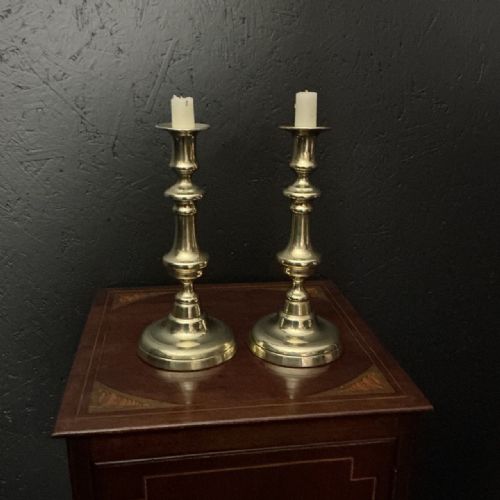
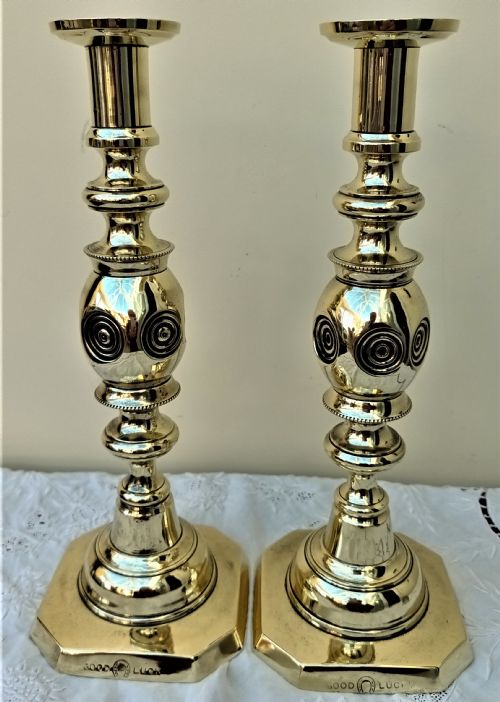
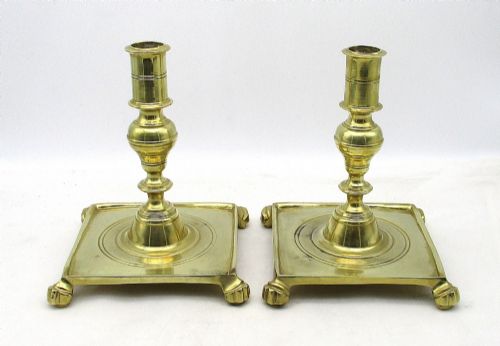
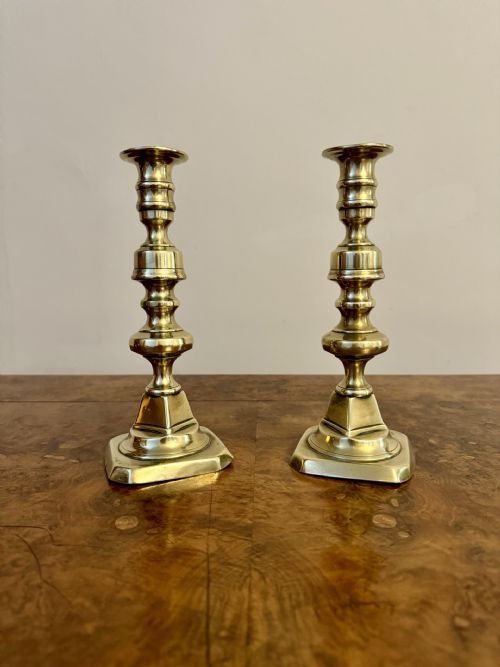

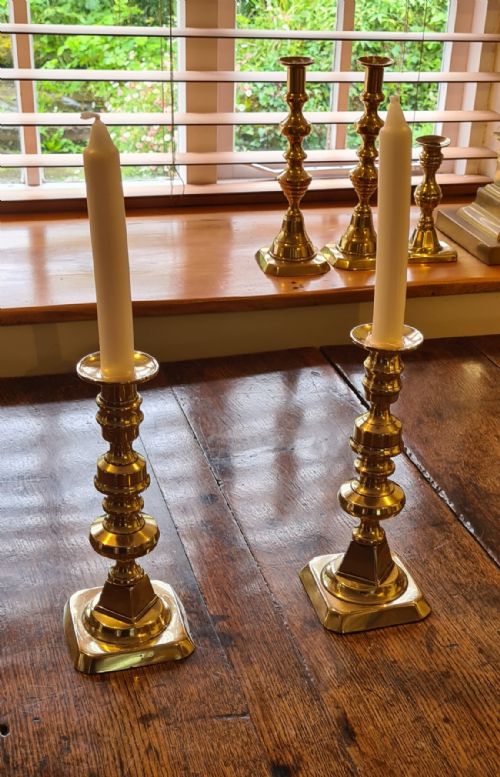
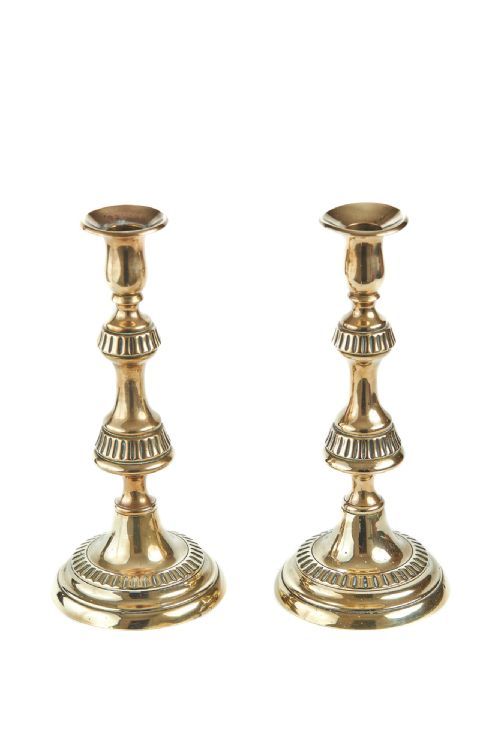
Traditional Brass Candlestick Pair
A traditional brass candlestick pair brings period warmth to a room, offering functional metalwork shaped across the centuries.
Traditional Brass Candlestick Pair
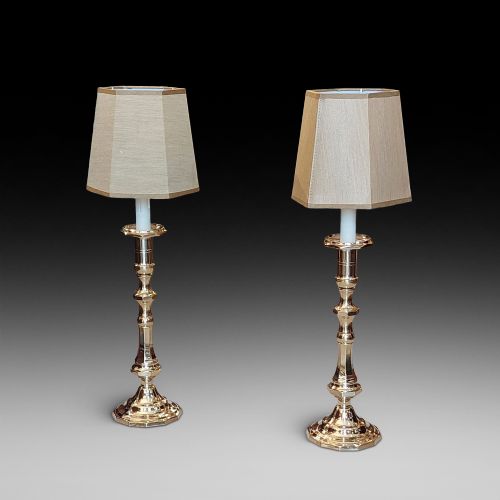
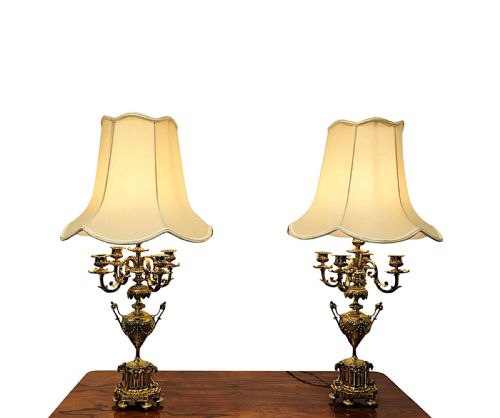
A traditional brass candlestick pair comprises matched metal holders designed for domestic or ecclesiastical illumination, appearing here in forms ranging from standard sticks to converted table lamps and student lights. The examples on this page span several eras, with nineteenth-century Victorian and Georgian styles appearing frequently alongside earlier revivals.
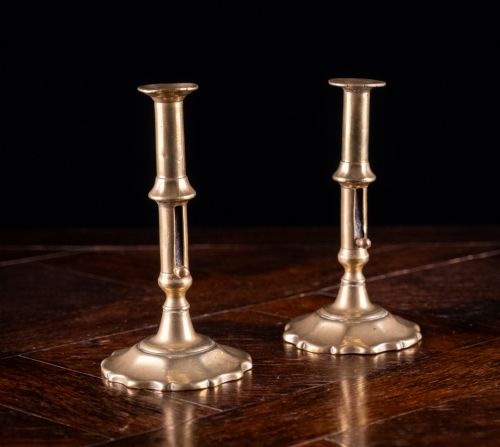
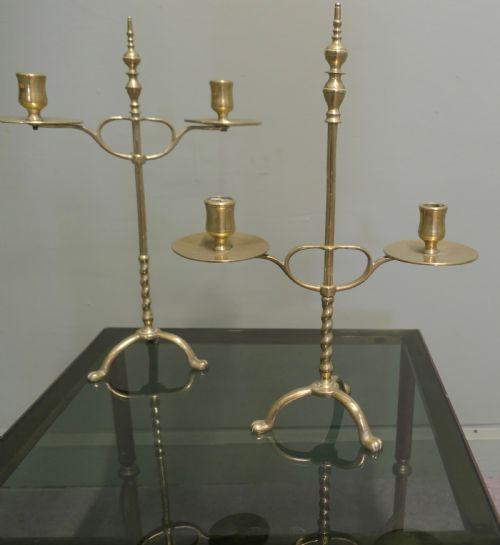
Buyers encounter various heights and configurations, including tall church pieces, seamed ejector models designed to push out spent wax, and double-arm arrangements. Mixed materials occasionally join the brass, incorporating oak, mahogany, glass, and fabric shades.
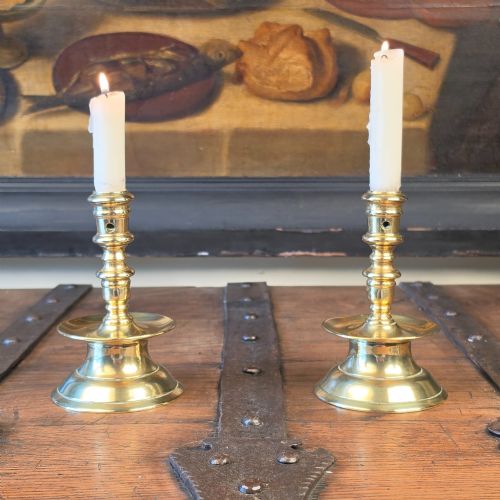
The aesthetic vocabulary stretches from restrained seventeenth-century style silhouettes to ornate Victorian casting and decorative twists. Selecting a traditional brass candlestick pair involves balancing these historic forms with the scale of a mantelpiece or tabletop.
Distinguishing quality in period pairs
Weight and metal thickness set apart superior examples, as heavier cast components indicate sturdiness and durability compared to thin pressed sheet metal. Crispness of detail in moulded or chased ornament also separates standard production from finer workshop output.
Integrity of construction matters greatly, particularly where separate sections join or where mechanical parts such as ejector mechanisms operate. Uniformity across the pair ensures that height, casting clarity, and base proportions match precisely.
Listings on this page span the 18th, 19th, and early 20th centuries, featuring materials such as brass, bronze, oak, and mahogany.
J.T. & Co
The Traditional Brass Candlestick Pair Glossary
- Ejector candlestick
- A domestic holder containing an internal sliding mechanism designed to push out the remaining stub of a wax candle. This mechanical element usually operates via a small side thumbpiece.
- Pricket candlestick
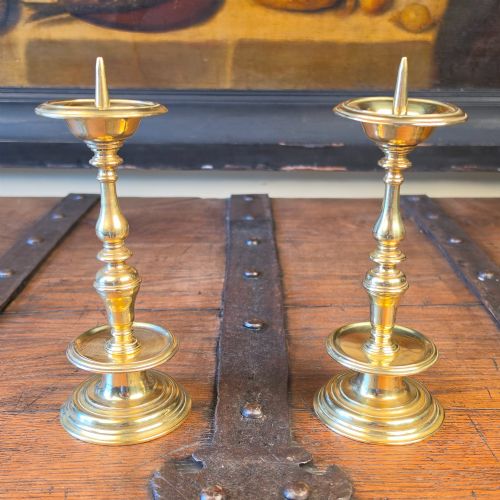
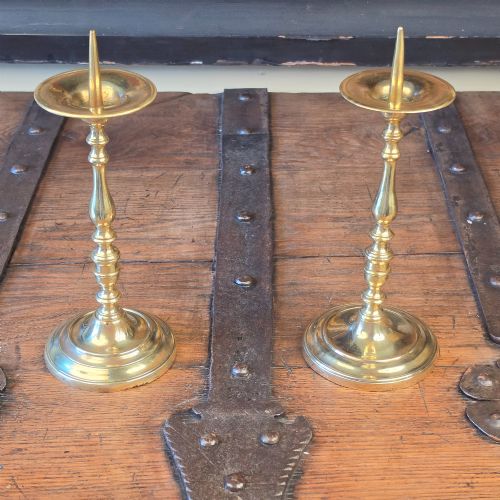
- A holder featuring a central metal spike upon which a wide candle is impaled, rather than a socket that surrounds the base of the candle. These forms frequently appear in ecclesiastical contexts.
- Column candlestick
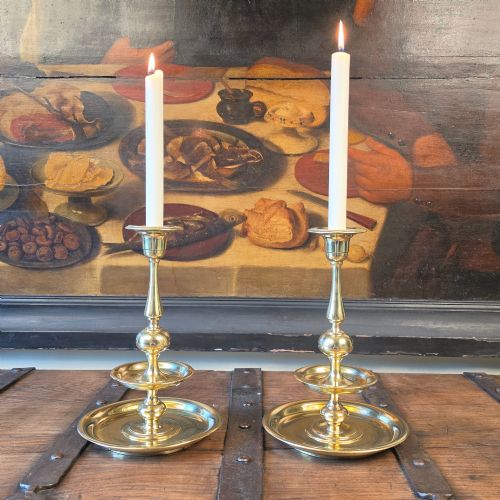
- A lighting form modelled after classical architectural columns, complete with a distinct base, shaft, and capital. They often draw on Georgian or Neoclassical design principles.
- Barley twist
- A spiral decorative carving or casting applied to the stem of a candlestick. This style appears in both metal and wood-turned combinations.
- Double arm
- A configuration featuring a central stem branching into two distinct nozzle holders. Such pieces provide increased illumination from a single weighted base.
Traditional Brass Candlestick Pair: Frequently Asked Questions
How do I date a brass candlestick pair?
Dating relies on observing manufacturing techniques, such as visible seams on older examples, alongside stylistic markers like Georgian column designs or ornate Victorian casting. Base construction and wear patterns also offer clues regarding the period of origin.
Comparing the proportions and weight against documented examples helps confirm whether a pair belongs to the eighteenth, nineteenth, or early twentieth century.
What is an ejector candlestick?
An ejector candlestick incorporates an internal push-rod mechanism operated by a small side lever. This allowed users to easily remove stubborn wax stubs without damaging the metal nozzle.
Such items are particularly characteristic of mid-eighteenth-century domestic lighting.
Can these candlesticks be used with modern candles?
Most antique sockets accommodate standard taper candles, though minor variations in historical sizing mean some candles require slight trimming at the base to fit securely. Ensuring the candle sits upright prevents dripping.
For pairs converted to table lamps, electrical fittings replace the original wax holders entirely.
How should I clean antique brass?
Gentle dusting with a soft cloth preserves the historic surface and maintains the natural oxidation accumulated over decades or centuries. Aggressive chemical polishes remove desirable patination and diminish the antique character.
If cleaning is necessary, mild soapy water dried immediately with a soft cloth is safest.