




Traditional Brass Taper Sticks
Traditional brass taper sticks are small, enduring domestic light holders that bring genuine period character and warm metallic lustre to a room.
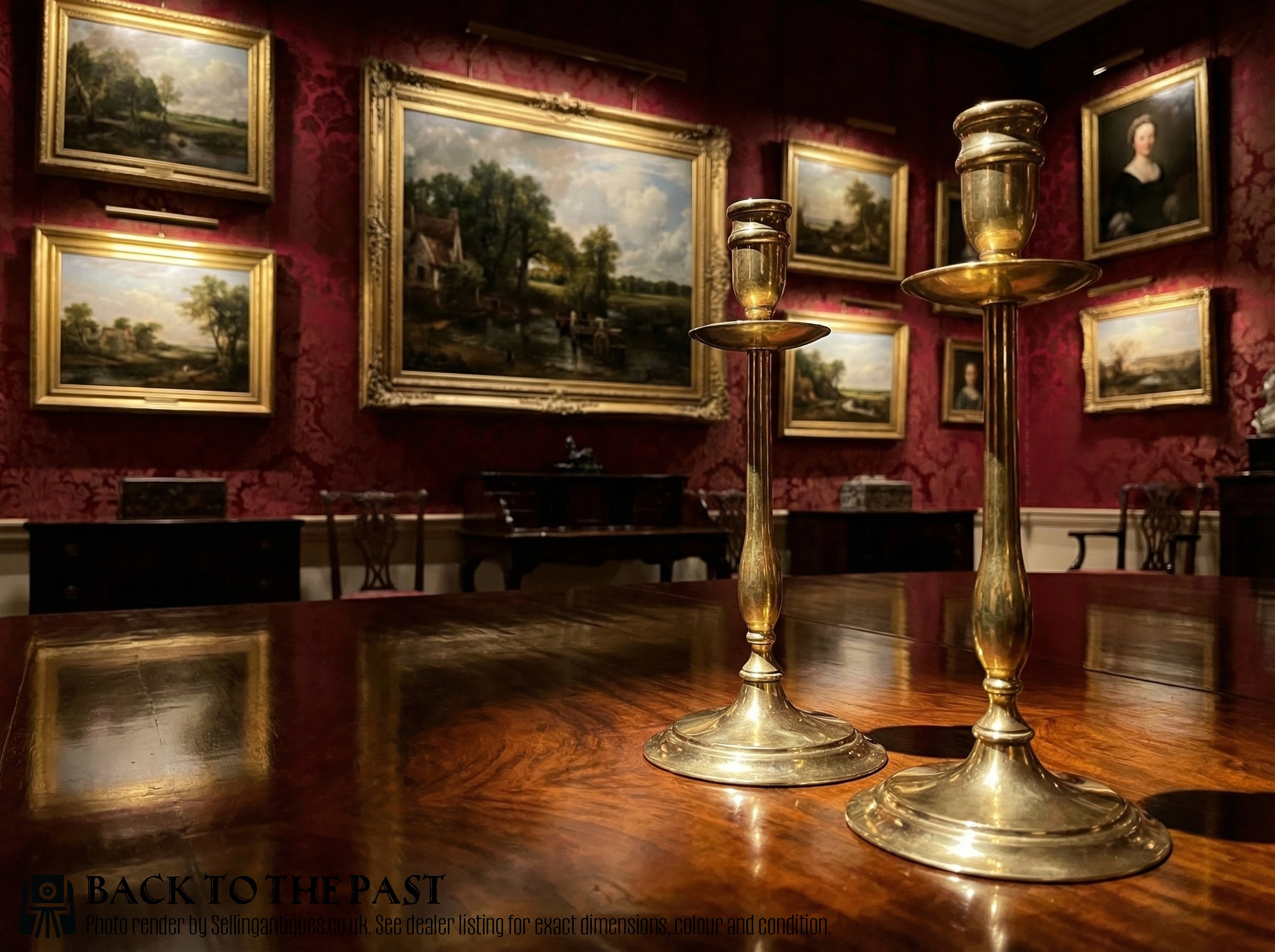
Traditional Brass Taper Sticks
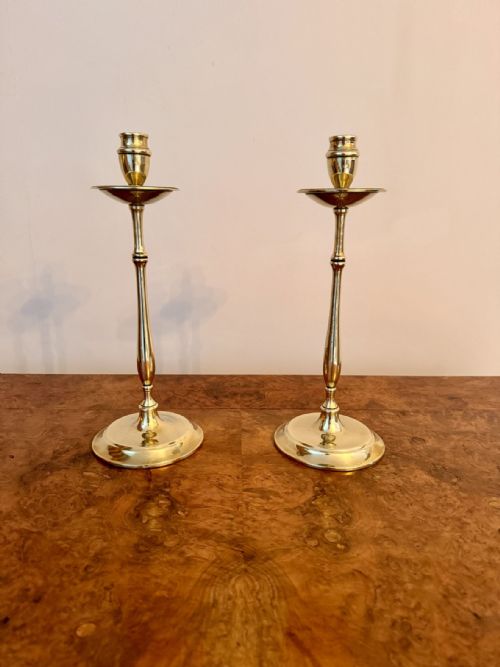
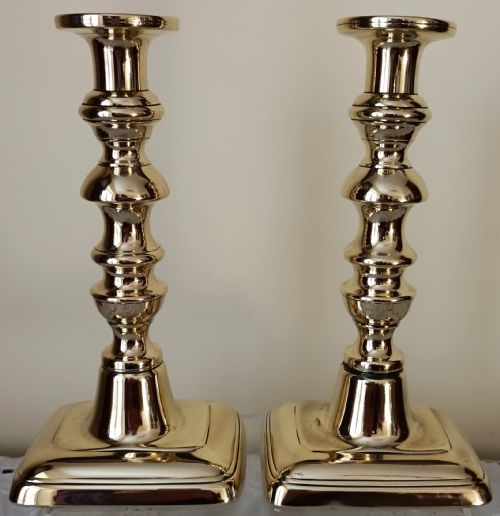
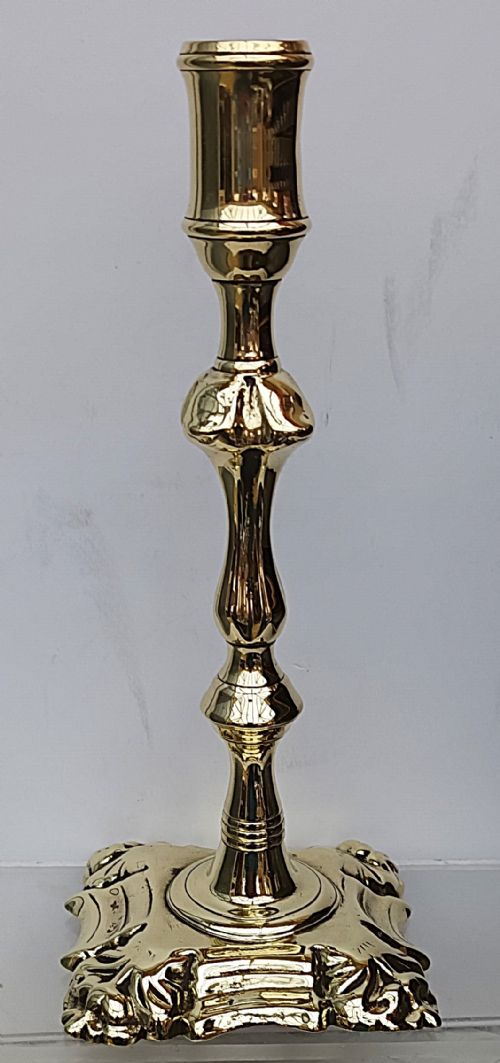
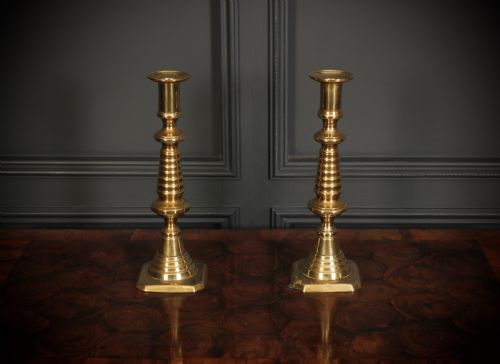
Traditional brass taper sticks comprise small candle holders designed primarily for melting sealing wax or providing portable illumination in domestic settings. When you search for traditional brass taper sticks, you encounter forms that span several distinct eras from the Georgian period through to the Edwardian age.
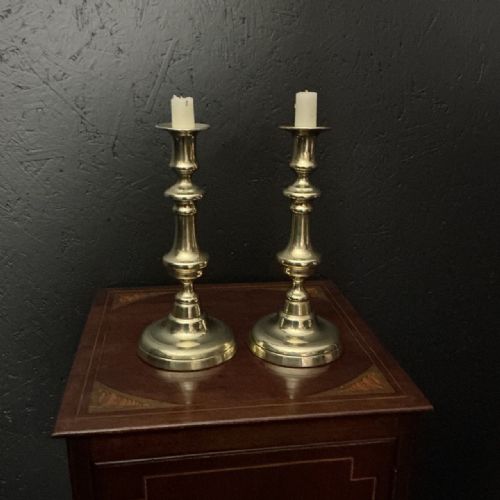
The selections on this page centre upon solid brass examples, frequently offered in matched pairs alongside single specimens. Most pieces adhere to established stylistic idioms such as Georgian, George II, and Victorian, reflecting the prevailing domestic tastes of their respective centuries.
How they were made
Makers utilised durable copper and zinc alloys, shaping the metal through casting techniques such as sand casting or using seamed construction methods. Individual components were then joined and finished by hand on lathes to achieve smooth profiles and secure joints.
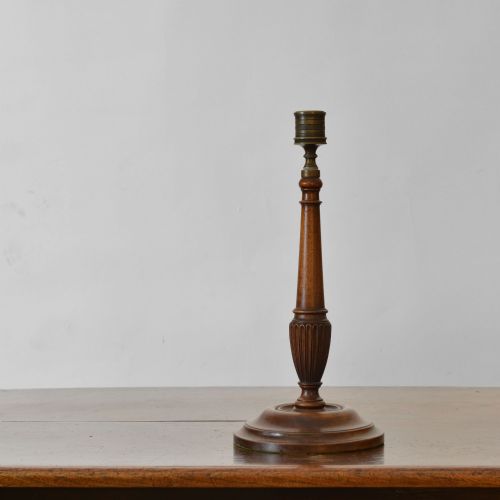
Certain examples incorporate wooden elements, notably mahogany bases or stems, combining two traditional materials to create contrasting textures within a single object.
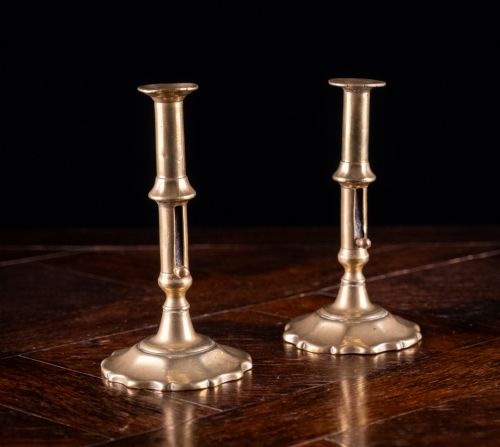
Some taper sticks include tiny internal pushers, proving that eighteenth-century writers hated digging stubborn wax out with a penknife just as much as we do.
What varies in quality
Quality rests upon the crispness of the casting detail and the heft of the metal utilised in the construction. Finer examples display clean lines, well-defined mouldings, and substantial weight that indicates generous metal content rather than hollow economy.
The integrity of the construction and the subtlety of the finish separate ordinary production from superior work. Pieces that retain harmonious proportions and deliberate detailing demonstrate the careful attention of the original metalworker.
J.T. & Co
The Traditional Brass Taper Sticks Glossary
- Taper stick
- A miniature candlestick designed specifically for holding thin wax tapers rather than large household candles. These smaller holders were kept on writing desks and side tables for sealing letters.
- Ejector
- A concealed internal mechanism featuring a small push-rod that lifts the remaining candle stump out of the socket. This practical addition makes removing spent wax significantly easier.
- Seamed
- Constructed from flat brass sheet rolled and joined down the side rather than cast as a single solid piece. This technique was common in eighteenth-century production.
- Hexagonal
- A stem or base shape possessing six distinct flat sides meeting at sharp or softened angles. This geometric form appears frequently on early eighteenth-century examples.
- George III
- The stylistic and historical period spanning the long reign of the third British monarch from the mid-eighteenth century into the early nineteenth century. Work from this era often shows refined classical proportions.
Traditional Brass Taper Sticks: Frequently Asked Questions
What is the difference between a taper stick and a candlestick?
Taper sticks are noticeably smaller than standard candlesticks, designed to hold thin wax tapers rather than heavy lighting candles.
Their compact scale suits writing desks and dressing tables rather than dining or mantel illumination.
How do I identify a Georgian brass taper stick?
Georgian examples often feature simpler, more robust casting forms, including stepped or square bases with pronounced knops on the stems.
Examining the construction methods and surface wear helps distinguish genuine eighteenth-century production from later Victorian revivals.
Were these pieces always sold in pairs?
Many survive as matched pairs because domestic interiors of the eighteenth and nineteenth centuries favoured symmetrical arrangement on mantelpieces and sideboards.
Single examples also appear frequently, reflecting pieces that became separated over centuries of household use.
How should I clean brass taper sticks?
Gentle dusting with a soft cloth preserves the aged surface patination that collectors appreciate on historic metalwork.
Avoid aggressive polishing compounds that strip away the subtle coloration accumulated over generations.