
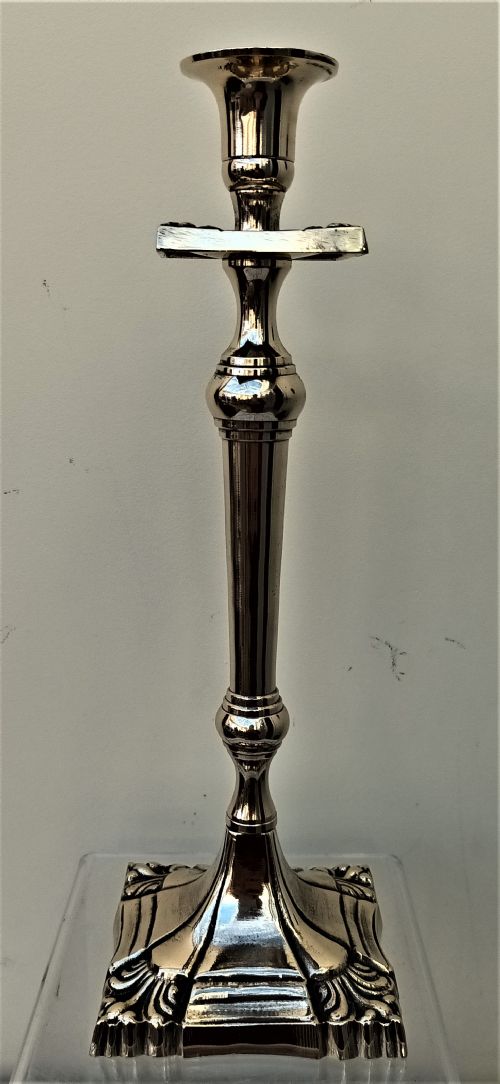
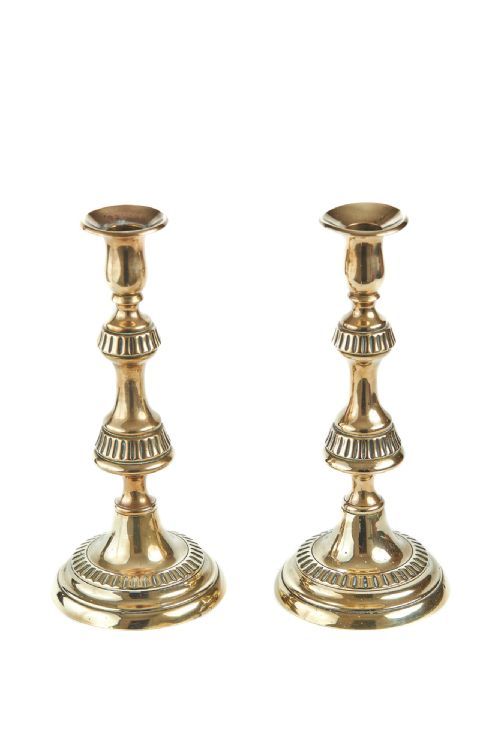
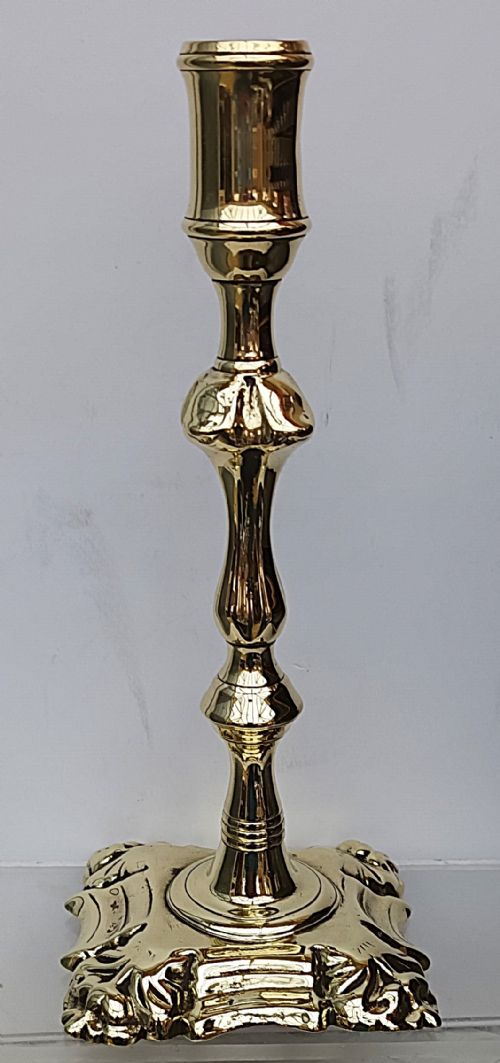


Ornate Brass Taper Holders
Ornate brass taper holders bring striking cast detail and period weight to a room, offering both function and decorative presence.
Ornate Brass Taper Holders
Ornate brass taper holders are solid metal candlesticks designed to burn small candles, frequently appearing in forms from the eighteenth, nineteenth, and early twentieth centuries. Buyers search for these pieces to add period character and warm metallic tone to a mantelpiece or side table.
The versions most commonly met on this page belong to the Victorian and Regency periods, alongside earlier eighteenth-century examples and later twentieth-century items. These objects encompass candlesticks, chambersticks, and heraldic designs in brass and cast bronze.
Makers shaped these items across several distinct aesthetic movements, including Georgian, Victorian Gothic Revival, and French Louis XV style. Each piece demonstrates the specific decorative vocabulary of its era through cast ornamentation and proportion.
How they were made
The construction of these pieces relies heavily on brass and cast bronze, materials chosen for their durability and capacity to take fine detail. Foundries shaped the metal using traditional casting techniques, producing weighty forms with substantial tactile presence.
Decoration on these holders emerged directly from the casting process and subsequent finishing work, incorporating heraldic motifs and period-specific ornamentation. The union of robust metal and intricate moulding allowed makers to achieve both structural stability and elaborate surface design.
Listings span the eighteenth, nineteenth, and early twentieth centuries, incorporating Georgian, Regency, and Victorian styles in brass and cast bronze.
What varies in quality
Quality in these items is determined by the crispness of the cast ornament and the overall weight of the metal. Superior pieces display sharply defined motifs and balanced proportions that reflect intentional design rather than hurried production.
The sophistication of the period style, whether French Louis XV or Victorian Gothic Revival, dictates the artistic ambition of the object. Finer examples maintain integrity in their decorative details across the entire form, from base to drip pan.
The Ornate Brass Taper Holders Glossary
- Brass
- An alloy of copper and zinc known for its bright golden appearance and durability. It serves as the primary material for the majority of these holders.
- Cast bronze
- A copper alloy utilised for heavier, highly detailed sculptural objects. This material allows for intricate casting work in specific stylistic pieces.
- Regency
- A design period spanning the early nineteenth century characterised by classical restraint and refined proportions. Pieces from this era often feature clean geometric lines.
- Chamberstick
- A short candlestick fitted with a pan and a handle for carrying through a house. This form is designed for practical illumination in domestic spaces.
Ornate Brass Taper Holders: Frequently Asked Questions
What are ornate brass taper holders?
These are small metal candlesticks and chambersticks created to hold thin candles for lighting rooms. They combine practical utility with decorative casting from various historical periods.
Collectors prize them for their period materiality and the distinctive styles that reflect the aesthetic tastes of their respective centuries.
How were these holders used historically?
People utilised them throughout homes to provide portable light before the widespread adoption of electricity. Chambersticks with side pans were carried along hallways to illuminate dark corridors.
Other standing candlesticks remained stationary on tables and mantelpieces to light specific rooms during evening hours.
How do I live with them?
Integrating these pieces into a modern interior involves placing them on mantelpieces, side tables, or bookshelves where their metallic surfaces catch the light. They work well grouped in pairs or mixed with other antique metalwork.
Care simply involves gentle dusting to maintain the natural patina of the brass without aggressive polishing.
How do I tell periods apart?
Dating these objects requires examining the stylistic vocabulary, such as the classical restraint of Regency design or the elaborate ornamentation of Victorian Gothic Revival. Each era employed specific casting methods and decorative motifs that evolved over time.
Reference to the listed periods from the eighteenth century through to the early twentieth century helps establish a chronological baseline for comparison.