




Cast Brass Candle Sticks
These cast brass candle sticks are heavy, sculptural items of lighting that bring weight and period character to a room.
Cast Brass Candle Sticks
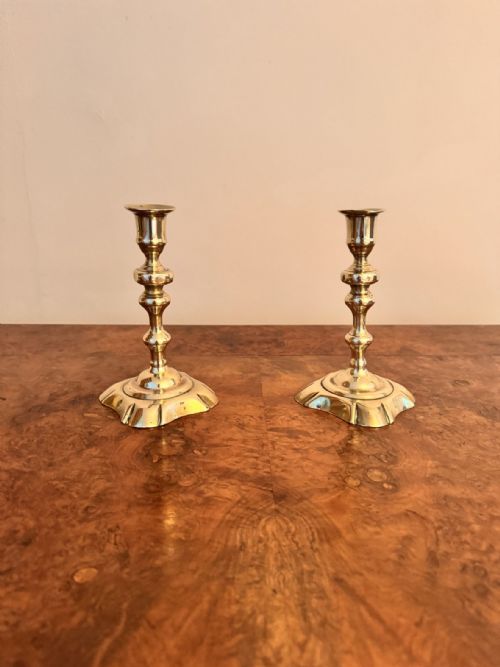
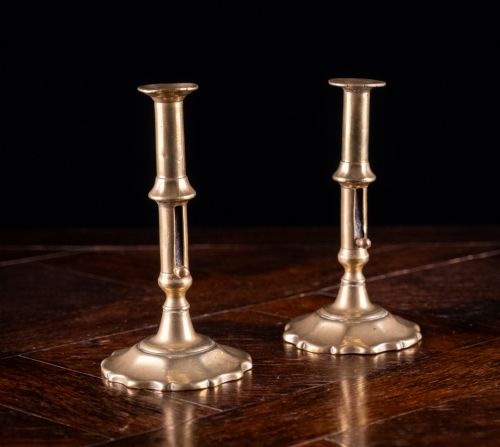
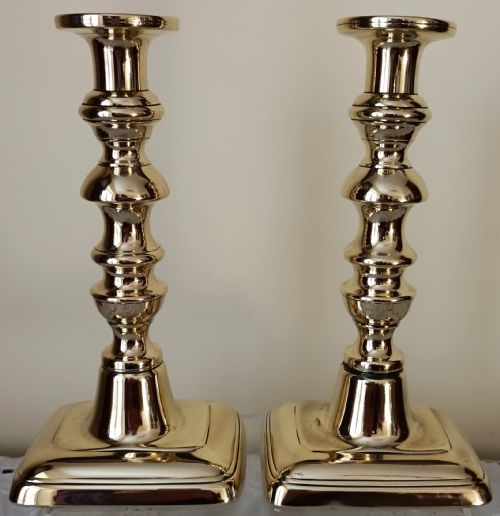
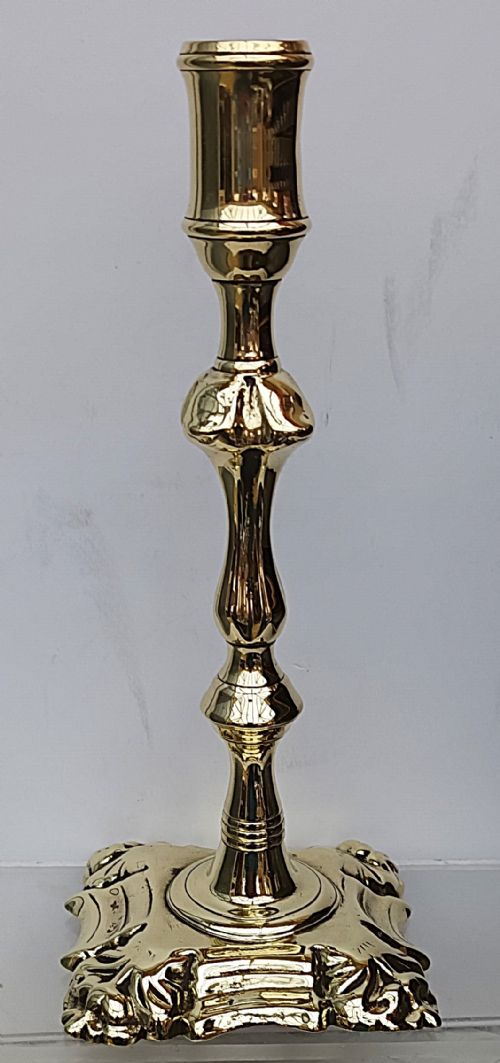
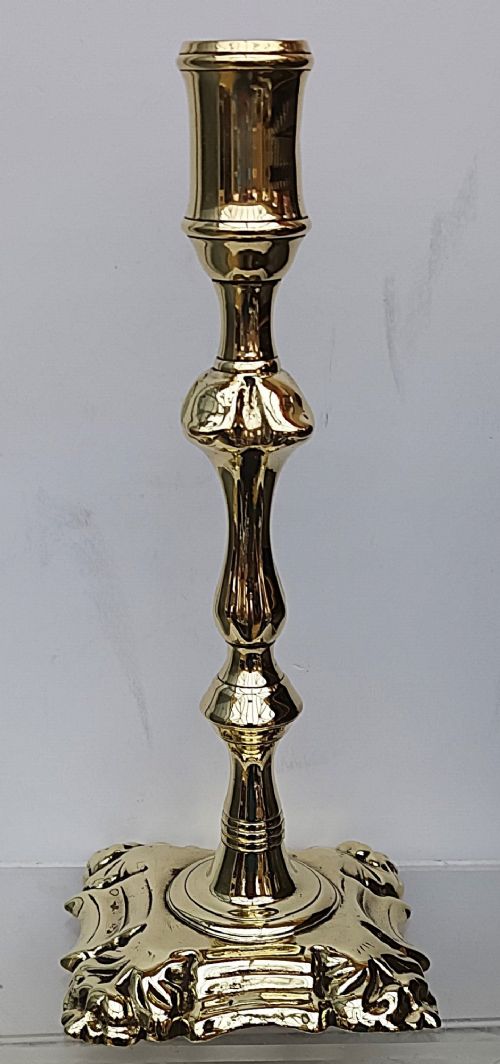
When you search for cast brass candle sticks, you encounter forms spanning from seventeenth-century Flemish prickets to Victorian novelties and twentieth-century ecclesiastical designs. The pieces on this page are predominantly pairs from the eighteenth and nineteenth centuries, taking forms such as baluster stems, petal bases, and ejector mechanisms.
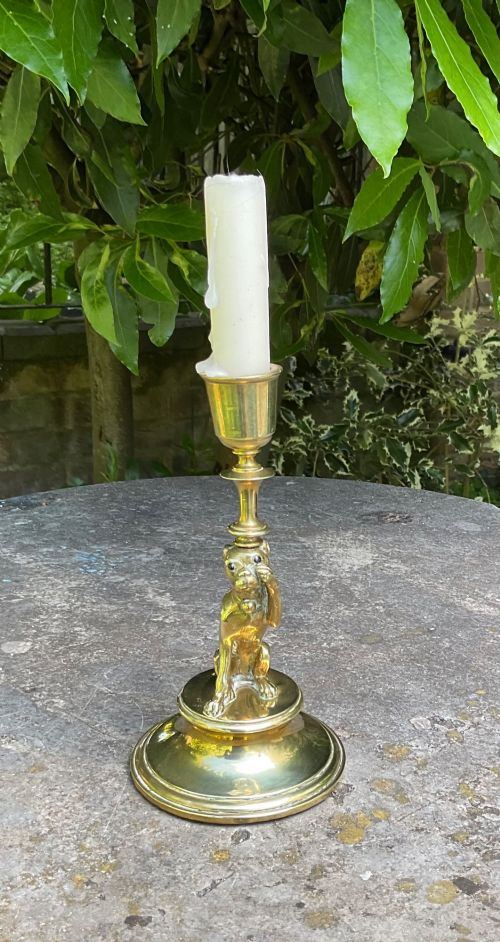
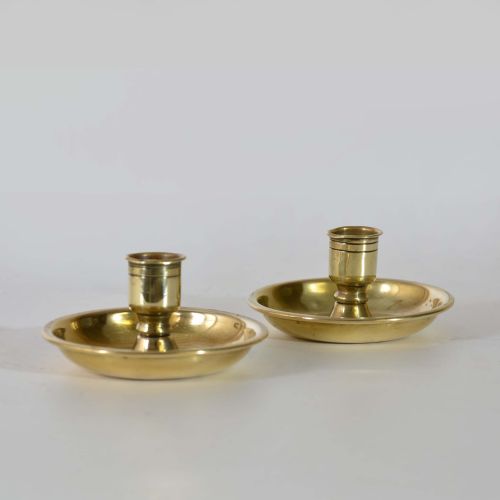
You find Georgian examples featuring multi-knopped stems alongside later Victorian interpretations in styles ranging from Gothic to Aesthetic Movement. Chamber candlesticks and travelling versions like Brighton buns also appear, reflecting the diverse domestic lighting needs of their eras.
Materials and construction
Makers utilised molten brass, bell brass, gilt bronze, ormolu, and paktong, pouring metal into moulds to achieve solid, substantial forms. Seamed construction is common in older examples, where components were joined before finishing on a lathe.
Surface treatments vary from polished finishes to remnants of gilding and the warm patination accumulated over centuries of handling and age.
Recorded periods stretch from seventeenth-century Flemish work through Georgian balusters to late Victorian novelties.
Judging quality
The distinction between ordinary production and superior work lies in the crispness of the casting detail and the heft of the metal used. Finer items exhibit sharp relief on ornamental elements like cherubs, heraldry, or floral motifs, while simpler pieces show softer contours from worn moulds.
Proportion and balance further separate the tiers, as better examples maintain a harmonious relationship between the base width, stem height, and socket size.
J.T. & Co·William Tonks
The Cast Brass Candle Sticks Glossary
- Ejector
- A concealed internal mechanism operated by a thumbpiece to push the remaining candle stump out of the socket. This ingenious device helps protect the metal from excessive heat damage.
- Baluster
- A turned column shape with a swelling lower portion resembling a small architectural baluster. It is a defining profile on many traditional stems.
- Paktong
- A copper-nickel-zinc alloy originating from China that mimics the appearance of silver. It was prized for its bright colour and used during the eighteenth century.
- Pricket
- A sharp metal spike set in the centre of a candle pan to secure a large candle, often found on ecclesiastical or early continental examples.
- Knoop
- A decorative swelling or ornamental knob on the stem of a candlestick. Multiple knoops add structural rhythm and visual weight to the profile.
Cast Brass Candle Sticks: Frequently Asked Questions
How do I date an old candlestick?
Dating relies on observing base shapes, manufacturing marks, and assembly methods. Early pieces often feature heavy cast construction with multi-knopped stems, whereas later nineteenth-century examples display distinct stylistic revivals like Gothic or Aesthetic motifs.
Examine the underside and joins for signs of seaming or hand-finishing. Subtle shifts in proportion and metal composition across periods help establish the likely decade of manufacture.
Were these used for everyday lighting?
These items served as primary sources of portable illumination in homes before the widespread adoption of gas and electric lighting. People carried chamber candlesticks between rooms to light their way along dark corridors.
Heavier table versions remained stationary in parlours and dining rooms. They required regular maintenance to trim wicks and clear wax drippings.
What is the difference between brass and paktong?
Brass is an alloy of copper and zinc, yielding the familiar golden hue seen on the majority of antique lighting. Paktong contains copper, nickel, and zinc, resulting in a paler, silvery appearance.
Paktong was imported from Asia at considerable expense and imitated silver before modern plating techniques became common. Its distinct metallic tone sets it apart visually from standard brass.
How should I clean antique brass?
Most collectors prefer to leave an aged patina intact rather than polishing metal to a bright, mirror-like shine. Gentle dusting with a soft cloth removes surface dirt without harming the historical surface.
Avoid abrasive chemical cleaners that strip away centuries of oxidation. Preservation of the natural darkening enhances the visual character of the piece.
Can I still burn candles in them?
You can burn candles provided the base is stable and the socket matches the candle diameter. Ensure the piece sits level on a secure surface to prevent tipping.
Use drip protectors or remove wax carefully with warm water rather than scraping tools. Modern taper candles often require slight paring at the base to fit older, narrower sockets safely.