


Claw Foot Candlesticks
Claw foot candlesticks combine sculptural metalwork and stone bases to elevate domestic lighting across centuries of interior design.

Claw Foot Candlesticks
Claw foot candlesticks bring together utilitarian candle holders and decorative figural bases, most frequently appearing in brass, bronze, and marble forms. When you search for claw foot candlesticks, you encounter items designed to support single candles or multi-branch candelabra.
The selections span distinct historical periods, running from seventeenth century Flemish prickets to nineteenth century Regency and Victorian interpretations. Brass and bronze examples dominate the offerings, often paired with marble plinths or ebonised wood components.
Forms range from short table candlesticks to tall column lamps and heavy church furnishings. French Empire and Gothic Revival styles appear regularly alongside simpler nineteenth century domestic designs.
Materials and Construction
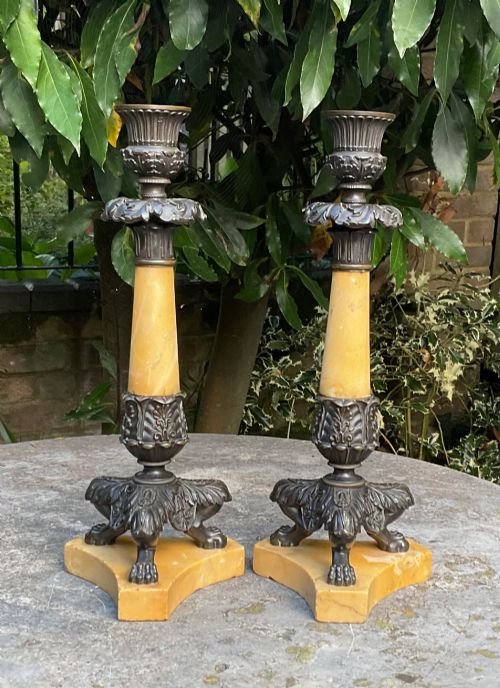
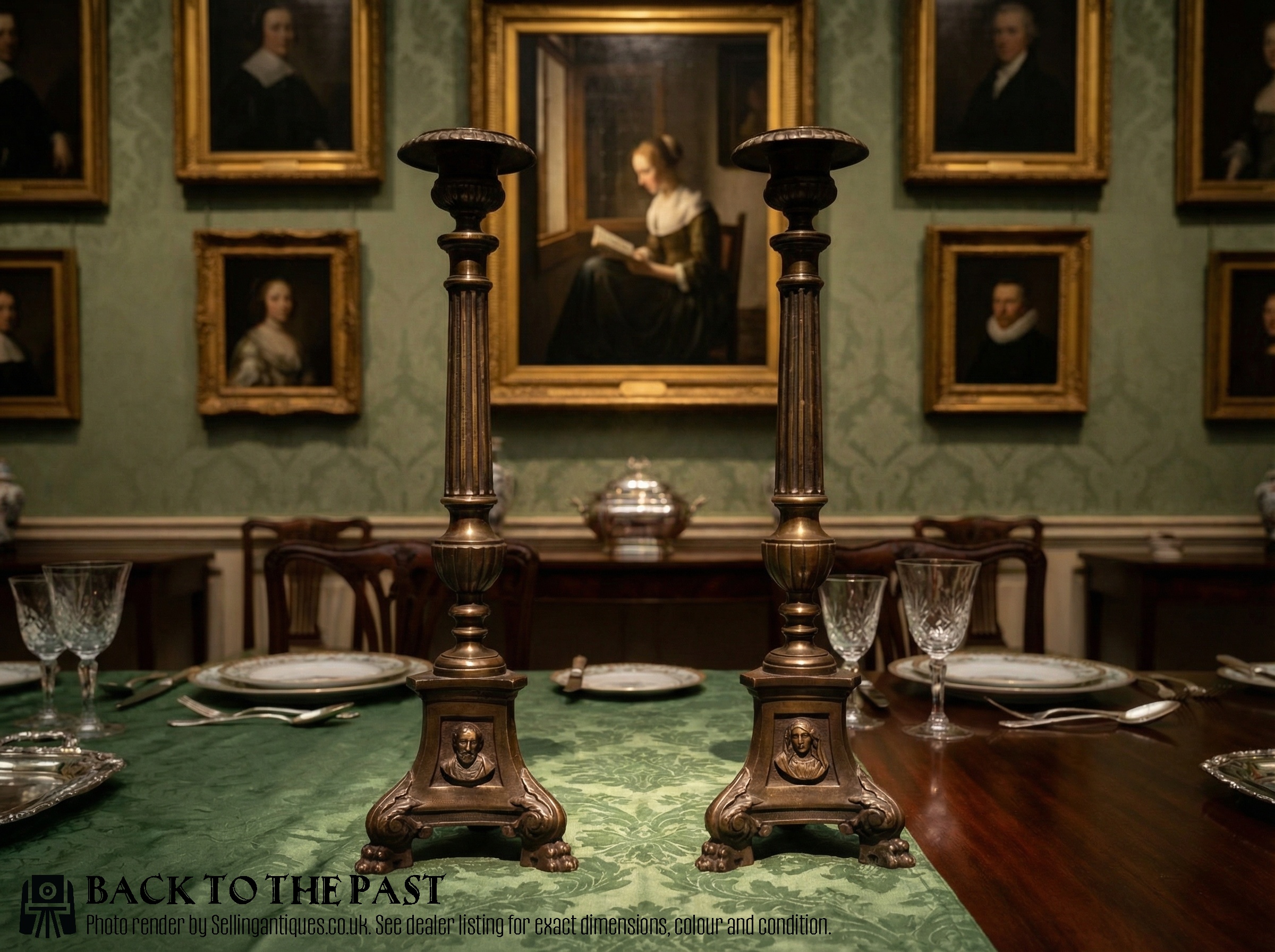
Makers utilised cast brass and patinated bronze for the upright shafts and decorative feet, combining these metals with sienna marble plinths and gilt bronze or ormolu mounts. Heavy metal casting allowed for detailed rendering of claw and paw feet supporting the main columns.
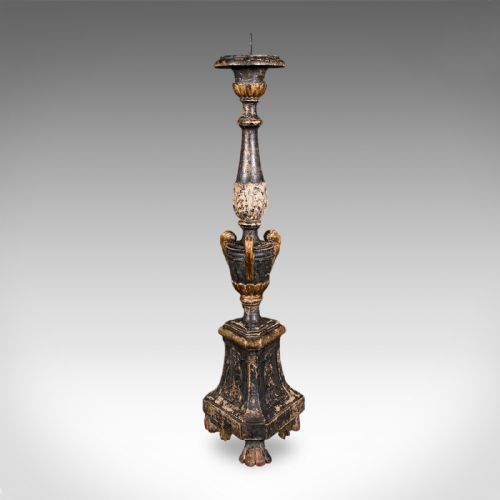
Surface treatments involve hand-finishing, patination, and occasional application of gold leaf or ebonised treatments to wood elements. Pricket versions feature central spikes to secure candles, while standard sockets accommodate tapered tapers.
Claw Foot Candlesticks Retail Price Guide 2026
Typical asking prices for claw foot candlesticks among the pieces listed under this phrase on Sellingantiques today, from the lower quarter to the upper quarter. They describe what is for sale here now, not the wider market.
Listings incorporate items spanning from the seventeenth century through to the 1930s, utilising brass, bronze, marble, and ebonised wood.
Assessing Quality and Execution
Superior examples demonstrate crisp casting definition in the claws and foliage, where individual toes and talons retain sharp edges rather than softened outlines. The integration between metal components and marble or wooden bases reveals the maker's precision.
Weight and balance indicate the integrity of the piece, with heavier bronze and brass castings providing stability to taller shafts. Surface patination achieved through age and handling adds depth that distinguishes accomplished workshop production from later reproductions.
The Claw Foot Candlesticks Glossary
- Pricket candlestick
- A candlestick featuring a central spike, or pricket, designed to impale and hold a candle secure. This form is common in ecclesiastical and earlier domestic lighting.
- Ormolu
- Finely ground high-carat gold applied to a bronze base using a mercury-gilding technique. This treatment creates a rich, durable golden surface.
- Patinated bronze
- Bronze that has developed a darkened or coloured surface through oxidation or chemical treatment. This finish highlights sculptural details.
- Sienna marble
- A yellow-brown decorative marble quarried in Italy, frequently used for architectural details and ornamental plinths. It provides a contrasting base for dark bronze mounts.
- Gothic Revival
- An architectural and decorative style drawing inspiration from medieval design forms. Pieces in this style often incorporate pointed arches and heavy ecclesiastical motifs.
Claw Foot Candlesticks: Frequently Asked Questions
How do I clean old brass candlesticks?
Dust the surface gently with a soft dry cloth to remove accumulated particles without disturbing the underlying patination. Avoid harsh chemical polishes that strip away age and diminish the historical character.
For stubborn residue, use mild soapy water on a damp cloth, drying immediately and thoroughly to prevent oxidation spots.
Were these candlesticks converted to lamps?
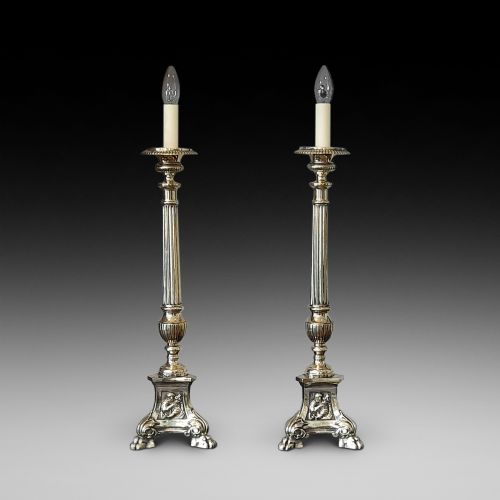
Several listings show candlesticks adapted into table lamps during later periods to accommodate electrical wiring. These conversions often retain the original brass or bronze shafts and marble bases.
Inspect the fitting entry points to understand how the original structure was modified for modern utility.
How do I date a brass candlestick?
Examine the casting method, tool marks, and overall wear patterns visible on the underside and socket interior. Earlier pieces often display rougher sand-casting textures and hand-finished seams.
Compare the stylistic motifs, such as Regency or Gothic Revival details, against documented historical design periods.