




Triform Base Candlesticks
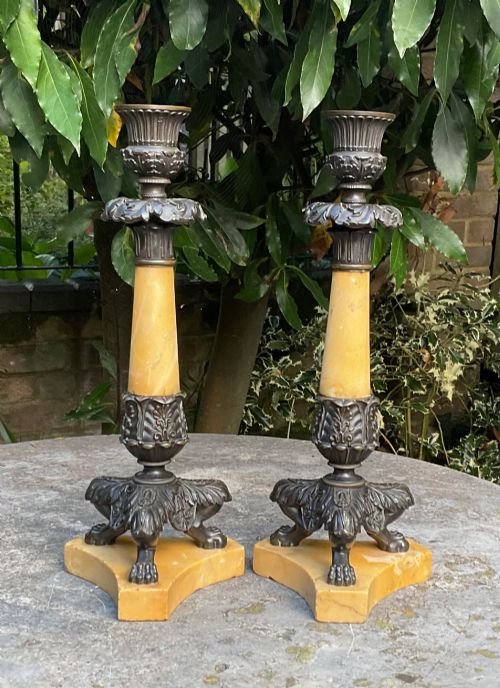
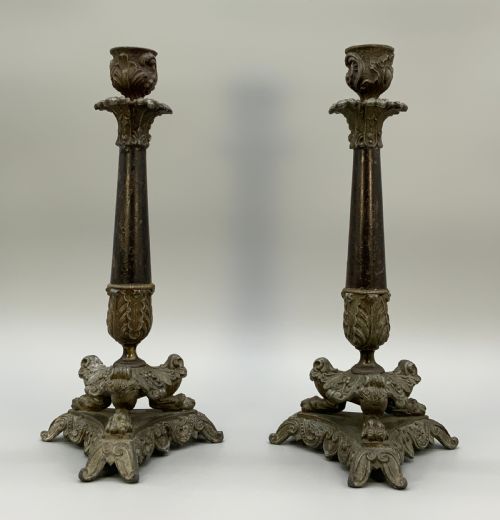
Triform base candlesticks are lighting supports resting upon three distinct feet, offering both architectural stability and a striking silhouette.
Triform Base Candlesticks
Triform base candlesticks are lighting fixtures designed with a three-sided or three-footed foundation, creating a stable and balanced platform for holding candles. When exploring triform base candlesticks, buyers encounter items ranging from domestic table holders to taller ecclesiastical altar pieces.
The selections span several periods, most notably the nineteenth century and the Regency era, alongside earlier eighteenth-century examples and later twentieth-century adaptations. Forms include standard candlesticks, multi-branched candelabra, and pieces later converted into table lamps.
Origin and style vary widely across the inventory, encompassing French Empire, Italian Baroque, and Victorian and Gothic designs. Metal and wood predominate, often reflecting the specific ecclesiastical or domestic contexts of their creation.
How they were made
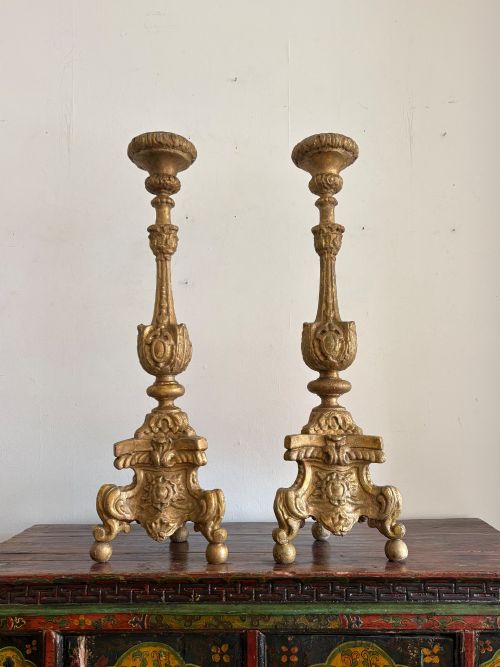
Metals such as brass, bronze, cast metal, and silver plate form the structural backbone of many examples, frequently shaped through casting and patination. Artisans also employed carved wood, gesso, and gold leaf, particularly in ecclesiastical contexts where decorative surface texture was paramount.
Marble frequently appears as a foundational or balancing element, pairing with patinated or gilt metals to add weight and visual contrast. Surface treatments range from polished brass to painted or patinated bronze and applied gold leaf over gesso.
Triform Base Candlesticks Retail Price Guide 2026
Typical asking prices for triform base candlesticks among the pieces listed under this phrase on Sellingantiques today, from the lower quarter to the upper quarter. They describe what is for sale here now, not the wider market.
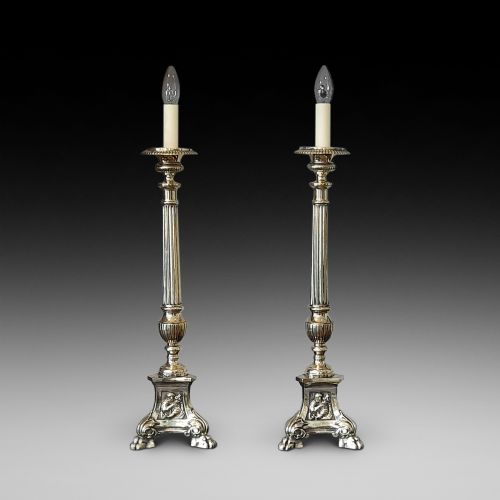
Several items on the page started life holding altar candles before quietly transitioning into modern table lamps.
What varies in quality
Quality in these pieces rests upon the crispness of the casting and the depth of the finish, whether in patinated bronze, carved wood, or applied gesso. Superior examples display harmonious proportions between the three-sided base and the stem, where every decorative moulding serves the overall architecture.
The choice of secondary materials, such as genuine marble plinths or substantial gauge brass, separates standard production from finer workmanship. Original surface treatments and untouched patination also elevate an object, reflecting the integrity of its period manufacture.
The Triform Base Candlesticks Glossary
- Triform
- Having three sides or feet arranged symmetrically around a central axis. This configuration provides a stable footprint for taller stems.
- Pricket
- A sharp metal spike set in the drip pan to impale a wax candle. This form is common in ecclesiastical and altar pieces.
- Gesso
- A plaster-like mixture applied to wood surfaces as a base for gilding or painting. It allows for crisp carved details before the application of gold leaf.
- Patinated
- The surface appearance altered by age, wear, or chemical treatment. In bronze and brass, this creates a dark, lustrous skin.
- Candelabra
- A branched candlestick holding multiple lights. These provide greater illumination than a single candle.
Triform Base Candlesticks: Frequently Asked Questions
What is a triform base?
A triform base is a foundation with three distinct feet or sides that spread outward for stability. This three-point stance is typical in classical and ecclesiastical design.
Such a configuration allows the weight of heavier metal or wooden stems to remain balanced. It also introduces distinct geometric angles to the silhouette of the piece.
How were these candlesticks used?
These pieces served practical lighting purposes in domestic rooms, chateaux, and churches before the widespread adoption of electricity. Many held standard wax candles to illuminate dark interiors.
Others functioned as altar candlesticks in ecclesiastical settings, holding large candles for ritual use. Over time, numerous examples were adapted to house electrical fittings as table lamps.
Are these pieces usually sold as pairs?
Many listings feature matching pairs, which were originally intended to balance mantelpieces, sideboards, or altars. Symmetrical arrangement was a core principle in historical interior decoration.
Single pieces also appear, often surviving from larger sets or originating as larger church pieces. Pairs generally command more attention from collectors seeking symmetry.
How do I identify the period?
Dating relies on stylistic clues, such as the classical motifs of the Regency and French Empire periods or the ornate carvings of Italian Baroque. Material combinations, including bronze paired with marble, often point to specific nineteenth-century manufacturing trends.
Construction methods, such as the type of casting seams or wood preparation under gesso, further clarify the era of production. Examining the wear patterns on the metal or wood helps confirm historical age.