

19th Century Candle Holders
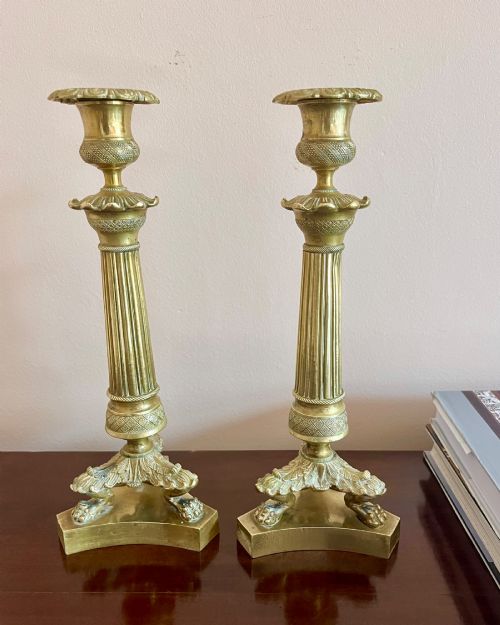
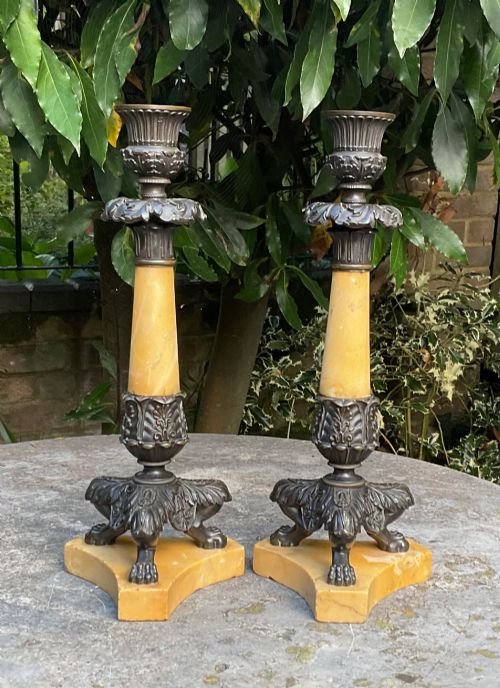
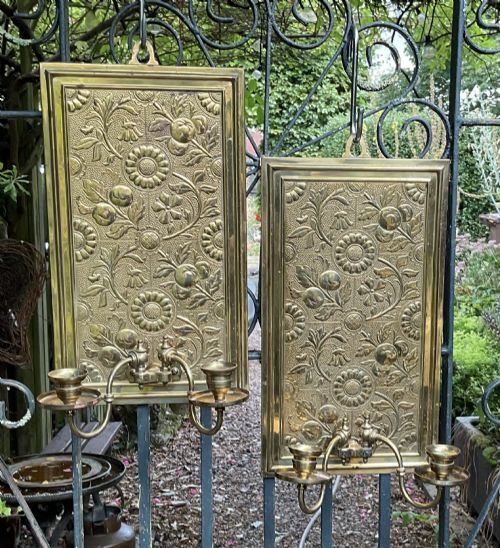
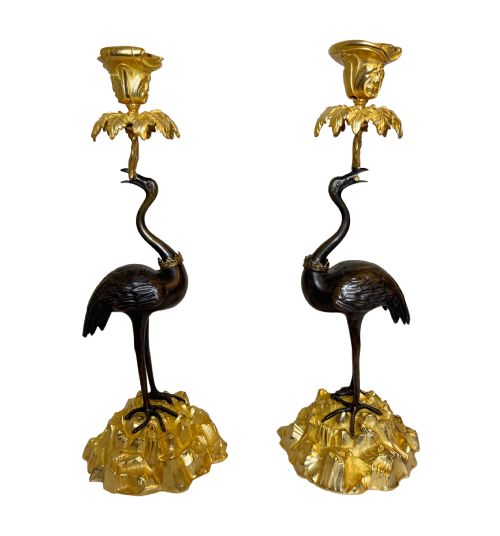
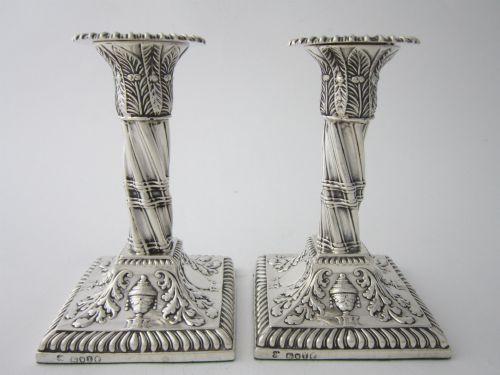
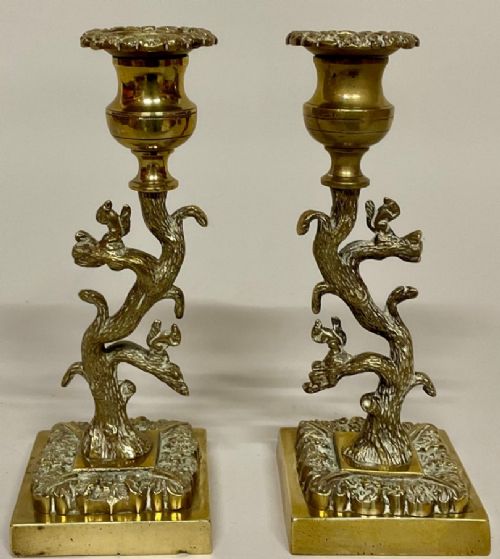
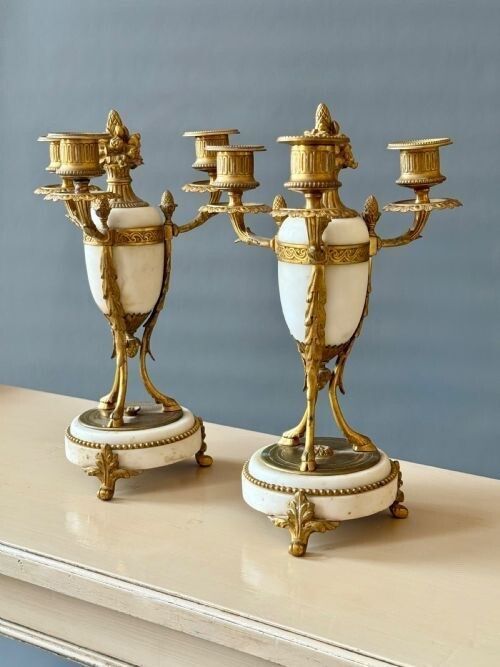
These 19th century candle holders bring period character to a room, ranging from grand French Empire models to turned walnut pairs.
What 19th century candle holders are
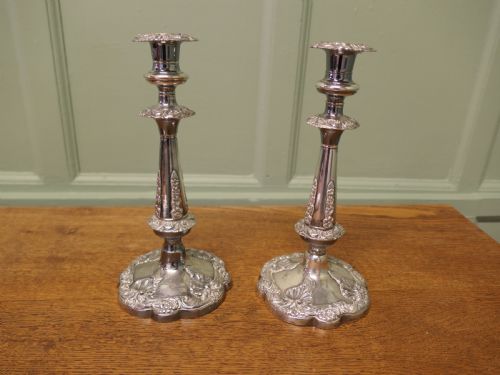
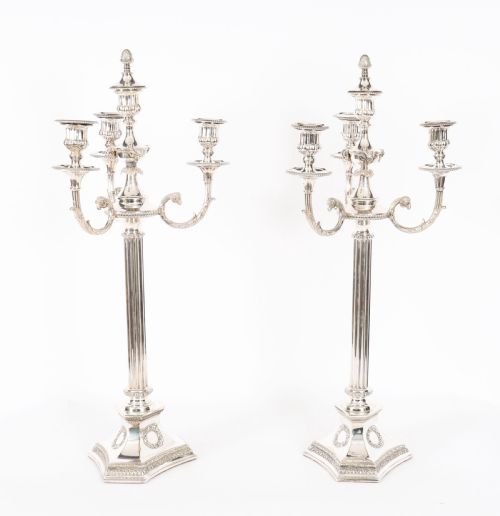
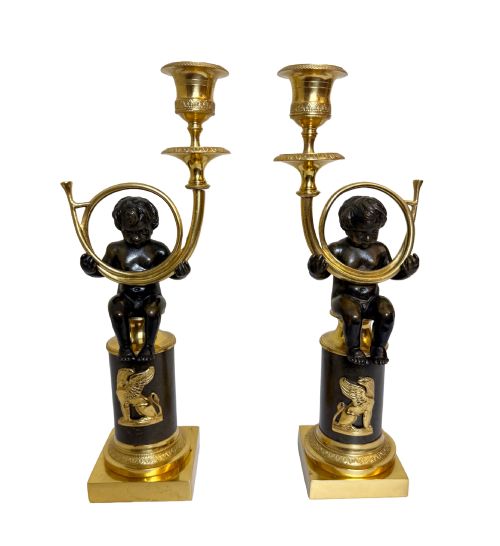
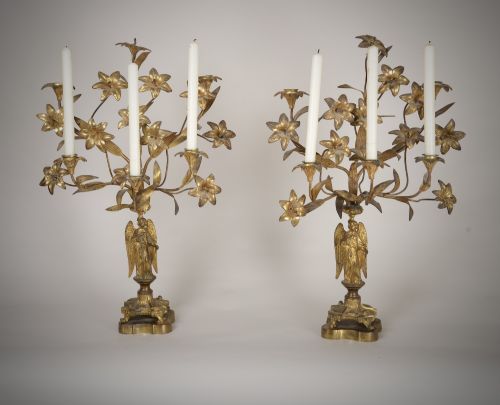
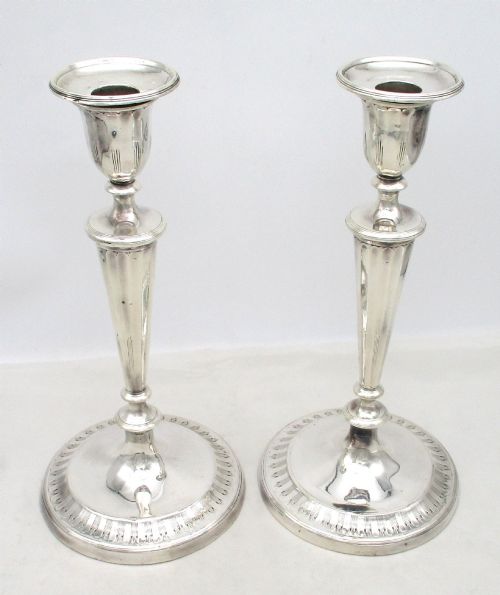
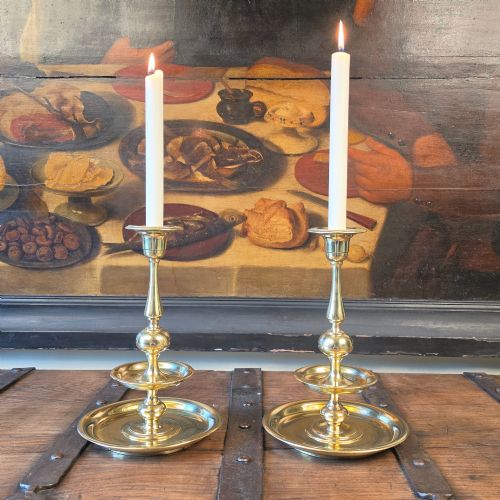
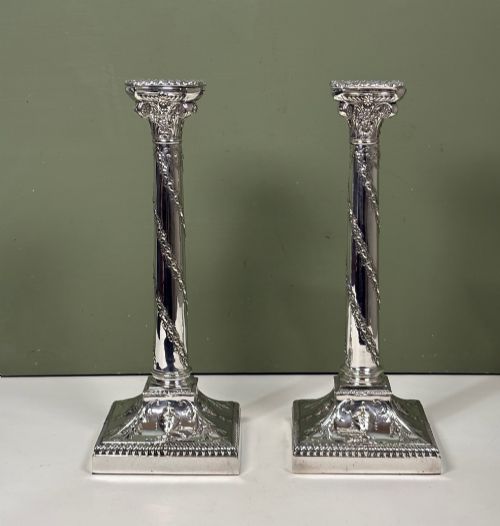
When you search for 19th century candle holders, you look at domestic lighting fixtures designed to hold wax or tallow candles upright before the widespread adoption of electricity. The examples appearing on this page span the Victorian and French Empire styles, taking the form of candlesticks rather than multi-branched candelabra.
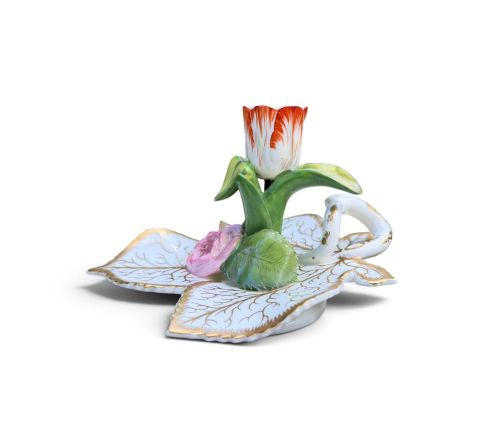
Most pieces seen here arrive in pairs, which reflects the traditional requirement for symmetrical mantelpiece or tabletop display. They range from simple turned wooden columns to sculptural animal forms and porcelain figures.
The materials and origins vary considerably across the selection, including British, French, and Italian examples. Buyers encounter everything from utilitarian brass to decorative gilt bronze and carved bone.
How they were made
Makers utilised casting techniques for metals such as brass, bronze, and cast metal, creating sculptural shapes including dogs, elephants, and cherubs with detailed surface finishing. Gold leaf was applied to enhance specific metallic elements on decorative pieces.
Woodworking techniques appear in walnut examples, where lathes shaped turned and spiral carved shafts. Ceramic items like porcelain incorporate enamel painting and fine modelling.
Specialised mechanical elements also appear in certain designs, such as internal springs used in Italian candle holders to push the candle upward as it burns down.
Retail Price Guide 2026
Typical UK retail prices for 19th century candle holders, calculated from the Sellingantiques database of over a million retail prices indexed since 2003. This retail price guide relies exclusively on Sellingantiques data; no external sources or auction records are used, so the figures do not describe the wider market.
The object types recorded in the inventory comprise candlesticks, figurine holders, and figural designs featuring animals and cherubs.
What varies in quality
The distinction between standard domestic items and superior examples lies in the crispness of the casting and the depth of the hand-finishing. Finely chased bronzes and intricate carvings on bone or wood show a level of artistry that elevates a utilitarian object into a decorative sculpture.
Material selection dictates much of the character, where solid walnut, heavy cast bronze, and hand-painted porcelain demonstrate greater substance than simpler cast metal substitutes. The preservation of original surface treatments, such as gilding or enamel work, preserves the intended visual impact of the piece.
Royal Worcester·James Hadley
The 19th Century Candle Holders Glossary
- Candlestick
- A portable device designed to hold a single candle in a vertical position. Most historical examples feature a sconce at the top and a widened base to prevent tipping.
- French Empire
- A neoclassical design style spanning the early nineteenth century, characterised by military motifs, classical symmetry, and rich gilding. Pieces in this style often display formal architectural lines.
- Gilt bronze
- Bronze metal treated with a thin layer of gold leaf or mercury gilding. This technique provides a durable, luxurious finish that resists tarnish.
- Spiral carver
- A woodworking term describing a shaft turned on a lathe with a twisted, helical flute. This decorative turning adds dynamic movement to wooden candlesticks.
Frequently Asked Questions
How do I clean antique brass candlesticks?
Clean brass candlesticks gently using a soft cloth and warm soapy water to remove accumulated dust and wax residue. Avoid harsh abrasive polishes that can strip away the historical patina built up over generations.
Dry the metal thoroughly after cleaning to prevent spotting. Preserving the natural darkening in the recessed areas enhances the definition of the cast details.
Were these holders used for dining tables?
Domestic lighting in the nineteenth century relied heavily on portable candlesticks moved from room to room as needed. Taller pairs typically served on mantelpieces or sideboards for ambient illumination.
Smaller single sticks were carried up to bedrooms or placed on desks. Their sturdy bases kept the flame secure during movement around the house.
How do I identify French Empire style?
French Empire pieces display strict symmetry, classical proportions, and motifs drawn from ancient Rome and Greece. The metalwork often combines polished and matte finishes to create visual contrast.
These designs convey a sense of formal weight and authority. They stand apart from the more eclectic and ornate Victorian aesthetic.
What is a spring-loaded candle holder?
A spring-loaded holder uses an internal coil mechanism inside the stem to push the candle upward automatically. As the wax melts down, the spring maintains the flame at a constant height.
This ingenious nineteenth-century device was particularly useful in reading lamps and specialised domestic settings. It eliminated the need to manually adjust the candle position.