
Antique Taper Candle Holders
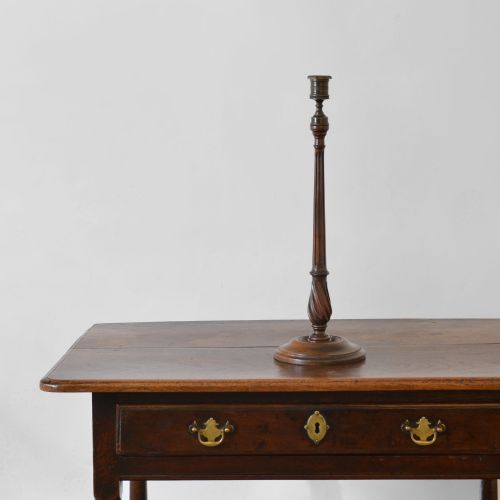
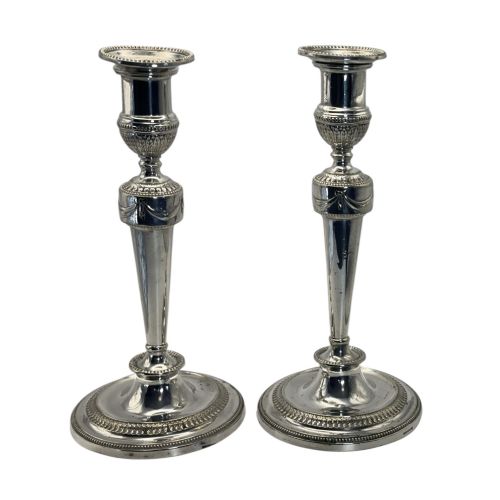
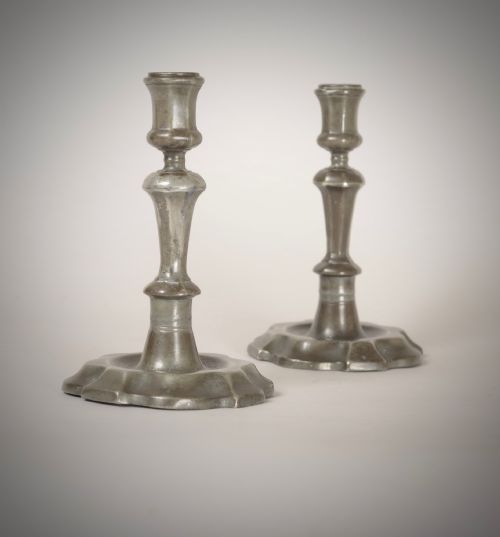
These antique taper candle holders bring candlelight to a room in brass, silver, porcelain and bronze.
Antique Taper Candle Holders
When you search for antique taper candle holders, you meet candlesticks and chambersticks spanning the Georgian, Victorian, Edwardian and Art Deco periods. The selection runs from utilitarian brass and pewter forms to decorative porcelain and silver pieces designed for desks and dining tables.
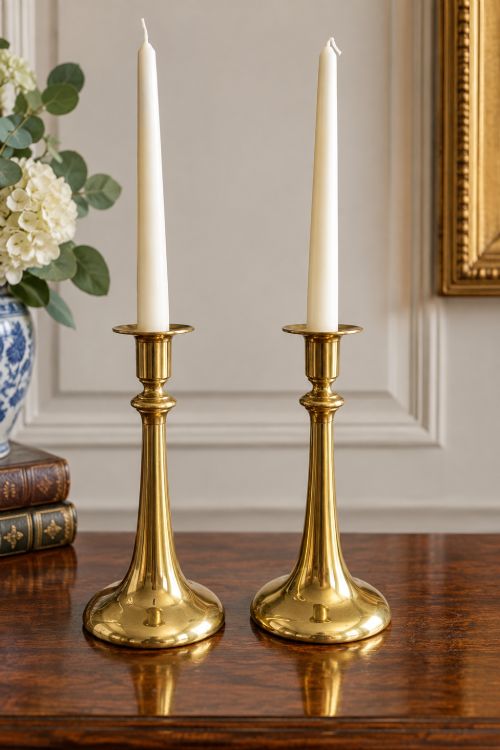
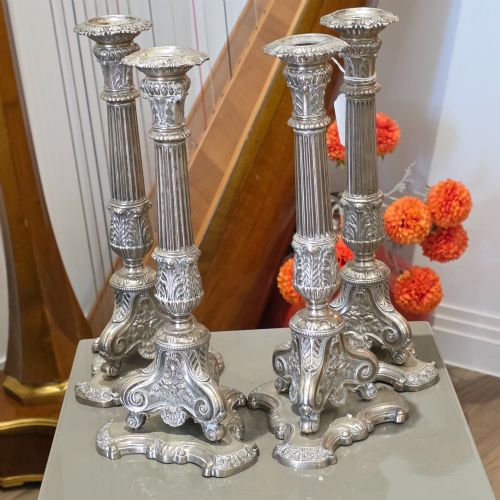
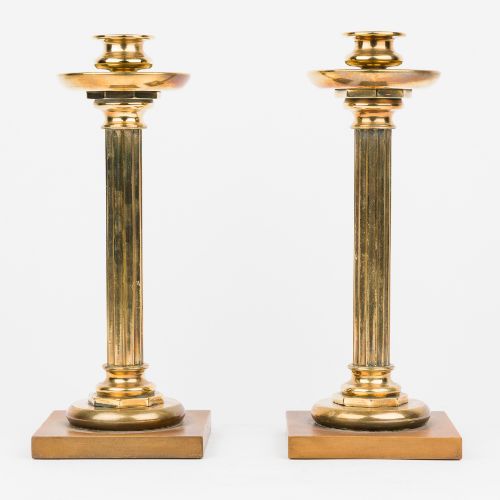
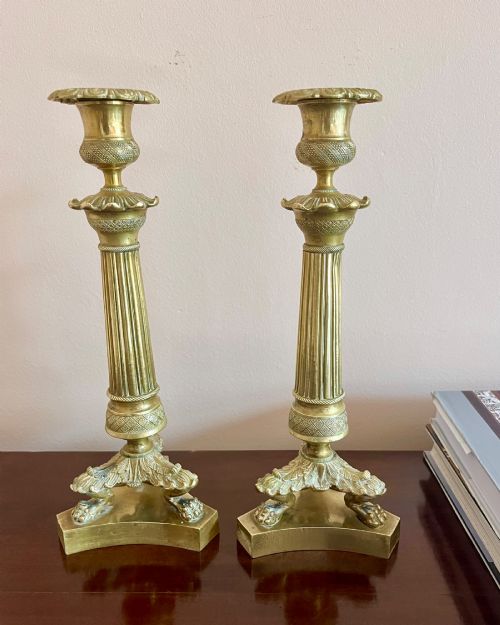
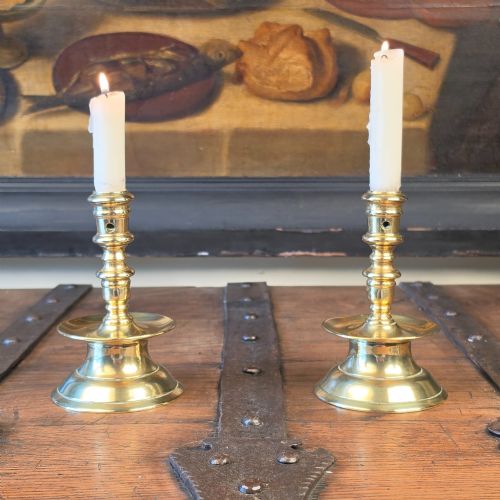
Brass examples from the eighteenth and nineteenth centuries dominate the selection, often taking classic petal or ejector forms. Alongside these sit silver plated and sterling silver columns, together with porcelain figures and metal chambersticks.
Materials and Construction
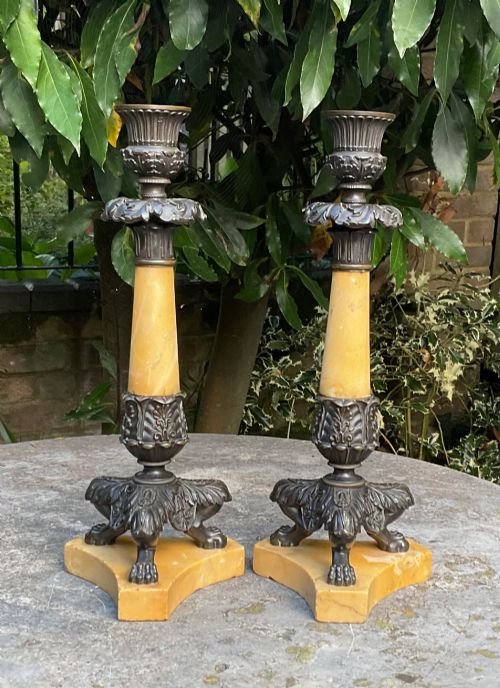
Makers shaped metal pieces through casting and seaming, notably in brass and bronze, leaving subtle tool marks on older examples. Silver and silver plate required forming sheet metal over cores or casting heavier components for domestic illumination.
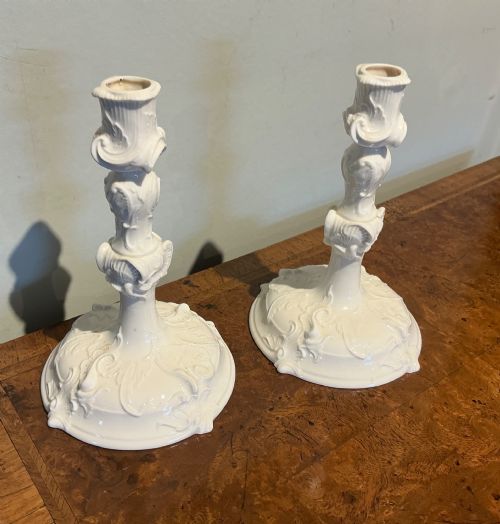
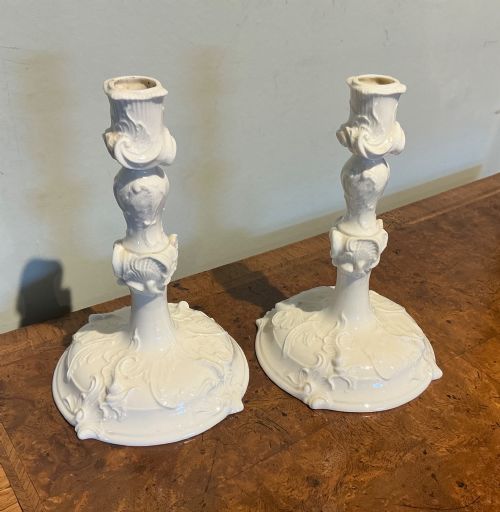
Ceramic versions utilise porcelain and ironstone bodies finished with hand-painted glazes and moulded foliage patterns. Ironstone and porcelain examples combine ceramic moulding with decorative enamel finishes.
Listings feature candlesticks in materials ranging from sterling silver and bronze to porcelain, pewter and brass.
Distinctions in Execution
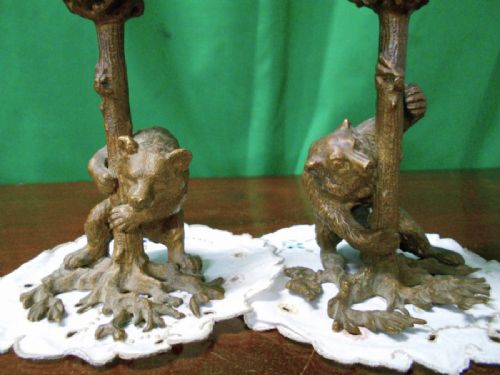
The degree of crispness in cast ornament separates standard domestic production from finer workshop output. Sharp detail in brass bases and clean lines in cast bronze demonstrate superior craftsmanship.
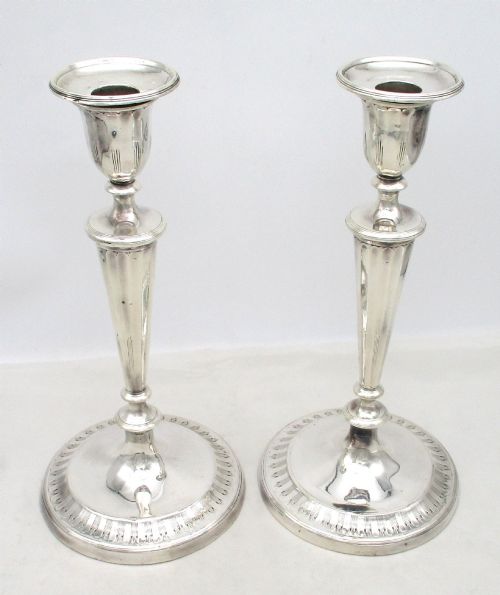
The weight and gauge of the metal influence the substance of silver and brass examples. Heavier castings and substantial gauge silver plate provide better stability and structural integrity.
Mappin & Webb·Nymphenburg·Ridgway·Barr Flight And Barr·WMF
The Antique Taper Candle Holders Glossary
- Ejector candlestick
- A brass candlestick containing an internal mechanism to push out the remaining candle stump. This device uses a small slider or rod fitted inside the stem.
- Chamberstick
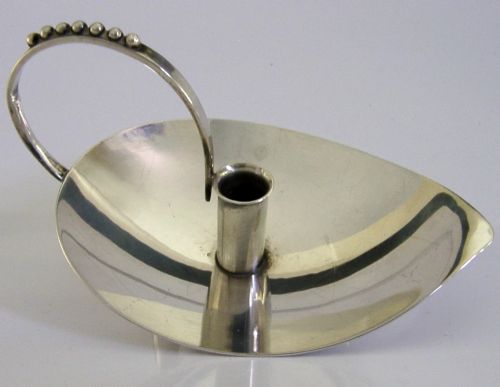
- A short candlestick set upon a wide saucer pan with a handle. It served for carrying light through a house at night.
- Old Sheffield plate
- A material made by fusing a thin sheet of silver to a thicker copper base. It predates electroplating and shows a characteristic copper seam along edges.
- Telescopic candlestick
- A design featuring adjustable stems that alter the height of the light. These pieces slide internally to raise or lower the candle nozzle.
- Corinthian column
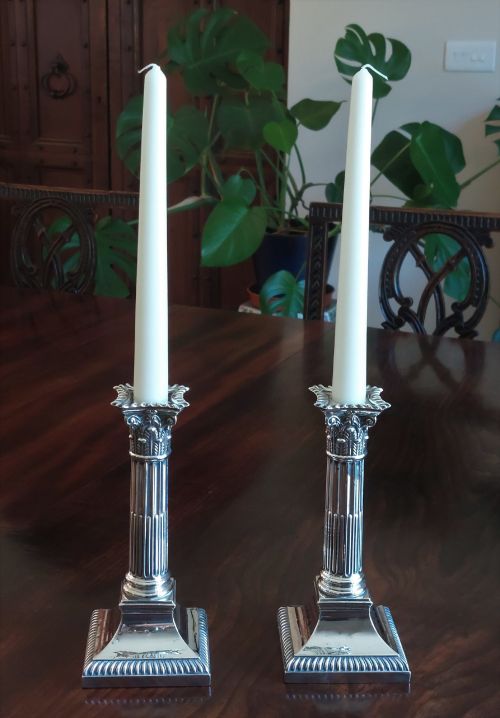
- A classical architectural order frequently used for the stems of silver and plated candlesticks. The capital displays ornate acanthus leaves.
Antique Taper Candle Holders: Frequently Asked Questions
How do I clean antique brass candlesticks?
Wash brass pieces gently in warm soapy water using a soft cloth to remove surface dirt. Avoid harsh abrasive cleaners that strip the aged patina developed over centuries.
Dry the metal thoroughly with a soft towel to prevent water spots. Most collectors prefer retaining the darker tones accumulated in recessed areas.
What is the difference between silver plate and sterling silver?
Sterling silver consists of solid precious metal meeting a specific purity standard throughout the entire object. Silver plate applies a thin layer of silver over a base metal such as copper or brass.
Hallmarks help distinguish the two materials by showing purity marks for sterling or maker marks for plated items. Plated pieces may reveal the base metal where wear occurs over time.
How were chambersticks used in period homes?
Chambersticks provided portable illumination for lighting a person's way to bed along dark hallways. The attached saucer caught dripping wax while the loop handle allowed a secure grip.
Many designs included a small conical snuffer resting in the saucer to extinguish the flame safely. They sat on hall tables until needed for evening routines.
How do I date an antique brass candlestick?
Construction methods offer the clearest clues to age, such as seamed stems found on mid-eighteenth-century examples. Base shapes evolved from heavy square forms to petal bases and circular Regency designs.
Tool marks and casting flaws also indicate earlier production before industrial manufacturing standardisation. Comparing base weights and wear patterns helps place pieces within specific decades.