


Rococo Bronze Candlesticks
Rococo bronze candlesticks bring asymmetrical curves and naturalistic motifs to a room, offering the weighty presence of nineteenth-century metalwork.
Rococo Bronze Candlesticks
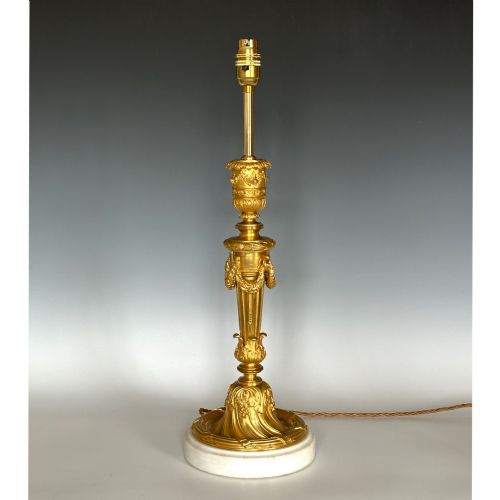
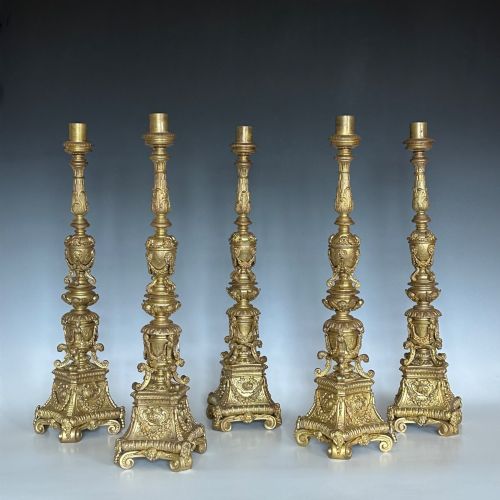
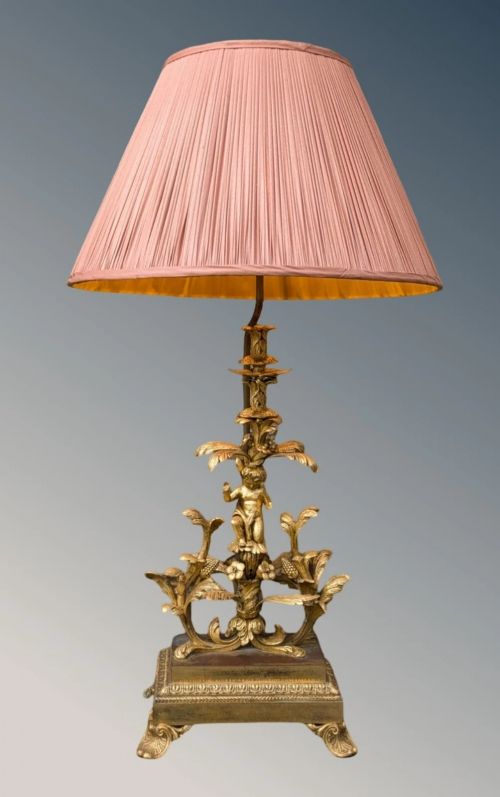
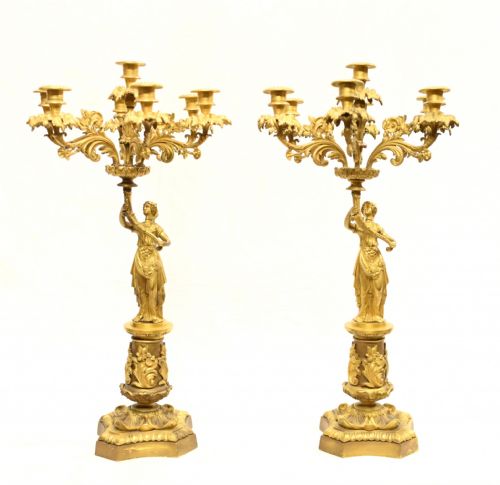
When buyers search for rococo bronze candlesticks, they encounter nineteenth-century revival pieces modelled after earlier eighteenth-century French designs. These items span single candlesticks, multi-branch candelabras, and examples later converted into table lamps.
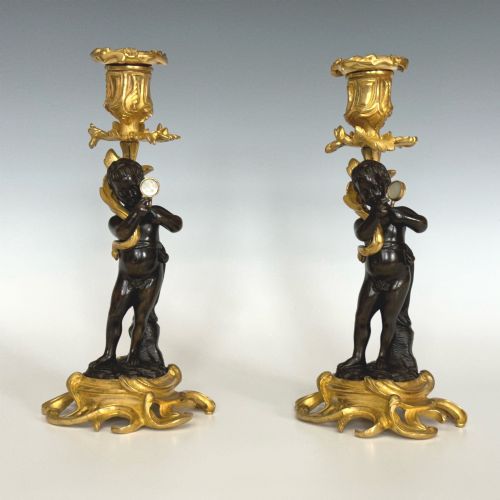
The selections on this page lean heavily towards French manufacture in styles such as Louis XV and French Second Empire. Pairs featuring figures like cherubs, putti, and mermen upon marble bases appear frequently among the listed objects.
How they were made
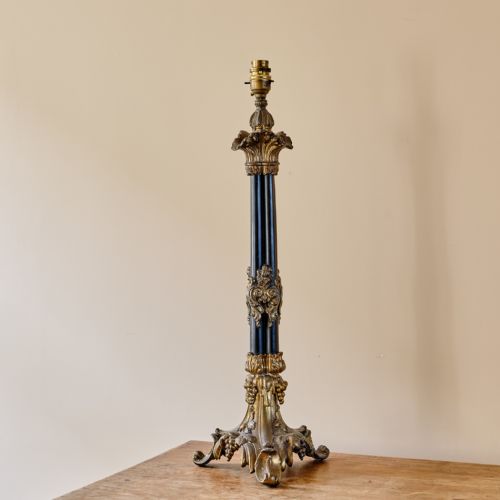
The physical construction relies on cast bronze and brass, often finished with ormolu, which involves applying a finely ground high-carat gold amalgam to the bronze base. Patinated bronze also appears, offering a darker, contrasting metallic surface against the bright gilt details.
Marble frequently provides a stable, weighty base for the cast bronze figures and scrolling arms. Glass and fabric elements occasionally supplement the metalwork, particularly in pieces adapted later into lamps or fitted with lustres.
What varies in quality
The crispness of the chasing separates finer examples from simpler production, as artisans manually refined the cast metal surfaces with chisels and punches to sharpen scrollwork and foliage. Softer, blurred details suggest a worn mould or minimal hand-finishing.
Weight and construction complexity also dictate the tier of an object. Solid cast components, multi-branch configurations with intricate figural work, and integration with quality marble plinths indicate higher workshop standards.
The Rococo Bronze Candlesticks Glossary
- Ormolu
- A technique of applying finely ground gold to bronze, creating a rich golden surface that resists tarnishing. It defines the lustrous finish seen on many French revival pieces.
- Candelabra
- A branched candlestick holding multiple candles on a single base. These often feature removable arms or central finials.
- Rococo
- An eighteenth-century style characterised by asymmetrical scrolls, shell motifs, and natural forms. Nineteenth-century revival pieces heavily imitate these flowing lines.
- Patinated bronze
- Bronze treated with chemicals to produce a darkened surface colour rather than a gold-gilt coating. It highlights the muscular or sculptural contours of figures.
Rococo Bronze Candlesticks: Frequently Asked Questions
How do I clean bronze candlesticks?
Dust gently with a soft, dry cloth to protect the metal surfaces and any applied gold finishes. Avoid using harsh chemical polishes that can strip away ormolu or alter the historic patina.
Water and moisture should also be kept away from the metal and any incorporated marble bases. Regular gentle maintenance preserves the original appearance without wearing down the fine chased details.
Were these converted into lamps?
Many nineteenth-century candlesticks and candelabras underwent conversion to electricity as household lighting preferences changed over time. Wiring paths were often threaded through the central column to accommodate bulbs without destroying the main structure.
Some buyers prefer keeping them in their original candle-holding state, while others appreciate the utility of a converted table lamp. Reversible adaptations sometimes allow collectors to switch between candle use and electrical illumination.
How do I identify French revival pieces?
Nineteenth-century French revival items typically display heavy cast bronze construction paired with meticulous hand-chasing. Motifs directly copy earlier Louis XV patterns, featuring exaggerated curves, asymmetric cartouches, and organic plant forms.
Foundry marks or specific casting numbers occasionally appear stamped on the underside or base rim. The inclusion of components like white or dark marble plinths also points towards nineteenth-century manufacturing standards.
Where should I display them?
These decorative objects suit placement on mantelpieces, sideboards, or console tables where their reflective gilt surfaces catch ambient light. Pairs look balanced when placed at either end of a surface or framing a central mirror.
Due to their substantial weight from bronze and marble, sturdy furniture is required to support them safely. Keeping them away from direct heat sources protects any internal wiring or delicate surface patination.