
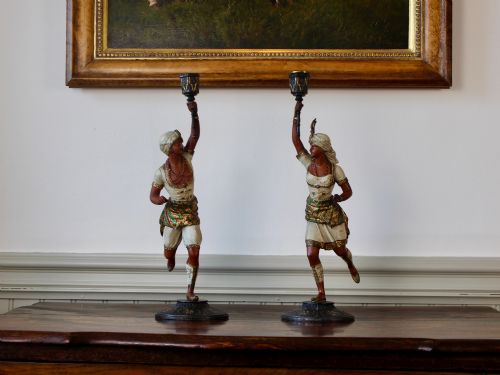


Decorative Bronze Table Candlesticks
These decorative bronze table candlesticks combine structural metalwork and rich gilding, offering both period illumination and a striking display form for the tabletop.
Decorative Bronze Table Candlesticks
When buyers search for decorative bronze table candlesticks, they seek domestic lighting objects designed to sit on furniture surfaces while adding sculptural presence to a room. The selections found on this page span several distinct periods including the eighteenth century, the Regency era, and the nineteenth century.
The objects take various forms, appearing as single sticks, balanced pairs, and multi-branched candelabra, occasionally wired or adapted as table lamps. Styles draw heavily upon continental European design traditions, encompassing French Empire, Rococo, Louis XVI, Neoclassical, and Venetian aesthetics.
Most examples rely on cast metal foundations, sometimes incorporating figural elements such as putti, dolphins, or human figures. Buyers frequently encounter pairings that make symmetrical mantelpiece or table arrangements possible.
How they were made
The primary construction of these pieces relies on metal casting using bronze, spelter, cast brass, and ormolu. Artisans employed detailed mould-making to achieve intricate figural and ornamental surface reliefs.
Gilding techniques, particularly ormolu, applied a gold layer over bronze to create a durable, lustrous finish that contrasted with dark patinated bronze sections. Additional decorative depth came from cold painting, enamel work such as cloisonné, and combinations with carved marble bases.
The listings span the eighteenth century, the nineteenth century, and the Regency period, utilising bronze, ormolu, marble, and painted spelter.
What varies in quality
The quality of the mercury gilding or ormolu finish separates fine studio work from commercial production. Better pieces also maintain complete original components, such as matched drip pans and unified mounting screws, without clumsy replacement parts.
The Decorative Bronze Table Candlesticks Glossary
- Ormolu
- A gilded bronze technique utilising a mercury amalgam to bond gold to a bronze base. This process creates a rich, lasting metallic lustre found on high-status period lighting.
- Spelter
- A zinc alloy used as a less expensive alternative to bronze for cast decorative objects. It is often painted or finished to imitate heavier metals.
- Candelabra
- A branched lighting fixture designed to hold multiple candles simultaneously. These pieces often feature a central shaft dividing into several arms.
- Restauration
- A French design period bridging the late Neoclassical and early Victorian eras. Objects from this time balance classicism with emerging decorative warmth.
- Cloisonné
- An enamelling technique where wires are soldered to a metal base to create compartments filled with coloured paste. This decoration adds vibrant pattern to the metal body.
Decorative Bronze Table Candlesticks: Frequently Asked Questions
How do I clean bronze candlesticks?
Dust the surface gently with a soft, dry brush to prevent the accumulation of dirt within recessed areas.
Avoid using abrasive metal polishes or chemical cleaners, as these can strip away historic patination and surface gilding.
Are these candlesticks safe for use?
Standard candlesticks are designed for traditional taper candles and require careful placement away from drafts.
Pieces adapted as lamps require modern electrical inspection by a professional to ensure safe domestic use.
How can I tell the period?
Examine the casting style, assembly methods, and surface wear against known design movements like Louis XVI or Regency.
Tool marks and fastener types often provide reliable clues regarding the age of the metalwork.
Can I mix different pairs?
Displaying contrasting pairs works well if heights and patination share a similar visual weight.
Symmetrical arrangements benefit from matching heights, while varied groupings allow for eclectic interior displays.