
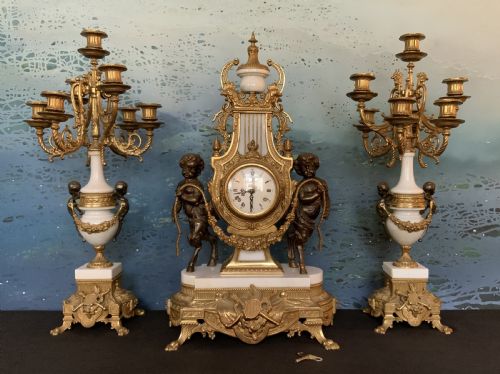


Gilt Bronze Clock Garniture
A gilt bronze clock garniture brings matching French architectural presence and heavy metalwork to a mantelpiece.
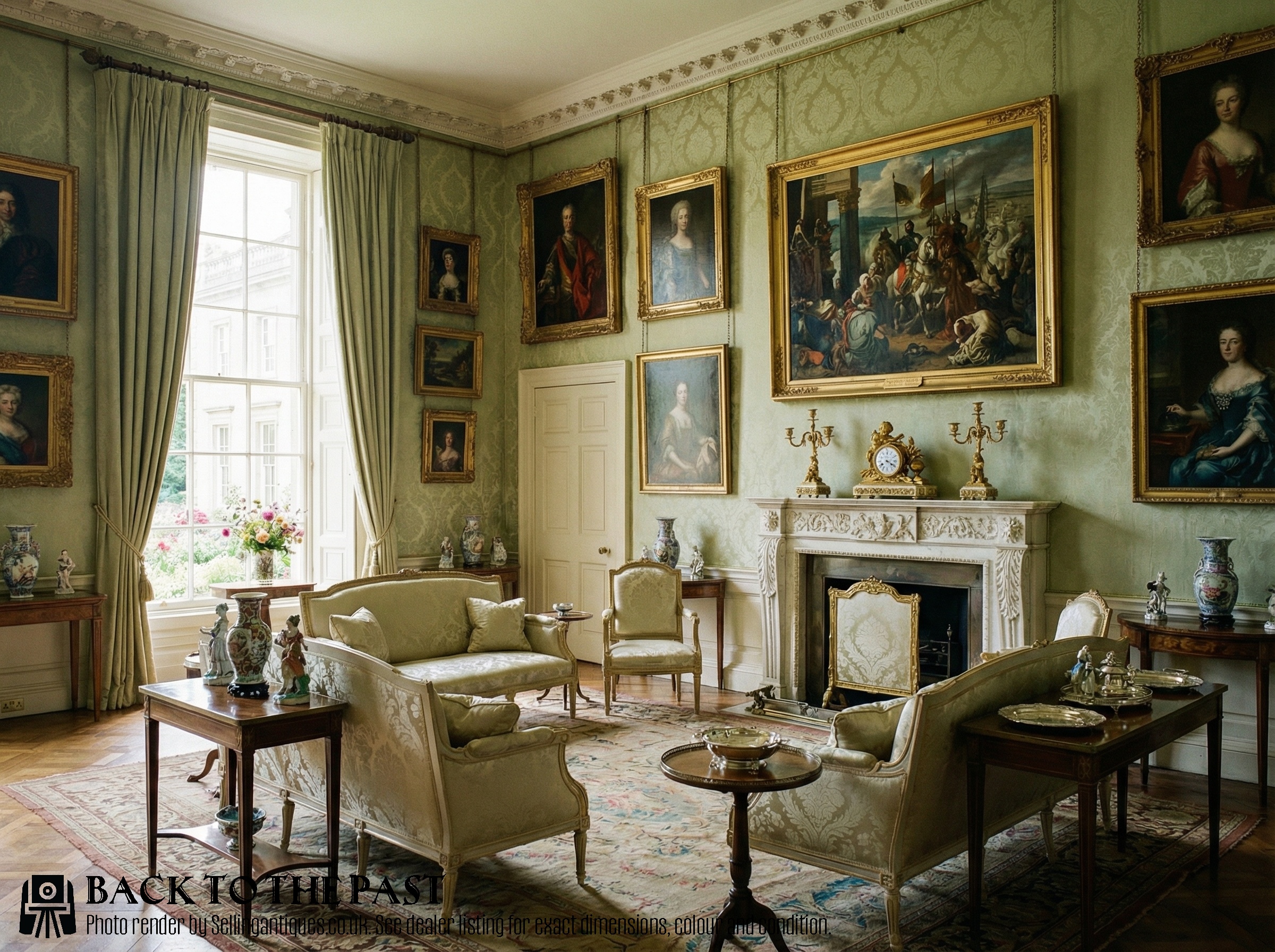
What a gilt bronze clock garniture is
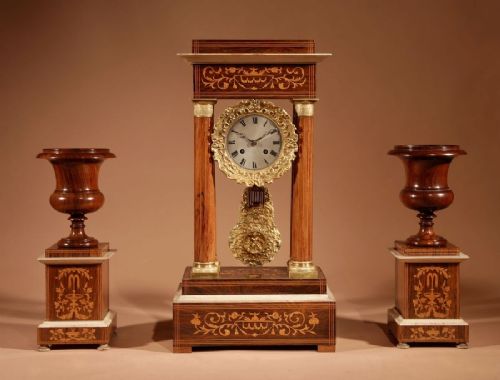
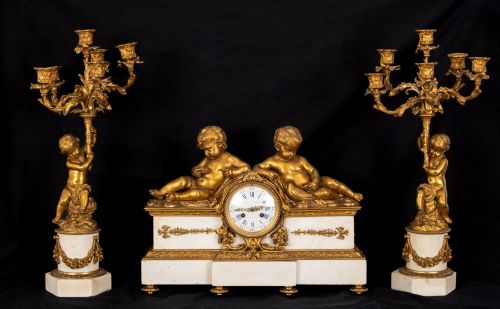
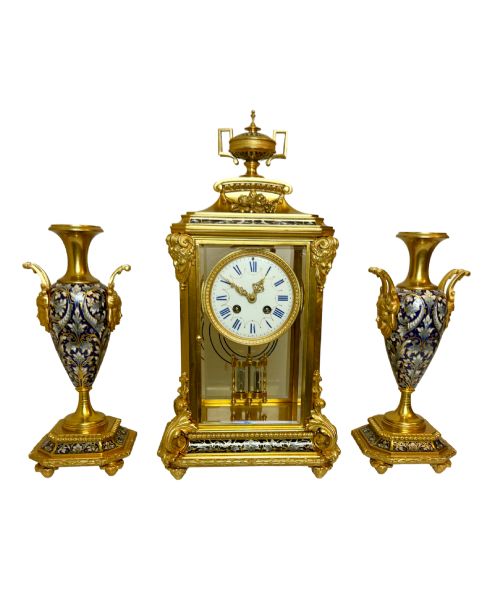
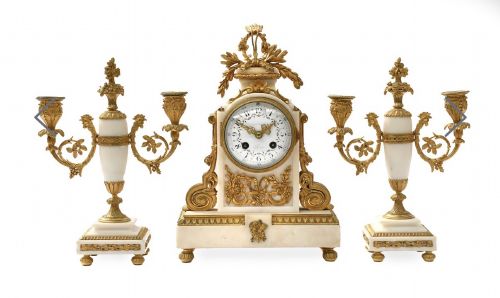
A gilt bronze clock garniture comprises a central mantel clock accompanied by matching sidepieces such as urns or candelabra, designed as a unified decorative set. These objects emerge predominantly from nineteenth century French makers working in revival styles.
The most common configurations on this page pair a striking clock in gilt bronze or ormolu with matching side vases or urns. They frequently incorporate contrasting materials like marble, slate, or porcelain to anchor the heavy metalwork.
The forms span French Rococo Revival, Second Empire, and Louis XVI Revival aesthetics. Buyers encounter everything from petite Edwardian mantel sets to large architectural nineteenth century garnitures.
How they were made
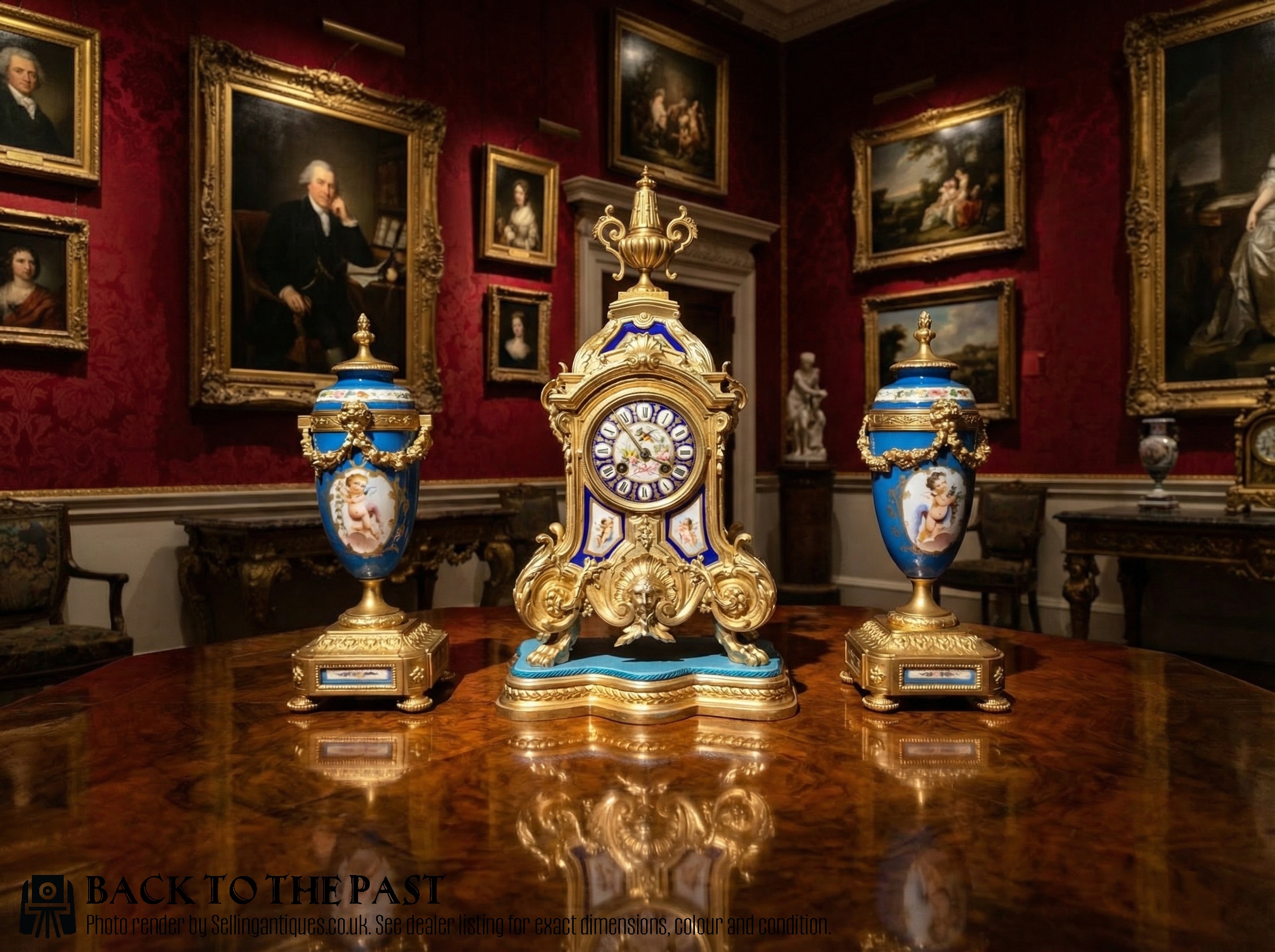
The primary metal components rely on cast bronze finished with mercury gilding or modern electroplating to achieve a brilliant golden surface. Makers combined this gilt bronze with carved marble bases, slate bodies, and hand-painted Sevres porcelain panels.
Clock movements use brass gear trains designed for eight-day striking intervals, driven by pendulum regulation. Dials feature individual enamel cartouche numerals or painted porcelain faces protected beneath glass bezels.
Retail Price Guide 2026
Typical UK retail prices for gilt bronze clock garniture, calculated from the Sellingantiques database of over a million retail prices indexed since 2003. This retail price guide relies exclusively on Sellingantiques data; no external sources or auction records are used, so the figures do not describe the wider market.
What varies in quality
Quality rests in the crispness of the bronze chasing and the weight of the cast components. Finer examples display deep, hand-chased relief work where the sculptor has sharpened the acanthus leaves and scrolls after casting.
The choice and integration of secondary materials dictate the upper tier of production. Sets that combine genuine white or black marble with detailed Sevres porcelain inserts and signed French movements command greater respect than lighter spelter alternatives.
VINCENTI of PARIS
The Gilt Bronze Clock Garniture Glossary
- Garniture
- A set of matching decorative objects for a mantelpiece, consisting of a central clock and two matching side ornaments such as urns or vases. These pieces were designed to be displayed together as a unified scheme.
- Ormolu
- A historic term for applying finely ground high-carat gold to a bronze object using a mercury amalgamation technique. It produces a warm, durable golden lustre that differs from modern electroplate.
- Spelter
- An alloy of zinc and lead used as a cheaper substitute for bronze in lesser nineteenth century decorative objects. It is softer and lighter than genuine bronze.
- Cartouche
- A small enamel plaque bearing a single numeral on a clock dial, traditionally pinned individually to the face. These separate plates allow for precise replacement during repairs.
Frequently Asked Questions
What is a clock garniture?
A clock garniture is a matching three-piece or five-piece set designed for a mantelpiece or sideboard. The central clock is flanked by matching side ornaments like urns or candelabra to create a balanced display.
These sets became popular in nineteenth-century French drawing rooms to anchor the visual weight of a fireplace. The pieces share identical decorative motifs and materials.
How do I wind the clock?
Most nineteenth-century French movements use a small square-drive winding key inserted into holes on the enamel dial. Turning the key tensions the internal springs that power the timekeeping and the strike train.
Take care not to over-wind the mechanism, and use a pendulum key to regulate the speed if the clock gains or loses time.
Are the sidepieces clocks too?
No, the sidepieces in a garniture are strictly decorative ornaments, usually taking the form of urns, vases, or covered jars. They mirror the materials and ornamentation of the central timepiece.
In some larger sets, the sidepieces function as candelabra with arms for holding candles, but they contain no mechanical clockworks.
How do I tell cast bronze from spelter?
Cast bronze is heavy, cold to the touch, and allows for sharp, deep detail in the chased surface. It accepts a rich gilt finish that ages with a warm, deep tone.
Spelter is noticeably lighter, softer, and more prone to bending or cracking under stress. Its surface finish often flakes to reveal a dull grey metal underneath.