



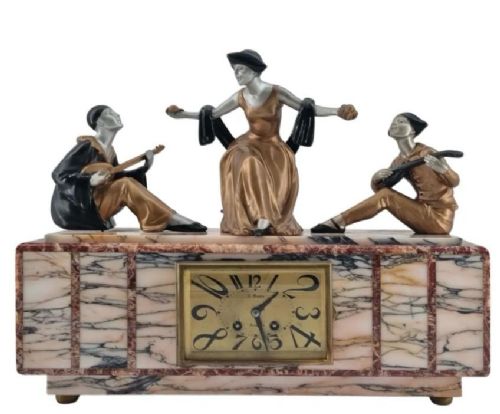
Marble and Bronze Clock
A marble and bronze clock brings heavy neoclassical presence to a mantelpiece, combining cool stone bases with cast metallic figures.
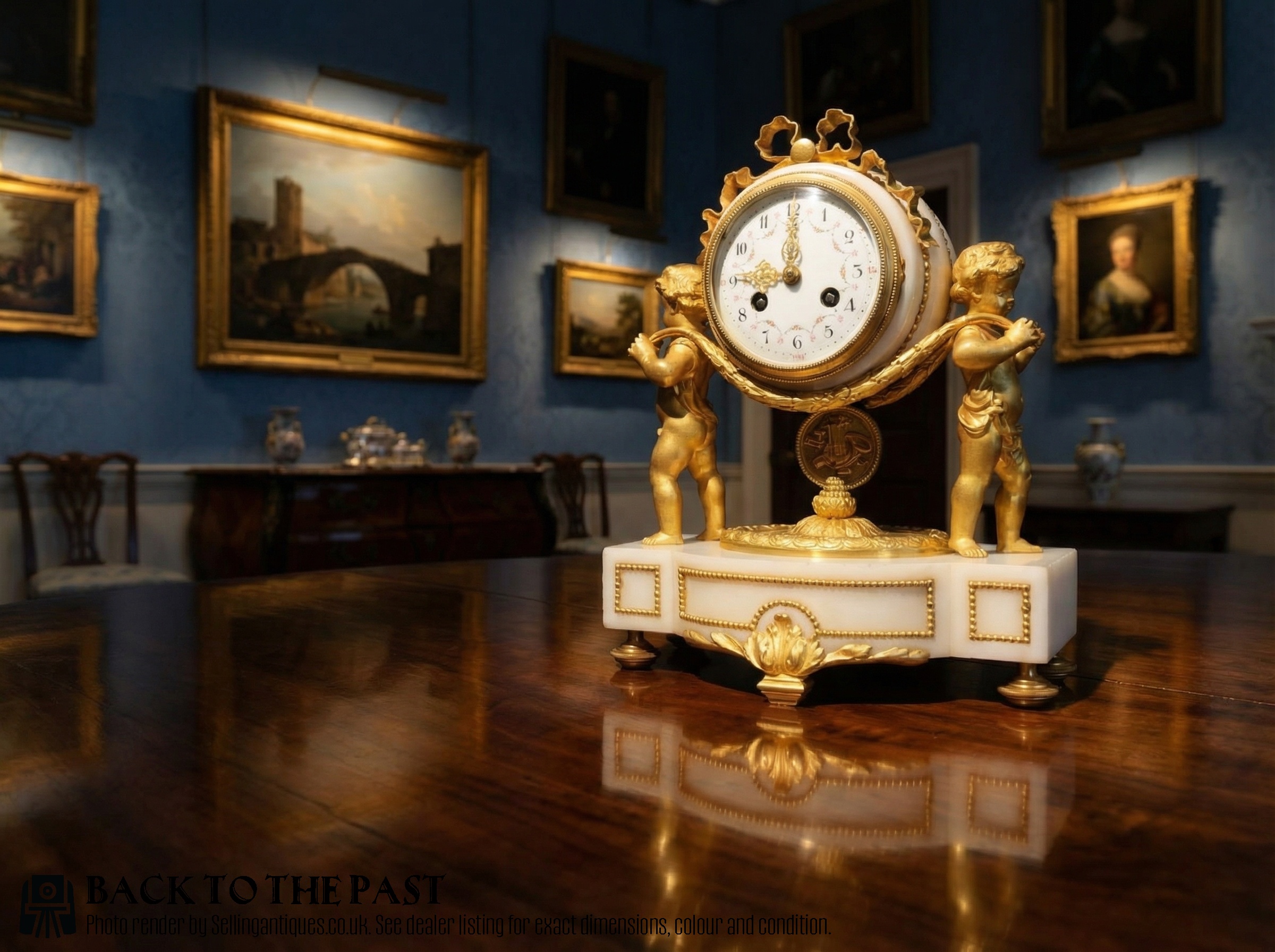
Marble and Bronze Clock
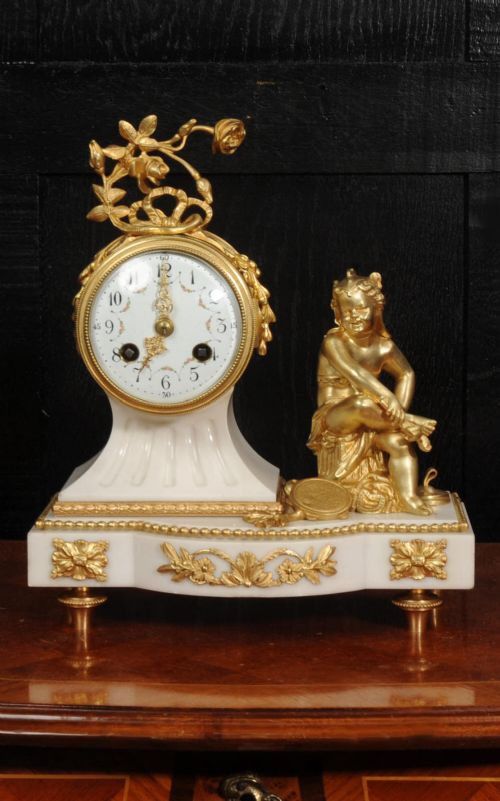
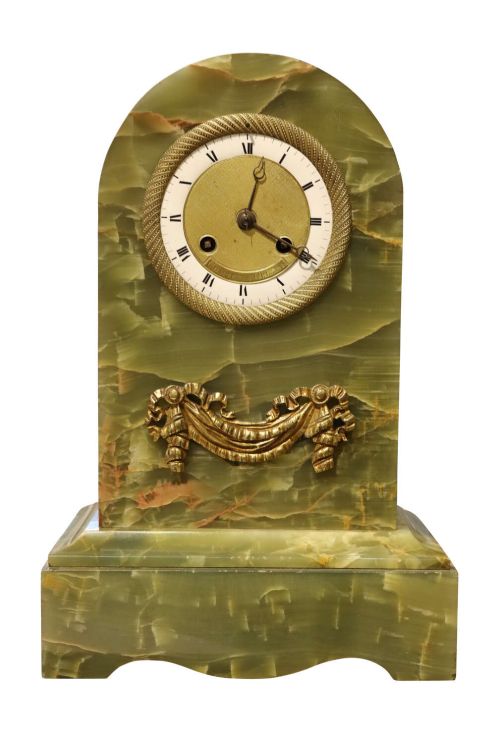
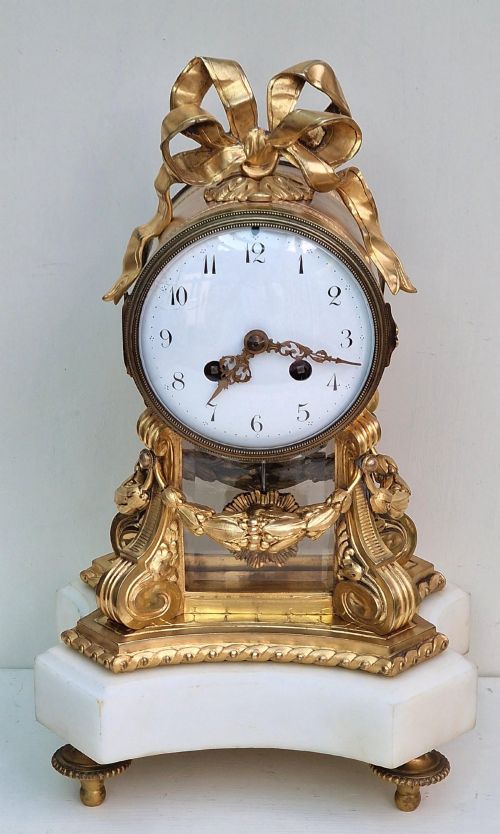
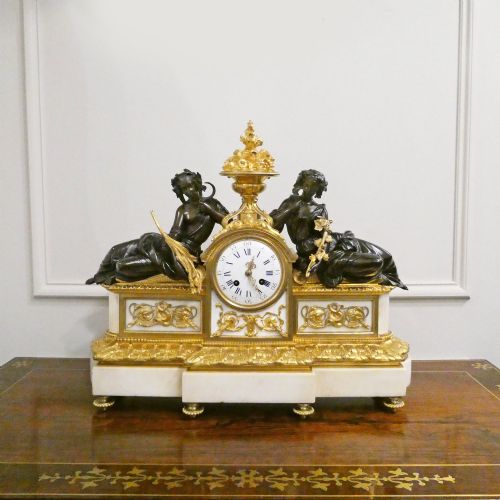
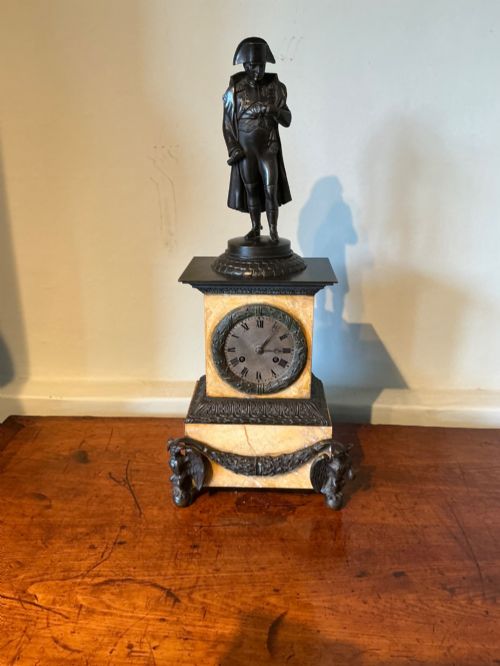
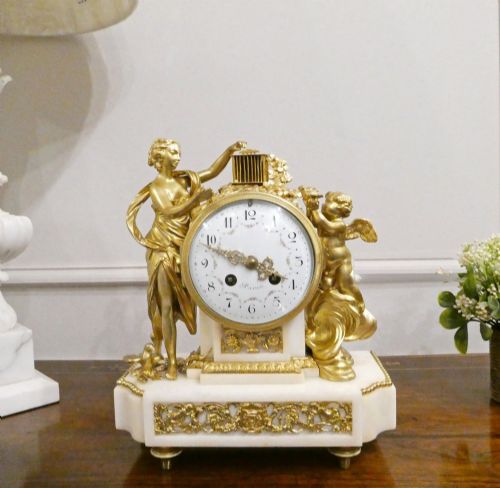
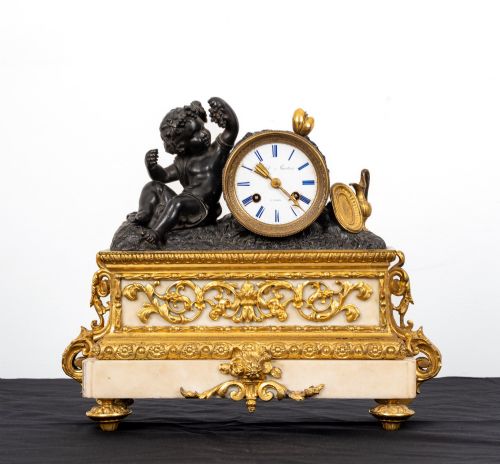
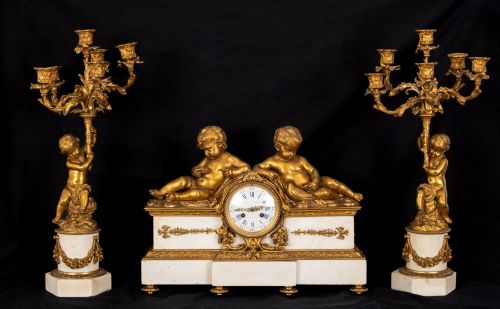
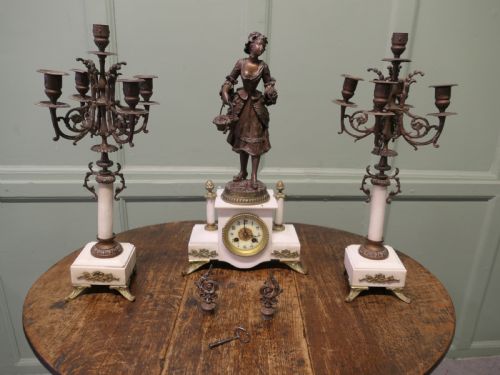
When you search for a marble and bronze clock, you enter a field dominated by nineteenth-century French mantel pieces and garniture sets. These objects pair architectural stone bodies in white, green, rouge or sienna marble with patinated and gilded bronze mounts.
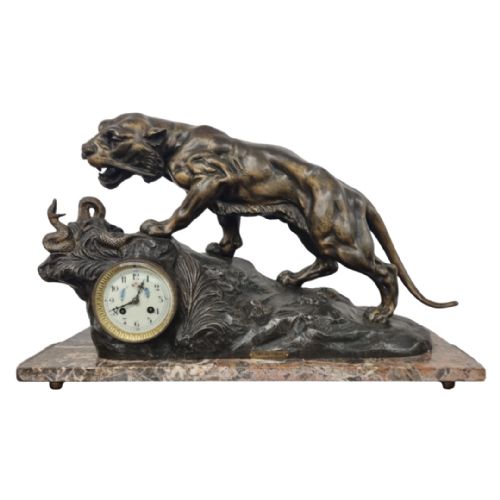
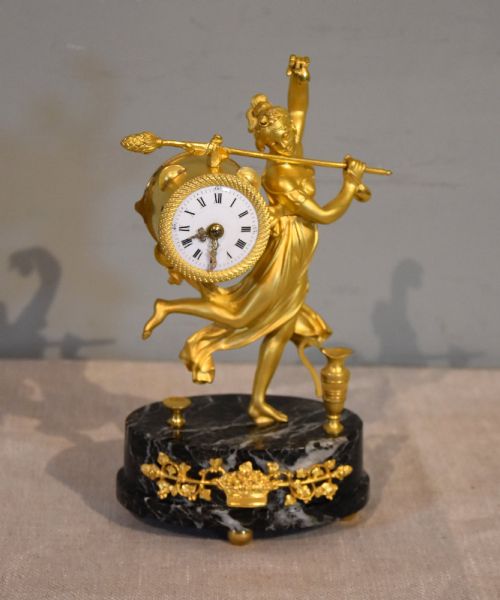
Beyond single mantel clocks, many listings include complete garniture sets featuring matching candelabra or urns. The forms range from simple drumhead timepieces to elaborate figural compositions depicting classical heroes, cherubs, and animals.
Materials and Construction
The heavy stone bases are hand-cut and polished from natural marble blocks, sometimes accented with enamel dials and glass bezels. Foundational structures support mechanical eight-day movements driven by brass gears.
Metal components utilise bronze cast through lost-wax or sand methods, then finished with mercury gilding, ormolu, or dark patination. Masons and metalworkers assembled these elements with threaded pins and screws hidden within the stone.
Several clocks feature watchful serpents, leaping greyhounds, and classical deities keeping permanent guard over the hours.
Judging Quality
Quality rests on the crispness of the bronze chasing and the density of the marble. Superior pieces display deep, hand-chiseled detail in the metal figures alongside finely painted enamel dial faces.
The integration between the stone and metal separates standard production from exceptional work. Maker signatures on the movement or dial elevate the standing of an individual clock within the genre.
Japy Freres·Honoré Pons·Philippes Paris·Vincenti·P L Hausburg
The Marble and Bronze Clock Glossary
- Ormolu
- Gilded bronze produced by applying a mercury and gold amalgam to cast metal and heating it to drive off the mercury. This technique creates a durable, warm golden finish seen on many nineteenth-century mounts.
- Garniture
- A set of matching ornamental objects consisting of a central clock flanked by two matching side pieces such as candelabra or vases. These balanced sets were designed to decorate a mantelpiece.
- Rouge marble
- A rich red variety of stone quarried for decorative architectural and horological use. It provides a striking contrast against bright ormolu mounts.
- Dial
- The face of the clock where time is indicated by painted or applied numerals. Many examples feature white enamel over a copper base.
- Movement
- The internal mechanism driven by springs or weights that powers the clock and any striking train. French makers produced robust eight-day movements for these heavy cases.
Marble and Bronze Clock: Frequently Asked Questions
How do I wind a marble and bronze clock?
Most nineteenth-century mechanical movements require a key inserted into the dial holes to tension the mainsprings every eight days. Care must be taken not to overwind the mechanism.
Moving these heavy clocks requires securing or removing the pendulum first to prevent damage to the delicate suspension spring inside.
What is a clock garniture set?
A garniture set consists of a central mantel clock accompanied by matching side ornaments, typically a pair of candelabra or urns. These pieces share identical bronze mounts and marble bases to create a unified display.
Wealthy Victorian and nineteenth-century households placed these sets on mantelpieces beneath mirrors to reflect the composition.
How do I identify French Empire style?
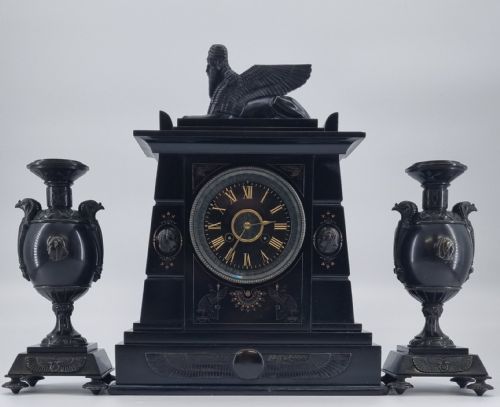
French Empire pieces draw heavily on classical Roman, Greek, and Egyptian motifs, reflecting the taste of the early nineteenth century. You will spot military trophies, laurel wreaths, sphinxes, and patinated bronze figures contrasted with gilt mounts.
The marble bases on these clocks tend to be architectural, taking the form of heavy rectangular plinths or porticos.
Are these clocks suitable for daily use?
Many antique mechanical clocks run reliably if they have been professionally serviced and cleaned. They require a level, stable surface to keep proper time.
Because of their weight and age, frequent relocation is discouraged to protect the stone and the internal gear train.