




Cherub Mantel Clock Set
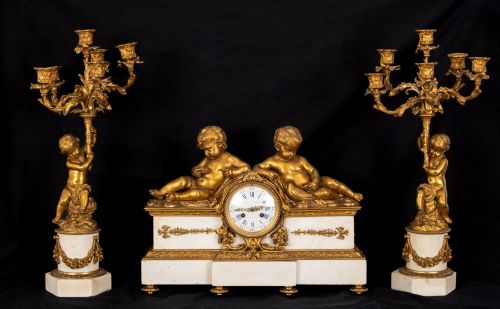
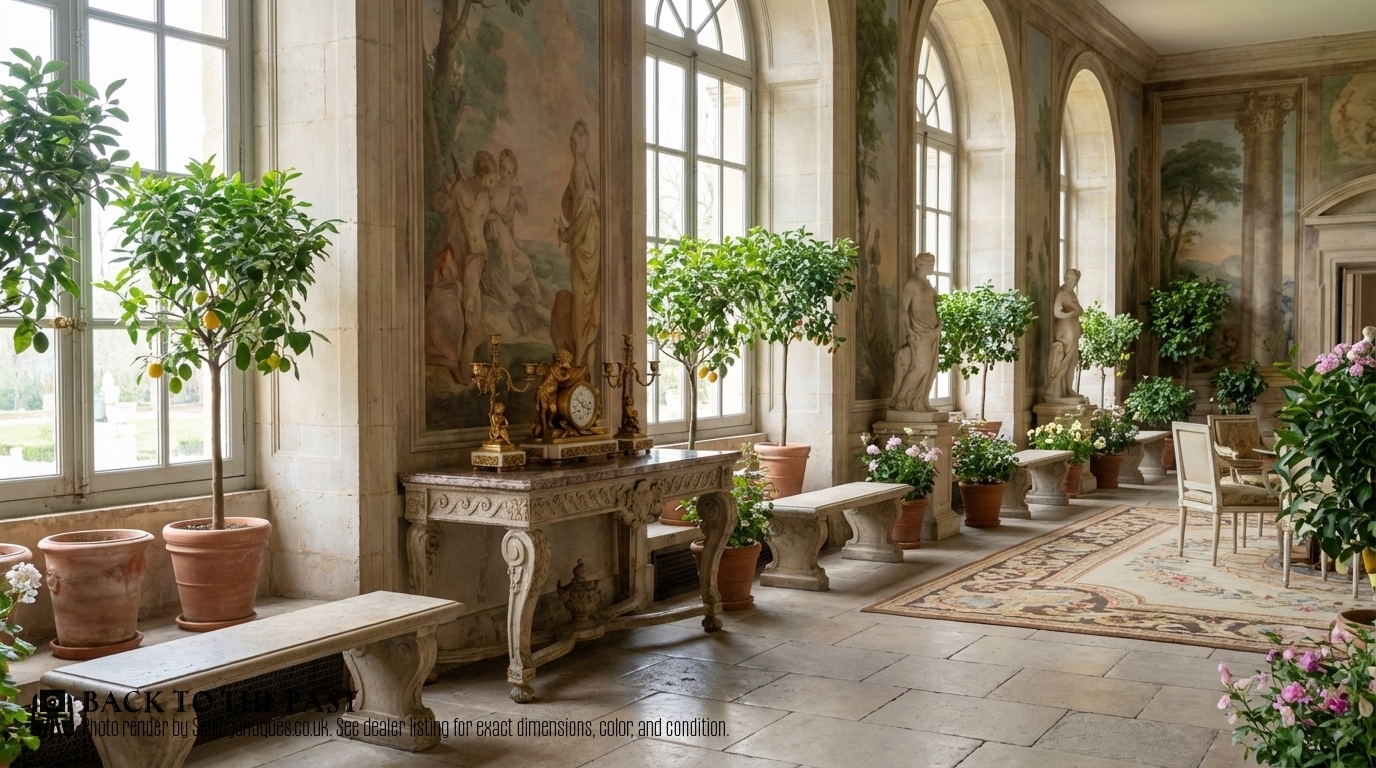
A cherub mantel clock set brings sculptural bronze putti and coordinating garnitures together to anchor a period room with classical French elegance.
Cherub Mantel Clock Set
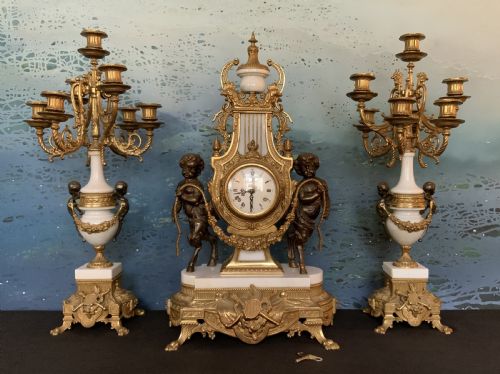
A cherub mantel clock set comprises a central timekeeper accompanied by matching sidepieces, most frequently cast as candelabras or urns in the French taste. These ensembles date predominantly from the nineteenth century, spanning Victorian and Belle Epoque periods alongside revival designs.
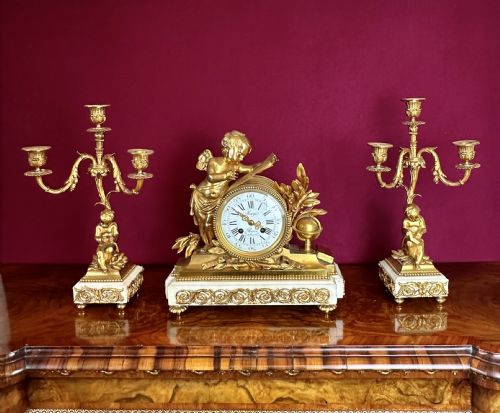
The central clock houses an eight-day movement while the flanking pieces repeat the sculptural motifs of the main dial. Figures of winged putti or cherubs appear cast in bronze or ormolu, often seated upon bases of white, red, or black marble.
Makers and workshops from Paris dominate the surviving selection, adopting Louis XVI, Louis XV, and Neoclassical vocabularies. Collectors encounter complete three-piece garnitures where the proportions of the side ornaments balance the mass of the clock centrepiece.
Materials and construction
Foundries produced these assemblies using mercury gilding or electroplating on bronze to create the bright ormolu surface contrasts characteristic of the period. White and coloured marbles were shaped and polished to form the architectural plinths supporting the metalwork.
Enamel dials with painted numerals fit behind glass bezels, driven by brass mechanical movements that strike on bells or gongs. Secondary materials such as porcelain, onyx, and glass appear in select garnitures to add colour and texture to the composition.
Listings feature nineteenth-century French production predominantly, utilising ormolu, white marble, and gilt bronze across Louis XV and Louis XVI revival styles.
Distinctions in quality
The definition and depth of the bronze chaser's work separate standard production from superior pieces, particularly in the rendering of feathers, hair, and facial expressions on the cherub figures. Heavier gauge ormolu retains its crisp detail through multiple cleaning cycles, whereas shallow casts lose their edge.
The integration of the marble base with the metal mounts indicates the original workshop ambition, where tight joints and substantial stone plinths elevate the presence of the garniture. Signed movements by established makers like H Luppens add a documentary layer to the mechanical integrity of the clock.
H Luppens Paris·Meissen
The Cherub Mantel Clock Set Glossary
- Garniture
- A set of matching decorative objects designed to be displayed together on a mantelpiece, typically consisting of a clock and two side ornaments such as candelabras or urns. These sets create a balanced visual arrangement.
- Ormolu
- Gilded bronze produced by applying a mercury and gold amalgam to a bronze base and heating it to drive off the mercury. This technique yields a durable, warm metallic lustre.
- Putto
- A plump, naked child figure, frequently winged, used extensively in Renaissance and revival decorative arts. In these clocks, putti animate the composition with narrative or playful gestures.
- Visible pendulum
- A movement design incorporating an opening in the dial or case to show the swinging pendulum during operation. This feature allows the observer to monitor the beat without opening the back case.
Cherub Mantel Clock Set: Frequently Asked Questions
How do I wind an eight day movement?
Insert the appropriate key into the winding arbours on the dial face and turn gently until resistance is felt. Care must be taken not to overwind the mainspring.
Most nineteenth-century French movements require a weekly key turn to maintain accurate timekeeping and striking functions.
What is a clock garniture?
A clock garniture is a matched set comprising a central mantel clock and two flanking ornaments, often candelabras or urns. These pieces share identical casting styles and materials to create a unified display.
Placed on a mantelpiece or sideboard, the sidepieces balance the visual weight of the central clock.
Can these clocks run accurately today?
Most antique mechanical movements maintain good time when properly serviced and adjusted by a professional horologist. Environmental stability in the room helps prevent pendulum rate fluctuations.
Routine maintenance ensures the brass gears and escapements continue to function without excessive wear.