

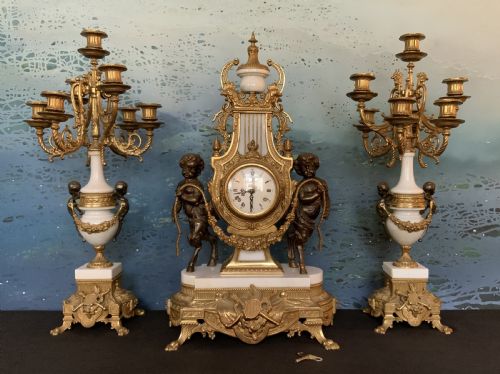


Antique Candelabra Clock Set
An antique candelabra clock set brings a striking centrepiece of matched timekeeping and side illumination to a room.
Identifying an antique candelabra clock set
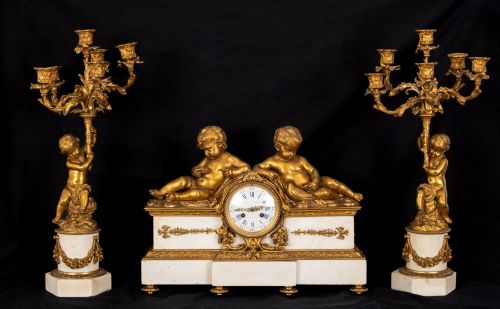
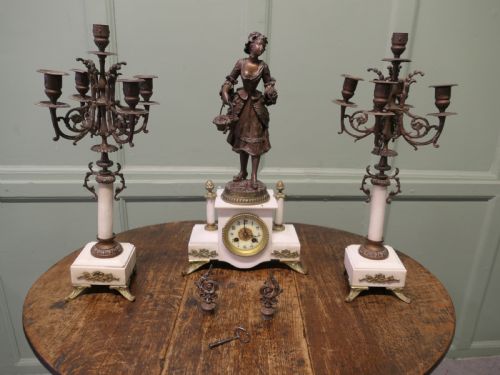
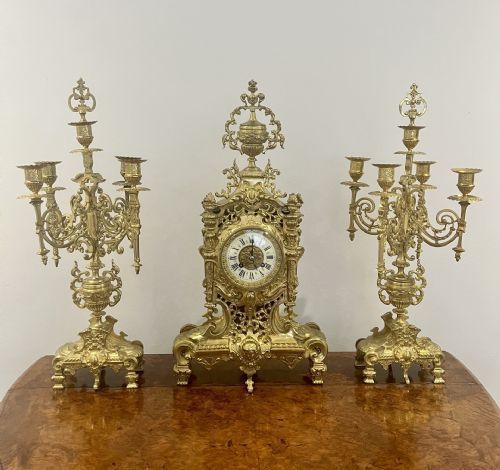
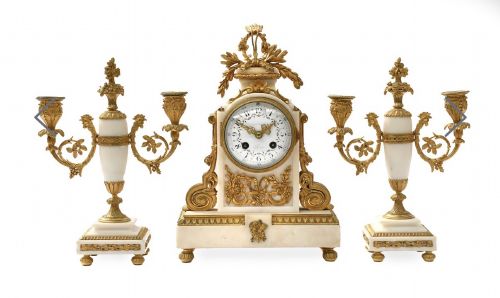
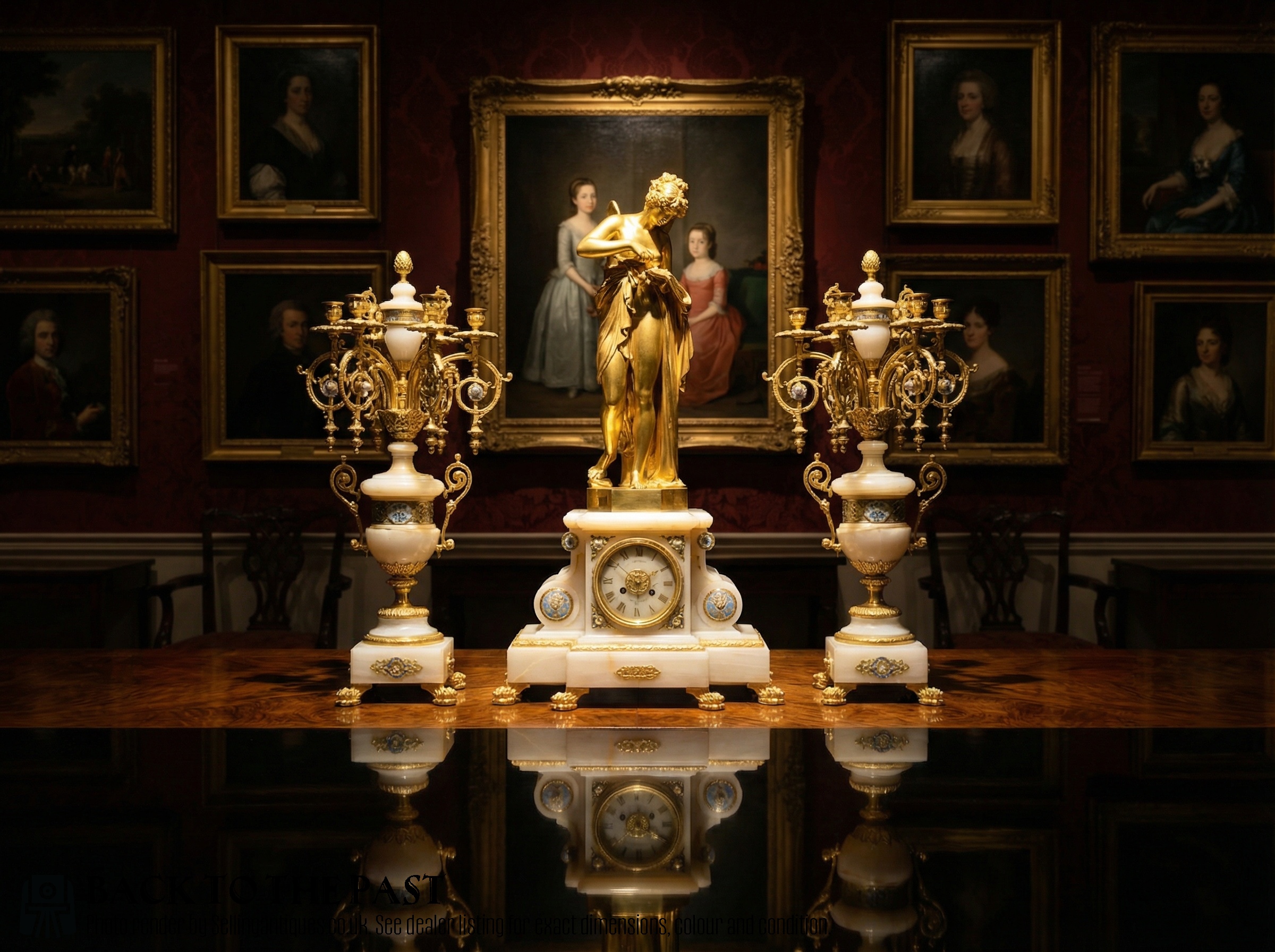
When you search for an antique candelabra clock set, you encounter matched mantel clock garnitures comprising a central clock flanked by a pair of coordinating light holders. These decorative assemblies range from nineteenth century Victorian examples to French Louis XVI style and Regency pieces.
The most common versions on this page are large nineteenth century mantel clock sets combining clock garnitures with matching candelabras. These decorative suites originate from periods including the Victorian era, circa 1800 to 1900, and employ materials such as marble, gilt bronze, brass and ormolu.
Comprising a central clock and two side pieces, an antique candelabra clock set unites functional horology with ornamental symmetry. The forms vary from Regency bronze and marble compositions to French Empire and Gothic designs.
Materials and construction
The construction of these sets involves casting metals such as bronze, brass and ormolu alongside carved stone elements including marble and onyx. Enamel is utilised for dial faces, paired with detailed metalwork in French Empire, Gothic and Louis XVI styles.
Craftsmen built these assemblies using heavy cast metals and natural stone bases, often applying a gilt finish to bronze and brass surfaces. The integration of mechanical clock movements with matched side candelabras required precise foundry and stonework techniques.
Retail Price Guide 2026
Typical UK retail prices for candelabra clock set, calculated from the Sellingantiques database of over a million retail prices indexed since 2003. This retail price guide relies exclusively on Sellingantiques data; no external sources or auction records are used, so the figures do not describe the wider market.
Listings feature nineteenth century mantel clock sets spanning Victorian, Regency, and French Louis XVI styles in marble and gilt bronze.
Distinguishing quality across pieces
Quality in these sets separates through the crispness of the metal casting and the depth of the gilding on bronze, brass and ormolu. Finer examples display superior chasing in the figural and decorative elements, whilst simpler pieces rely on basic casting.
The selection of materials creates a distinct tier in the range, with solid marble bases and heavy gilt bronze contrasting against simpler brass or mixed components. The integration between the central clock case and the companion candelabras dictates the visual cohesion of the ensemble.
Japy Freres·Samuel Marti
The Antique Candelabra Clock Set Glossary
- Candelabra
- A branched candlestick designed to hold multiple taper candles simultaneously. These form the matched sidepieces of a garniture set.
- Ormolu
- Gilt bronze created by applying a finely ground high-carat gold mercury amalgam to a bronze object. This technique imparts a rich golden lustre to French clock cases.
- Regency
- An English design style spanning the early nineteenth century. It draws heavily on classical Greek and Roman motifs.
- Louis XVI Style
- A neoclassical French revival style characterised by straight lines, symmetry and classical architectural details. It appears frequently in nineteenth century clock sets.
Frequently Asked Questions
What is an antique candelabra clock set?
An antique candelabra clock set is a matched decorative suite consisting of a central mantel clock accompanied by a pair of matching candle holders. These sets were designed to sit together on a mantelpiece to create a balanced ornamental display.
Such assemblies appear in nineteenth century styles including Regency, French Empire and Louis XVI revival, utilising materials like marble, gilt bronze and ormolu.
How were these clock sets used?
These sets served both practical and decorative purposes in nineteenth century interiors, providing a reliable timepiece alongside functional lighting from the matching candelabras. They were positioned centrally on mantelpieces in principal rooms.
The side candelabras held candles to illuminate the room, while the central clock kept time for the household during formal gatherings.
How do I style a clock set?
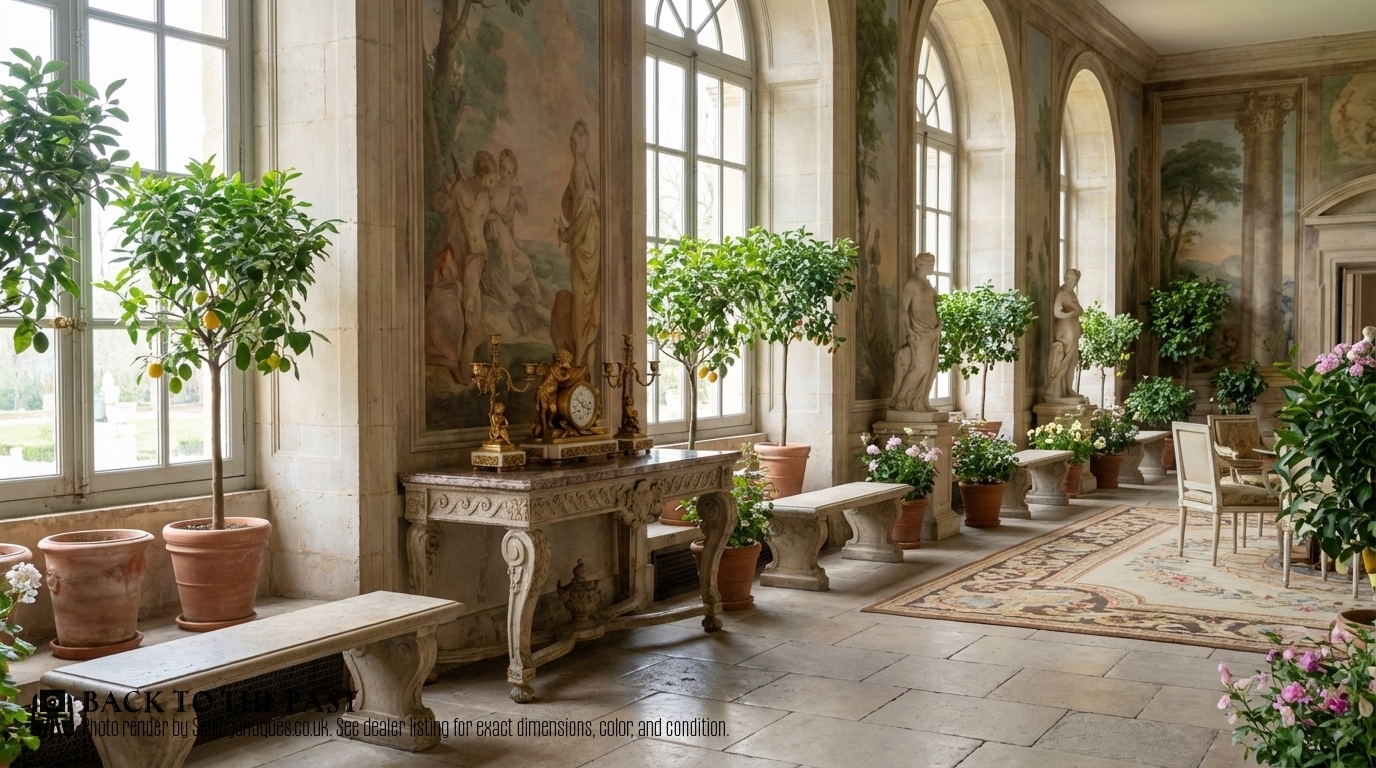
Styling an antique candelabra clock set involves placing the central clock in the exact middle of a mantelpiece or sideboard, with the matching candelabras flanking it at equal distances. This creates the symmetrical visual arrangement intended by the maker.
Allowing sufficient space around each component ensures the gilt bronze, marble or ormolu details remain the visual focus of the room.
How do I identify periods?
Identifying the period of a set involves examining the stylistic details, such as classical motifs for Louis XVI style or heavy bronze casting for Regency pieces. Materials like white marble, onyx and fire-gilded ormolu also point to nineteenth century manufacturing practices.
Maker signatures on the movement backplates, such as those by Japy Freres or Samuel Marti, provide concrete evidence of the production era.