

Gold Bronze Desk Clock
A gold bronze desk clock brings nineteenth-century French and English precision into a room through chased metal and painted porcelain dials.
Gold Bronze Desk Clock
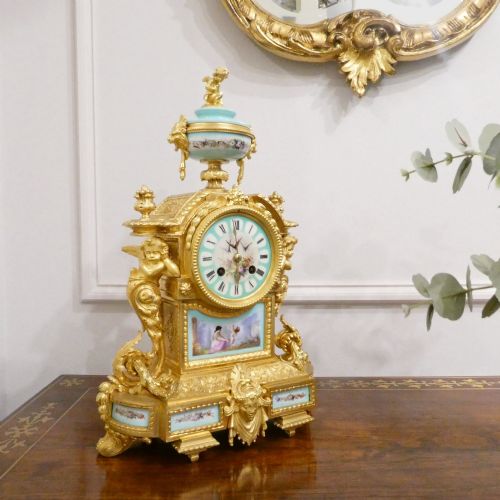
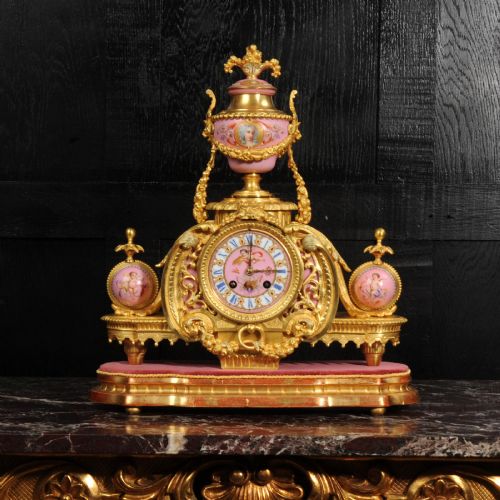
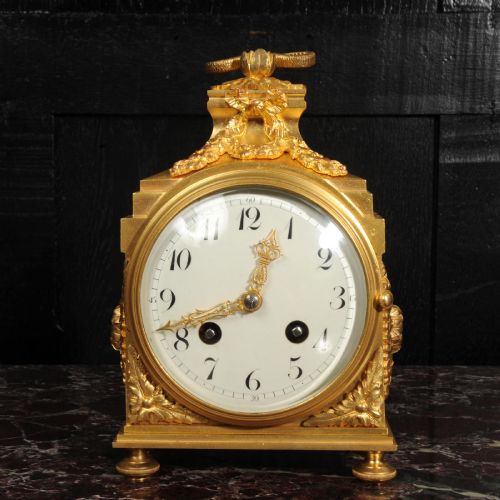
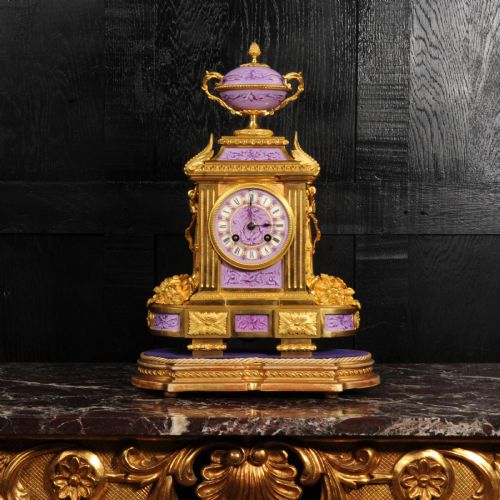
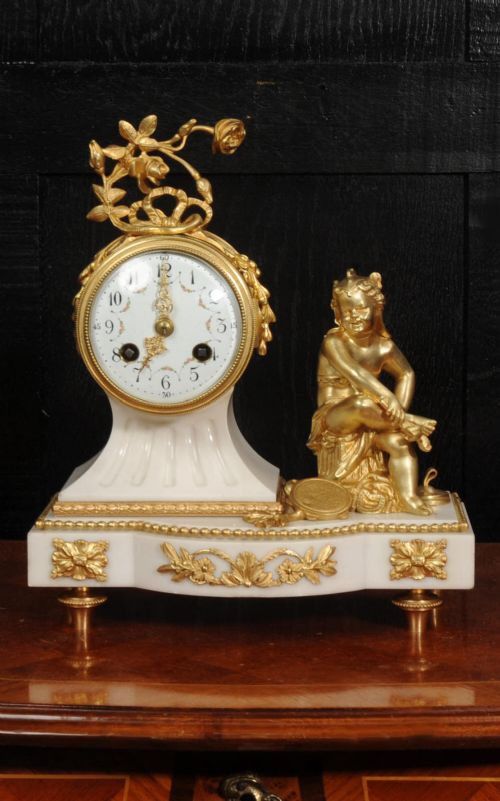
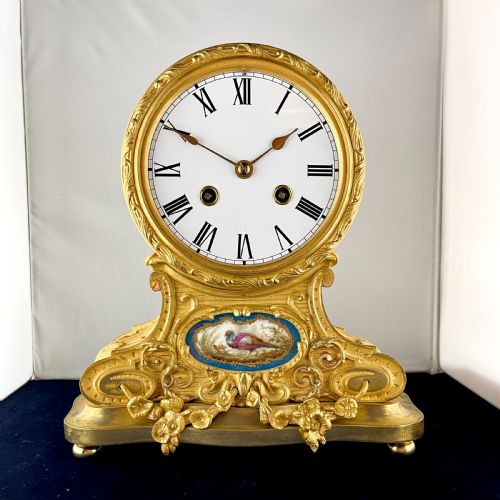
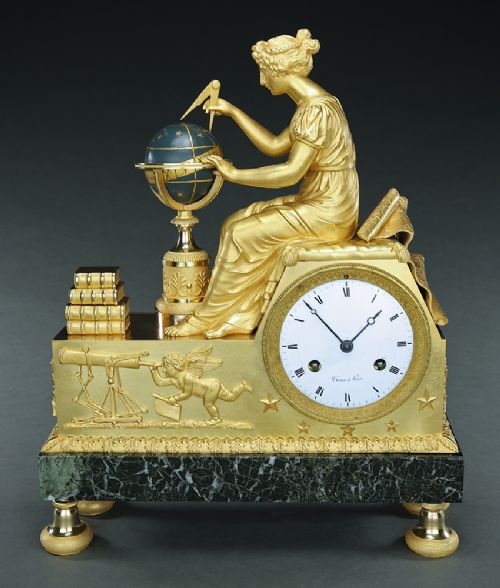
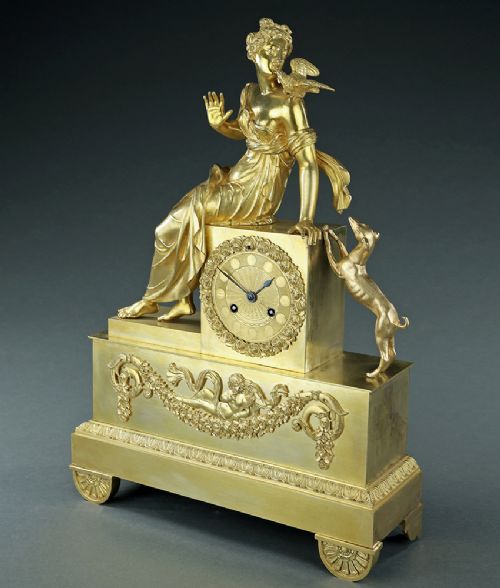
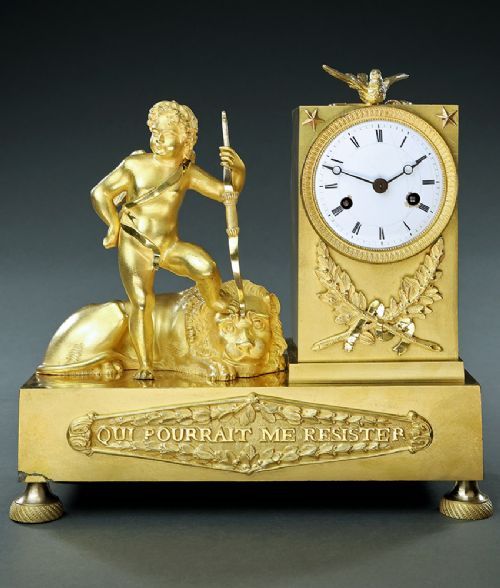
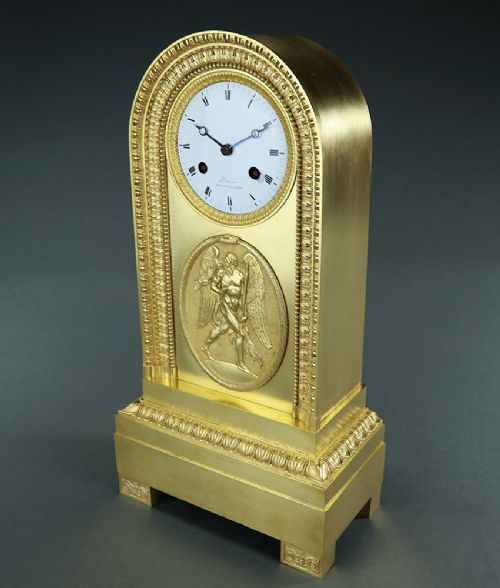
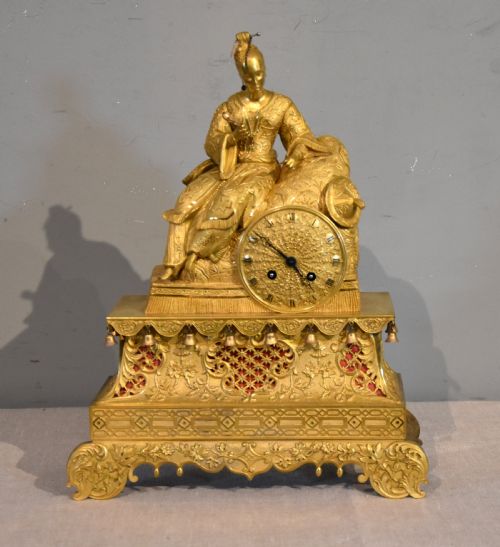
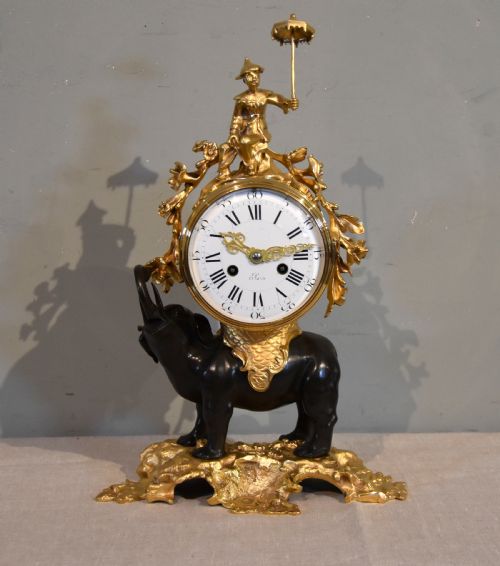
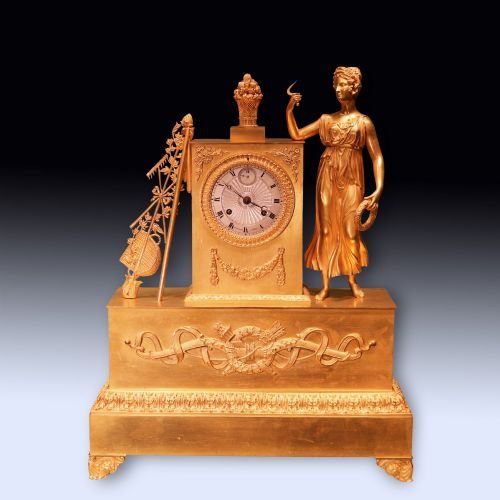
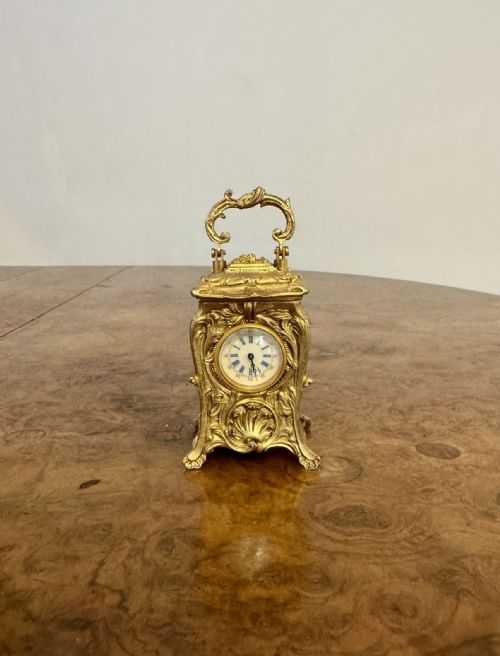
A gold bronze desk clock sits within a tradition of nineteenth-century horology, predominantly taking the form of French mantel clocks, carriage clocks, and smaller desk timepieces. The selection on this page centres on pieces from the Victorian era and earlier decades, spanning styles from French Empire and Rococo Revival to Louis XVI and Baroque designs.
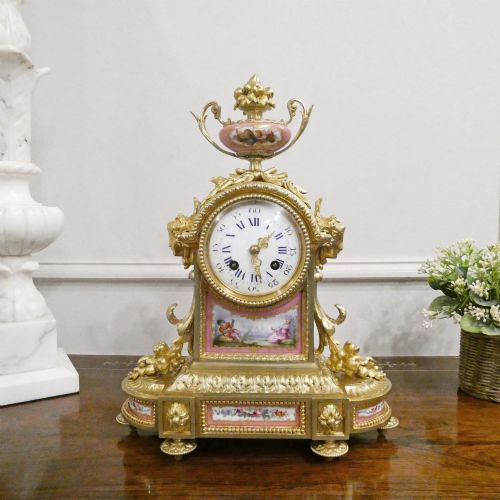
Buyers encounter heavy cast ormolu and gilt bronze housings paired with contrasting materials such as marble, glass, and Sèvres porcelain plaques. These objects served both practical timekeeping and decorative display in period interiors, frequently featuring allegorical figural subjects or architectural portico structures.
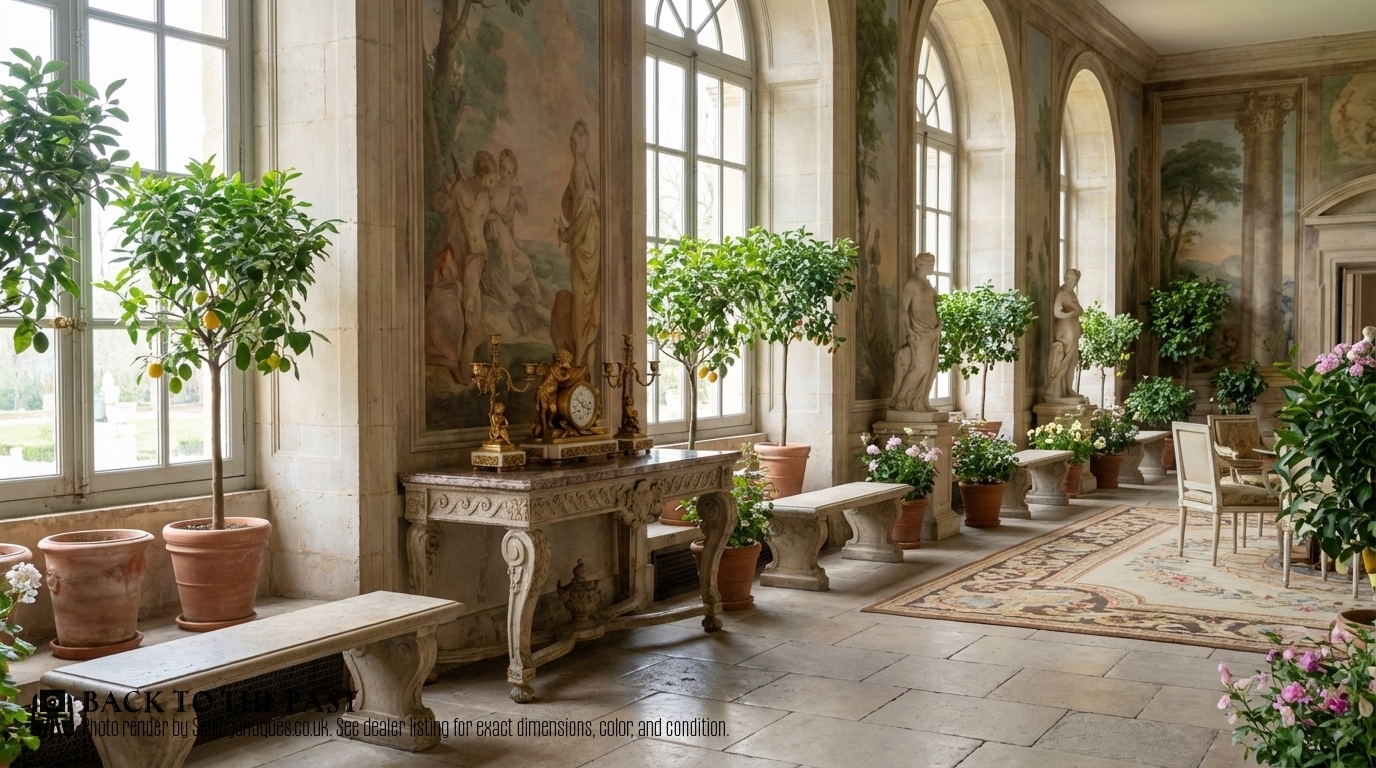
How they were made
Casting formed the foundation of these pieces, utilising bronze and brass that workers subsequently gilded with gold leaf or mercury amalgamation to achieve the characteristic ormolu surface. Founders often combined this metallic work with hand-painted enamel dials and inset porcelain panels depicting pastoral or classical scenes.
Internal movements required specialist skill, relying on mechanical escapements housed within heavy frames, while exterior elements frequently incorporated carved marble plinths, cut crystal, and champlevé enamel details.
Gold Bronze Desk Clock Retail Price Guide 2026
Typical asking prices for gold bronze desk clock among the pieces listed under this phrase on Sellingantiques today, from the lower quarter to the upper quarter. They describe what is for sale here now, not the wider market.
Listings feature movements by prominent Parisian and London makers housed in cases spanning the nineteenth century.
What varies in quality
Quality rests primarily in the crispness of the bronze chasing and the depth of the original gilding, where sharper cast details and heavier metal distinguish finer workshop output from simpler commercial pieces. The integration of high-grade porcelain panels, such as those from Sèvres, and the presence of named movement makers elevate the status of an object.
The artistry of the sculptural casting - whether depicting figures, animals, or architectural motifs - dictates the overall merit of the clock, alongside the survival of original glass shades, dials, and matching mechanical components.
Achille Brocot·Japy Freres·Canaillor of Paris·Le Roy·Leon Message·Breguet·Samuel Marti·Viner
The Gold Bronze Desk Clock Glossary
- Ormolu
- Gilt bronze produced by applying a finely ground high-carat gold-mercury amalgam to a bronze base metal, followed by firing to drive off the mercury. This technique created a durable, rich golden surface typical of nineteenth-century French horology.
- Champlevé
- An enamelling technique where troughs or cells are hollowed out of a metal surface and filled with vitreous enamel powder before firing. It frequently appears on dials and bezels of Victorian-era clocks.
- Portico clock
- A monumental clock design featuring a rectilinear case supported by four columns, resembling a classical temple facade. These often incorporated cut crystal or alabaster alongside gilt bronze mounts.
- Pendule d'Officier
- A portable military-style timekeeper with a swing handle, serving as an early precursor to the carriage clock. These pieces combined robust brass frames with precise escapements for travel.
- Fusee
- A conical pulley used within clock and watch movements to maintain equal force on the gear train as the mainspring unwinds. This mechanism improved timekeeping accuracy across the duration of the wind.
Gold Bronze Desk Clock: Frequently Asked Questions
How do I wind an antique ormolu clock?
Use the appropriate key matching the square arbours on the dial face, turning gently until you feel firm resistance. Avoid over-winding to protect the historical mainspring.
Ensure the clock rests on a completely level surface before starting the pendulum to maintain an even beat.
Are these clocks suitable for daily use?
Most pieces function reliably when professionally serviced, though mechanical movements from the nineteenth century require gentle handling and stable environmental conditions.
Many owners choose to run them regularly while keeping them away from direct sunlight and heat sources.
How do I identify a French Empire clock?
French Empire pieces typically feature strict classical proportions, dark patinated bronze contrasts, and subjects drawn from mythology, astronomy, or military triumph.
Ormolu mounts on these clocks focus heavily on military trophies, laurel wreaths, and classical deities.
What is the difference between gilt bronze and ormolu?
In historical manufacturing terms, ormolu specifically denotes mercury gilt bronze, whereas gilt bronze can encompass various modern or electroplated chemical gilding methods.
Nineteenth-century French pieces predominantly utilise traditional mercury gilding, which yields a softer, warmer lustre than modern alternatives.