


Classical Figural Mantel Clock
A classical figural mantel clock combines timekeeping with sculptural bronze figures, bringing nineteenth-century French and English artistry straight to the fireplace.
Classical Figural Mantel Clock
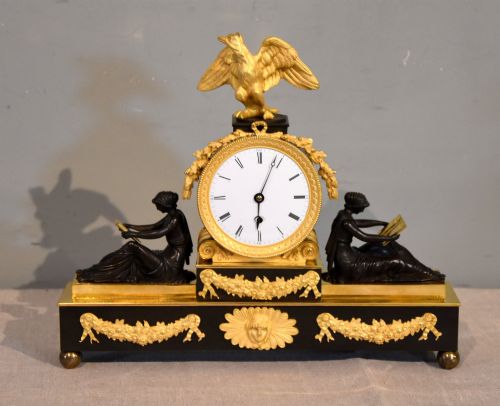
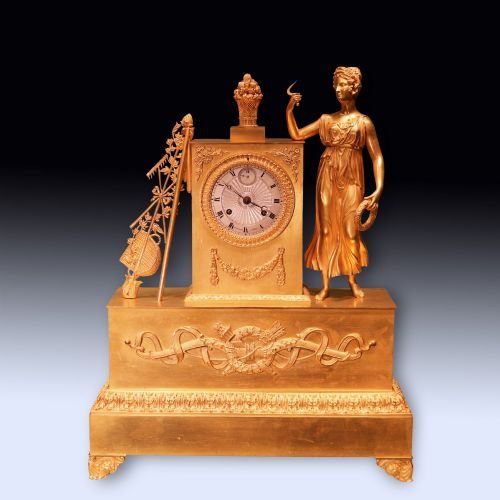
A classical figural mantel clock sits on a chimney piece or shelf, combining a mechanical timepiece with a cast metal or carved stone figure. These objects emerge mostly from nineteenth-century French workshops, spanning styles from Empire and Neoclassical to Rococo Revival and Louis XVI.
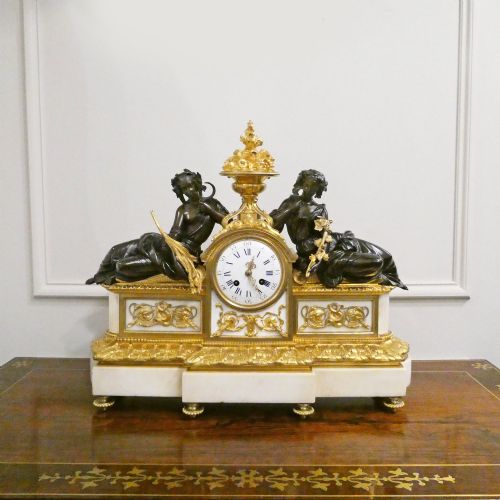
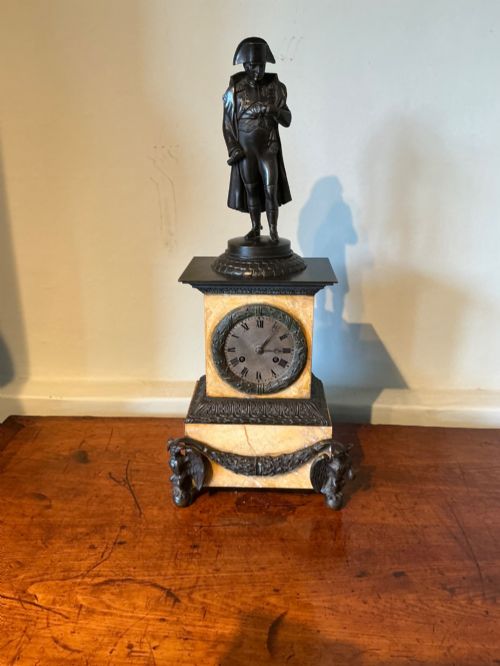
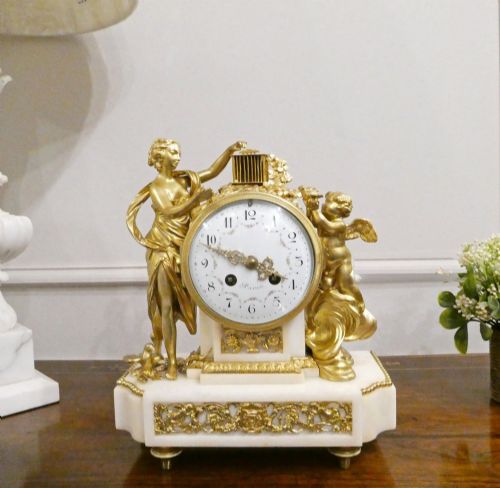
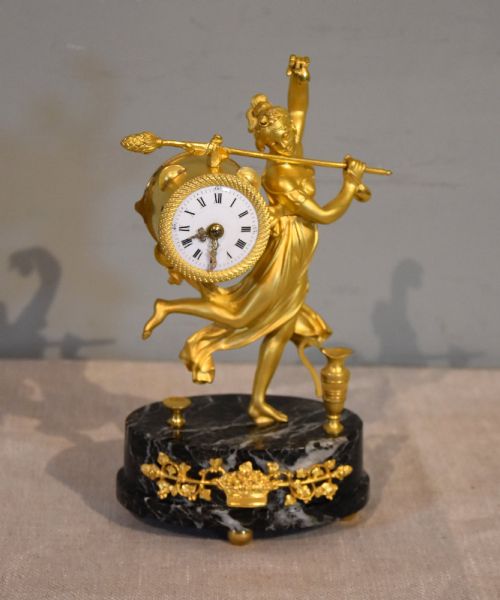
The physical form pairs a clock housing with human, mythological or allegorical representations, sometimes accompanied by matching side garnitures. Marble bases in white, green or rouge support patinated bronze, gilt bronze or ormolu statues depicting historical figures, deities or celestial themes.
How They Were Made
Maker-founders cast figures in bronze, spelter or brass using traditional methods, applying mercury gilding or ormolu finishes to create a brilliant metallic sheen against dark patination. Stonemasons shaped rouge, green and white marble into architectural plinths and bases to house the heavy metal movements.
Clockmakers fitted brass movements with escapements and striking trains, pairing them with enamel dials marked with Roman or Arabic numerals. Skilled artisans assembled these components alongside carved alabaster bodies and glass domes to protect the delicate exterior elements.
Classical Figural Mantel Clock Retail Price Guide 2026
Typical asking prices for classical figural mantel clock among the pieces listed under this phrase on Sellingantiques today, from the lower quarter to the upper quarter. They describe what is for sale here now, not the wider market.
Figures of Napoleon, Amphitrite, and celestial deities keep watch over time from these marble and bronze mantel plinths.
What Varies in Quality
The precision of the bronze casting and the crispness of the chasing define the upper tier of these timepieces. Master workshops employed deep, hand-chiselled details on ormolu surfaces, whereas standard pieces relied on simpler casts with softer definition.
The choice of materials dictates the standing of the clock, with dense rouge or green marble and heavy fire-gilt bronze separating high-end Parisian commissions from ordinary metal and slate alternatives. Maker signatures stamped on the brass movements indicate workshop pedigree.
Vincenti·Canaillor of Paris·Japy Freres·Deniere Et Fils·Deniere and Cailleaux·Lemerle Charpentier·Freres Raingo·Perigal and Duterrau·Gillion
The Classical Figural Mantel Clock Glossary
- Ormolu
- A gold-content alloy applied to bronze objects via a mercury amalgamation technique to produce a rich, durable golden finish. This surface treatment defines many nineteenth-century French decorative pieces.
- Garniture
- A set consisting of a central clock flanked by matching ornamental side pieces, such as urns or candelabra. These matched groupings decorate a mantelpiece symmetrically.
- Spelter
- A zinc alloy used as a cost-effective alternative to bronze for casting sculptural figures. It takes patination well to mimic heavier metals.
- Fusee
- A conical pulley used in clock movements to maintain even driving force as the mainspring unwinds. This mechanism improves timekeeping accuracy.
- Patinated bronze
- Bronze treated with chemical solutions to produce a darkened, aged surface colour on sculptural figures. This contrast highlights the gilded mounts.
Classical Figural Mantel Clock: Frequently Asked Questions
How do I wind a mantel clock?
Insert the winding key into the dial arbors and turn gently clockwise until you feel resistance. Do not overwind, as this damages the mainspring.
Set the time by moving the minute hand only, allowing the striking train to complete its sequence on the hour and half-hour.
Where should I place a heavy marble clock?
Support the clock on a sturdy, level mantelpiece or sideboard capable of holding significant stone and metal weight. Placing it away from direct heat sources protects the internal oils.
Ensure the surface is flat so the pendulum swings evenly without catching against the case interior.
How do I identify a French movement?
Look for a maker stamp, serial number or exhibition medal engraved directly onto the brass backplate of the mechanism. French movements often use distinct bell or gong striking arrangements.
Compare the casting style of the dial bezel and pendulum suspension to confirm nineteenth-century Parisian origin.
What is a clock garniture set?
A garniture comprises a central timepiece accompanied by two matching side objects, often designed as urns, vases or decorative ewers. These pieces share identical marble bases and bronze mounts.
Display the set across a mantelpiece with the clock in the centre and the matching items balanced on either side.