




French Sculptural Clock
A french sculptural clock brings together architectural presence and figurative metalwork, offering a striking centrepiece for a mantel or table.
French Sculptural Clock
A french sculptural clock combines a functional timepiece with decorative figures, animals or classical motifs cast in metal and mounted on stone bases. These pieces emerge primarily from the nineteenth century, spanning periods from the 1800s through to the Art Nouveau and Art Deco eras.
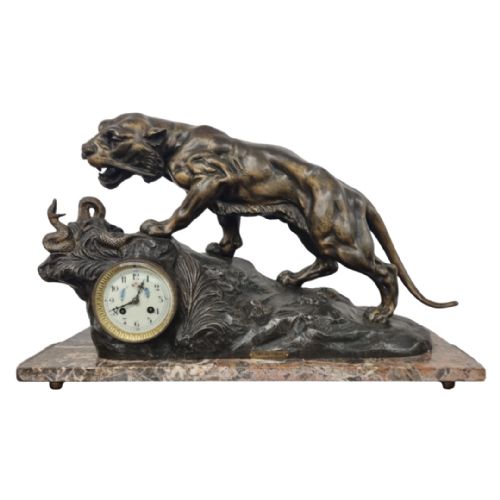
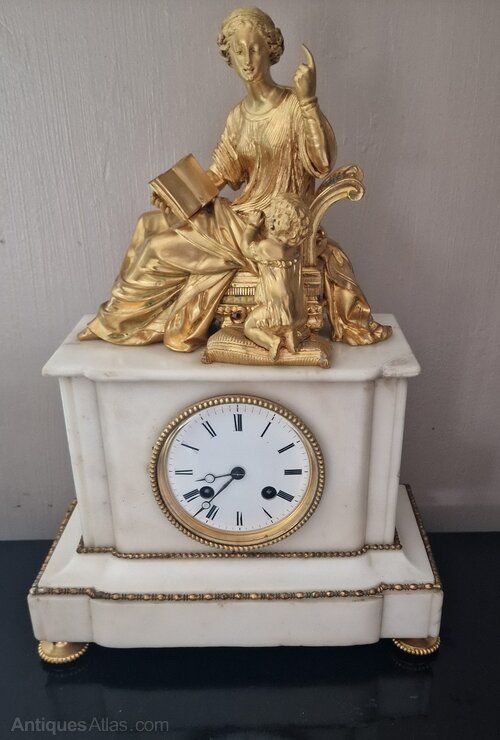
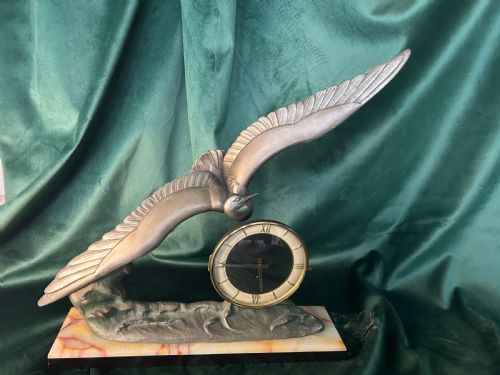
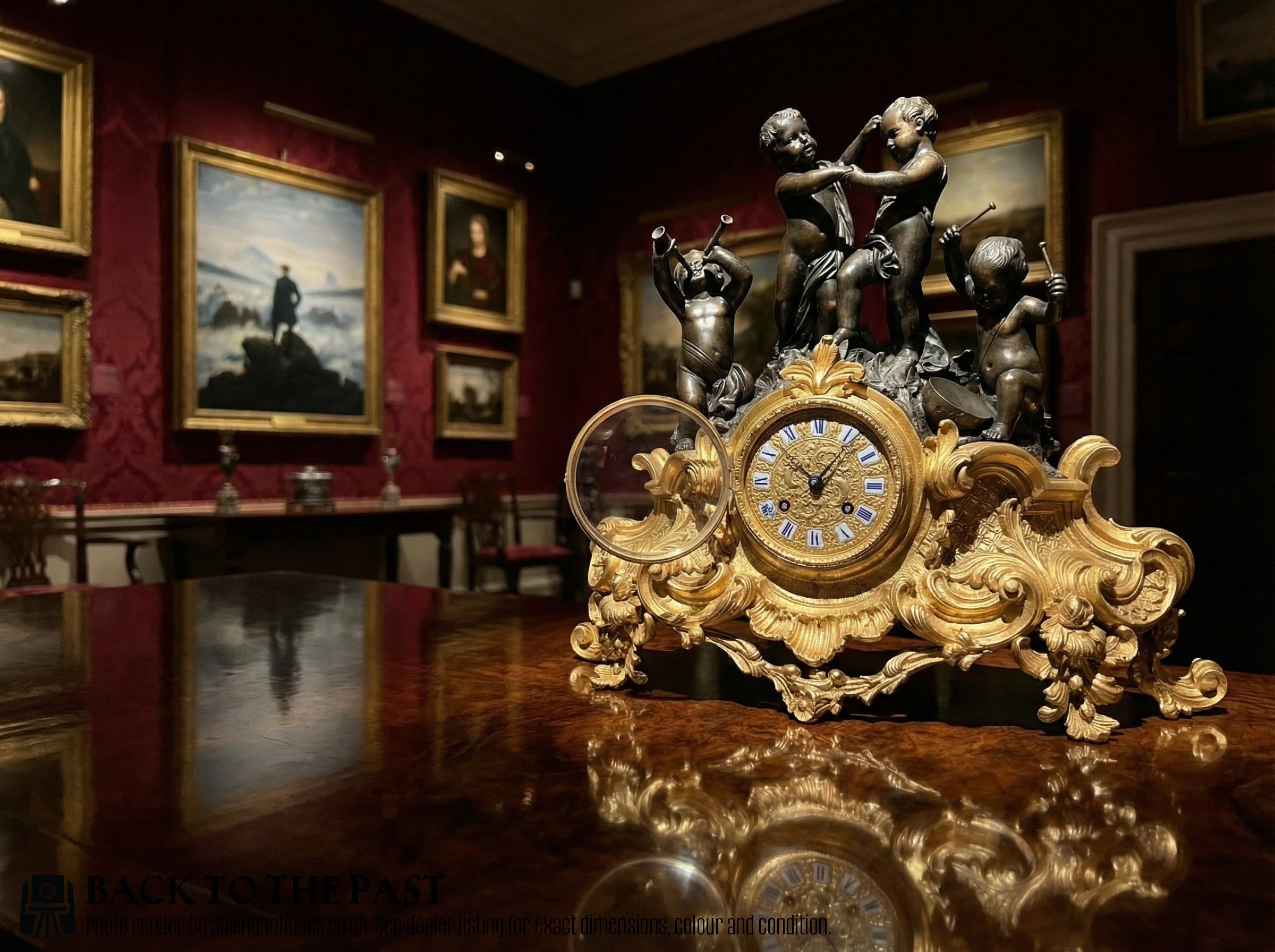
The most common formats on this page include mantel clocks, clock garnitures with matching side pieces, and drum head clocks. Subjects range from putti, cherubs and lions to allegorical figures like L'Aurore, often accompanied by elaborate marble or alabaster plinths.
How they were made
Foundries utilised bronze, gilt bronze, ormolu and spelter to cast the figurative elements and clock cases, frequently combining these metals with white or variegated marble and glass. Enamel dials provide the face, while brass movements regulate the time.
Sculptural components often draw upon classical sources, such as the work of Etienne Maurice Falconet, integrating detailed casting with polished stone bases and hand-finished gilding.
Materials recorded across the inventory include bronze, spelter, ormolu, marble, alabaster, glass, and enamel dials.
What varies in quality
The integration of the sculptural subject with the clock case and the quality of the variegated marble stand dictate the overall harmony and visual weight of the ensemble.
R Varnier·Berger Paris·Lemerle Charpentier·François Linke·François Moreau
The French Sculptural Clock Glossary
- Ormolu
- A technique of applying finely ground high-carat gold to an object of bronze, often used on French clock cases to achieve a rich, golden finish. It provides a durable and bright surface that characterises many Neoclassical and Rococo Revival pieces.
- Spelter
- A zinc alloy frequently utilised as a less expensive alternative to bronze for figurative castings on nineteenth-century clocks. It is softer than bronze and generally takes a patinated or painted finish.
- Garniture
- A set consisting of a central clock flanked by matching ornamental side pieces, such as urns or vases. These sets were designed to create a balanced arrangement on a mantelpiece.
- Animalier
- A nineteenth-century style focusing on the realistic depiction of animals, frequently seen in sculptural clock subjects involving creatures such as tigers and serpents.
- Putti
- Representations of plump, winged infants or cherubs commonly cast in metal to adorn the sides or top of clock cases.
French Sculptural Clock: Frequently Asked Questions
What is a french sculptural clock garniture?
A garniture comprises the main clock accompanied by matching side ornaments, designed to be displayed together as a unified set on a mantelpiece. These matched groupings create a symmetrical decorative arrangement.
They share the same materials and stylistic vocabulary, such as bronze figures or marble bases, tying the whole decorative scheme together.
How do I identify the period of a clock?
The stylistic markers offer the clearest guide to dating, with Neoclassical and Empire pieces showing architectural restraint, while Rococo Revival and Art Nouveau examples favour asymmetric curves and flowing organic lines. Signatures, maker marks and the choice of materials like spelter versus heavy bronze also help narrow down the decade.
Later nineteenth-century pieces often combine varied marble stands with allegorical figures, reflecting the changing tastes of the Victorian period.
Where should I place a heavy marble clock?
Because these pieces incorporate dense materials like white or variegated marble and heavy bronze castings, they require a sturdy, level surface such as a strong mantelpiece or a dedicated heavy table. Ensuring the support can bear the weight prevents accidental tipping.
Keep them away from direct sunlight and moisture to protect the enamel dials and the gilt surfaces.
What is the difference between bronze and spelter?
Bronze is a durable copper alloy that allows for crisp, fine details in casting and holds gilding or patination exceptionally well. Spelter is a softer, zinc-based metal that was often used as a budget-friendly substitute for bronze in later nineteenth-century manufacturing.
Objects cast in bronze generally feel heavier and display sharper definition in the sculptural elements than those made from spelter.