

French Bronze Table Clock
These heavy, finely cast timepieces combine metalwork and precision engineering to anchor a room.
French Bronze Table Clock
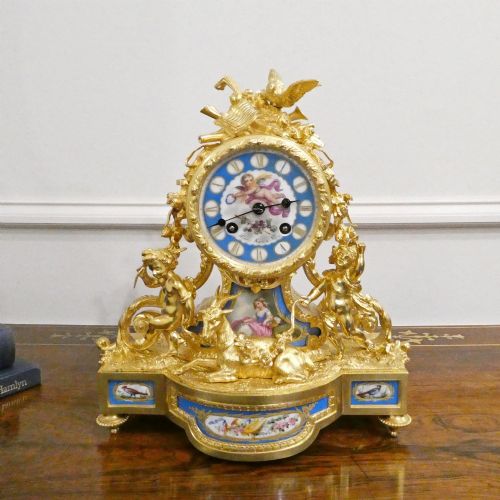
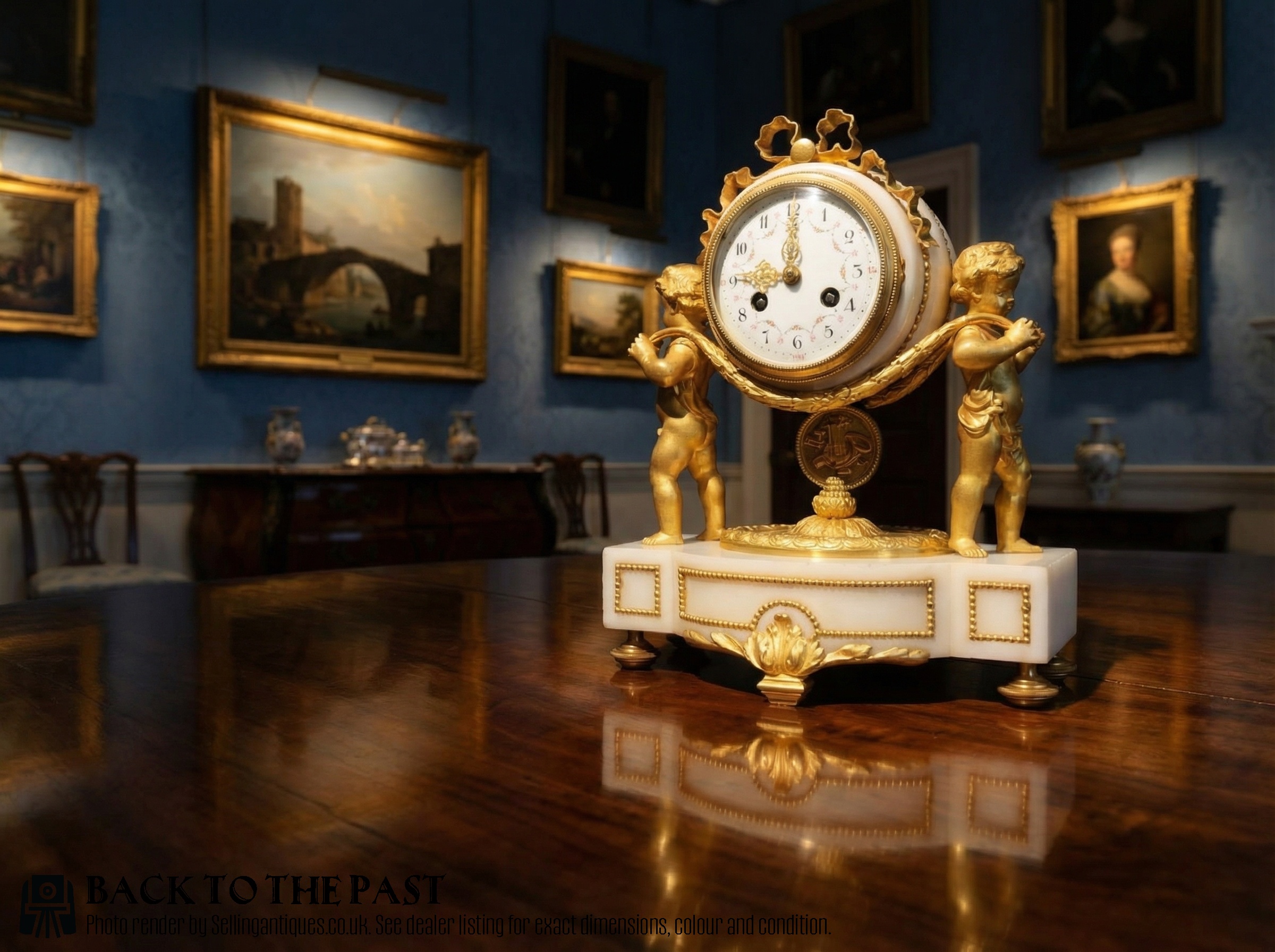
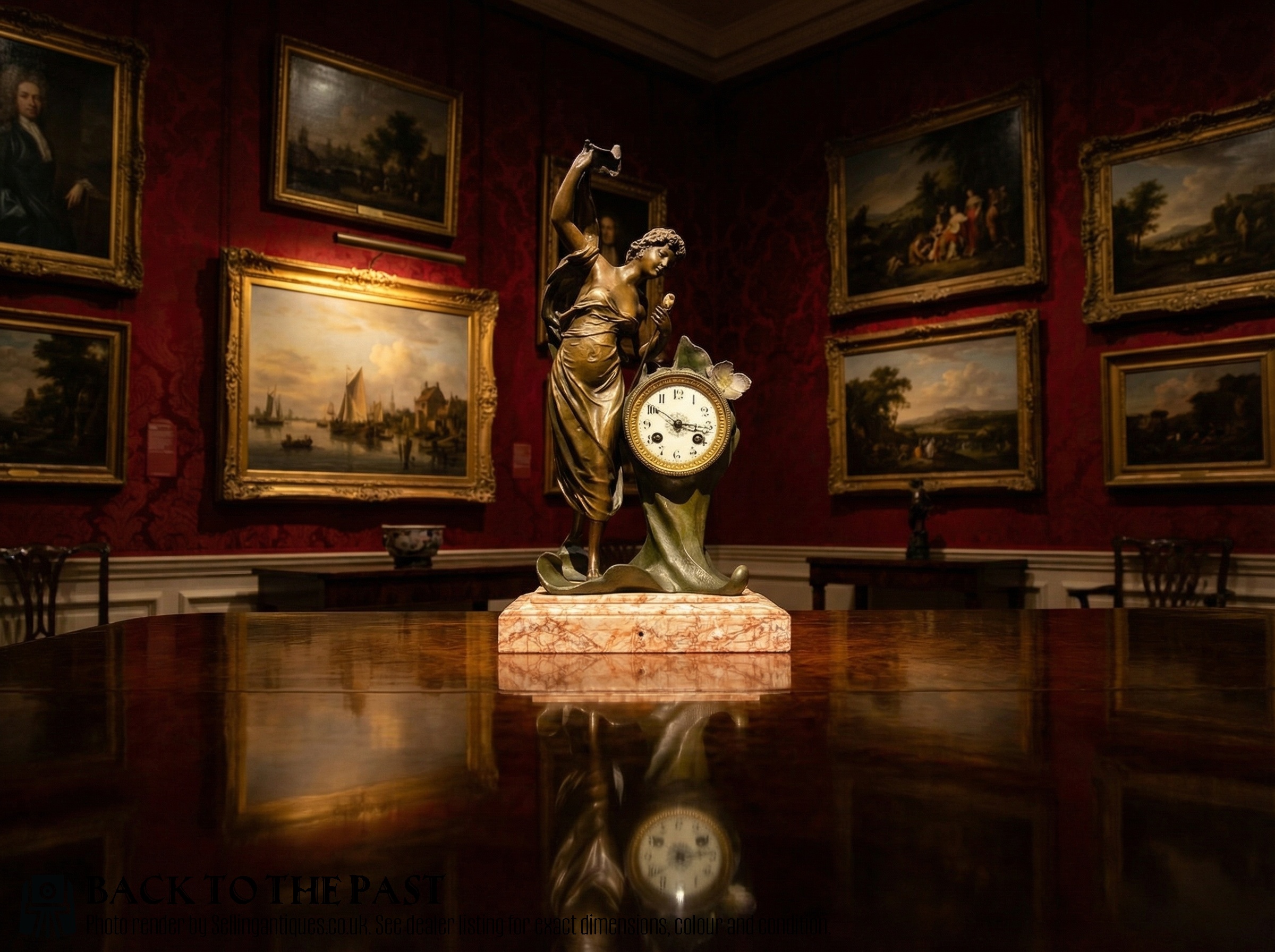
A French bronze table clock sits upon a mantelpiece, desk, or table, serving both practical timekeeping and decorative roles. The pieces gathered under this phrase span periods from the nineteenth century into the twentieth century, encompassing revival movements alongside Empire and Art Deco designs.
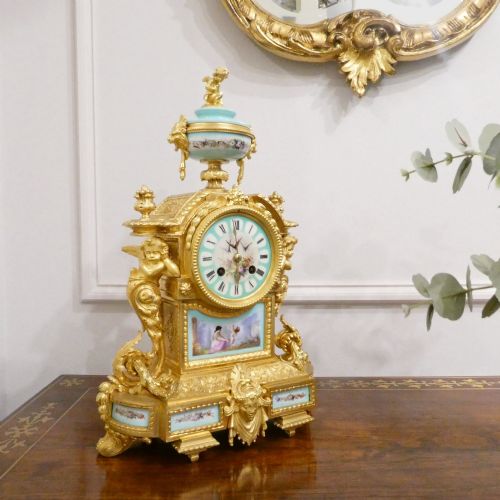
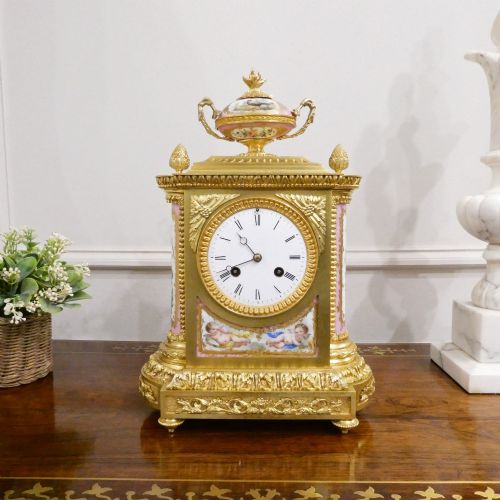
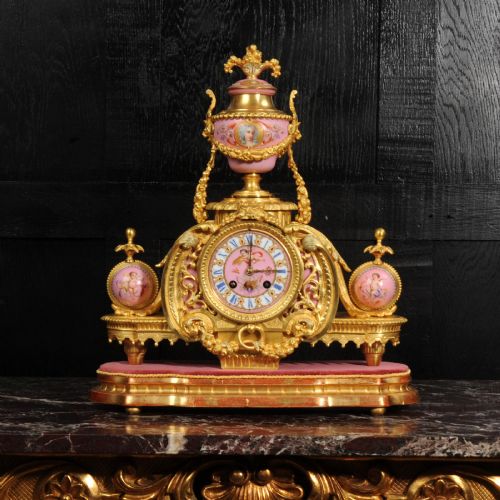
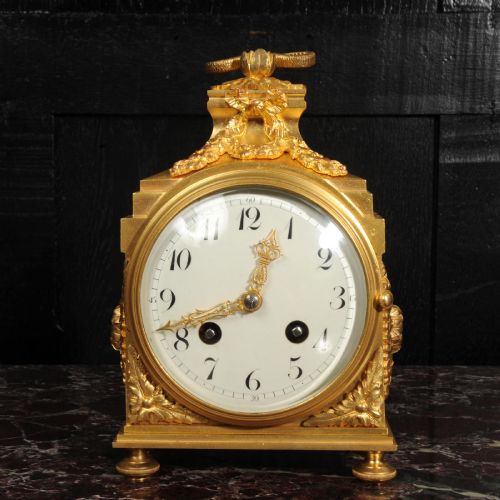
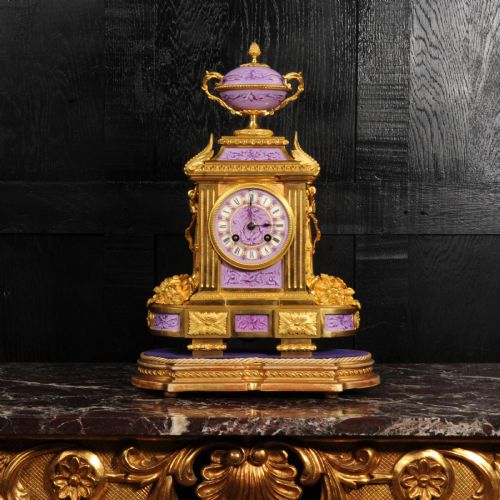
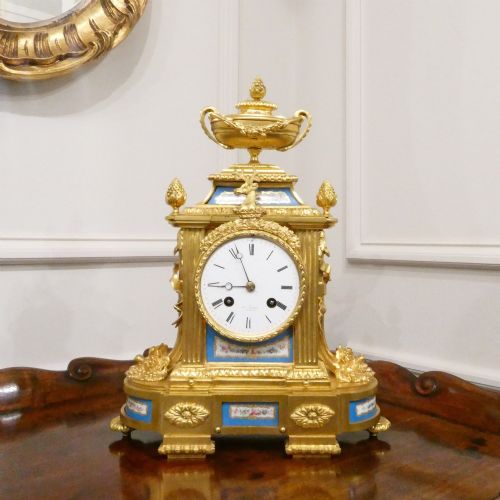
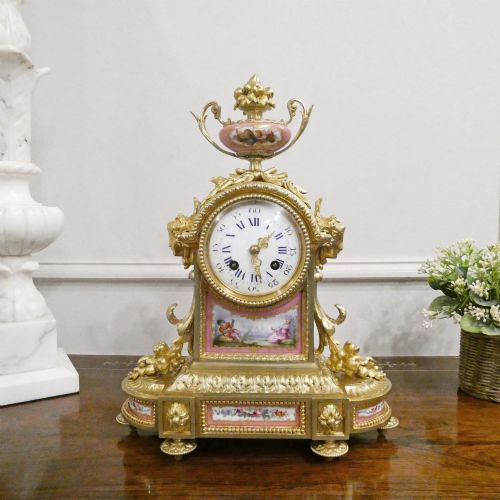
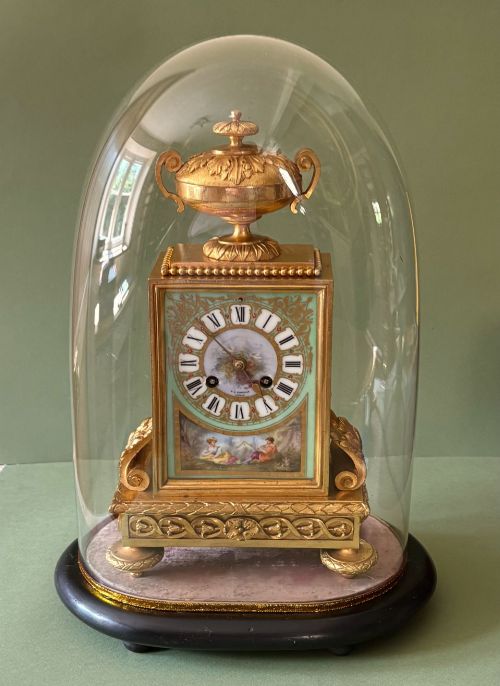
Most examples encountered here date from the Victorian era and the decades immediately surrounding it, frequently utilising gilt bronze, ormolu, and marble. Makers combined cast bronze figures with porcelain panels, enamel dials, and glass enclosures to produce substantial decorative objects.
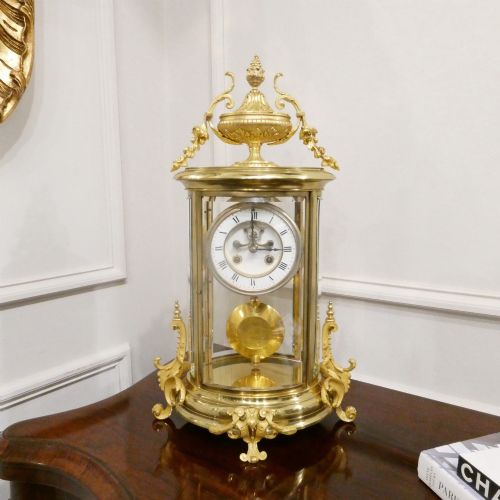
Forms range from architectural mantel clocks and figural groups depicting classical or romantic scenes to four-glass regulators and desk pieces. Many survive alongside matching side garnitures or candelabra to form complete decorative sets.
Materials and Construction
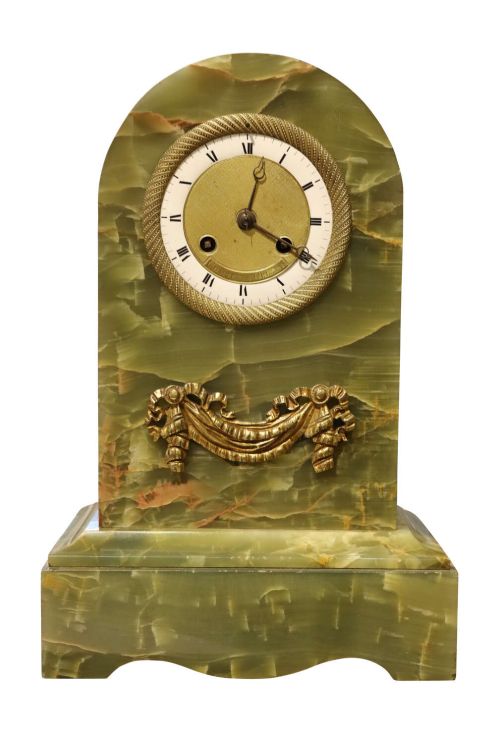
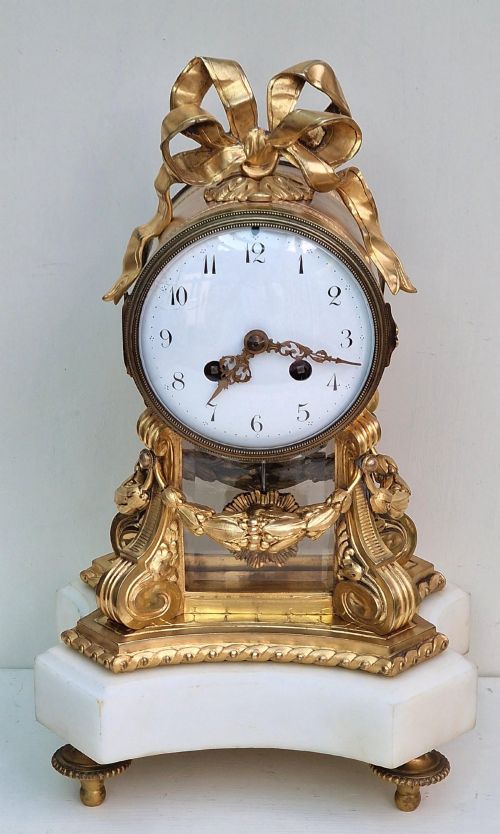
Foundry workers cast bronze and brass components before applying fire gilding or gold plating to create the characteristic ormolu surface finish. Casters frequently combined these metallic elements with carved marble bases, onyx, or porcelain plaques painted with floral and pastoral scenes.
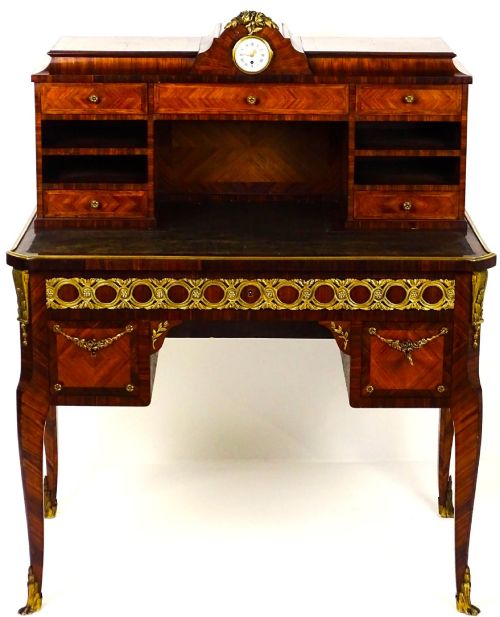
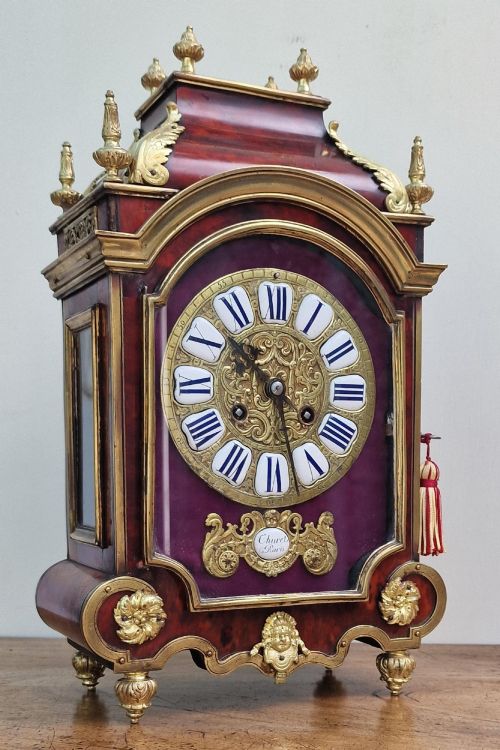
Clockmakers housed mechanical brass movements within these cases, utilising spring-driven or weight-driven escapements coupled with enamel numeral dials. Cabinetmakers also contributed specialised woodwork, integrating tortoiseshell and kingwood veneers into distinct clock bodies.
French Bronze Table Clock Retail Price Guide 2026
Typical asking prices for french bronze table clock among the pieces listed under this phrase on Sellingantiques today, from the lower quarter to the upper quarter. They describe what is for sale here now, not the wider market.
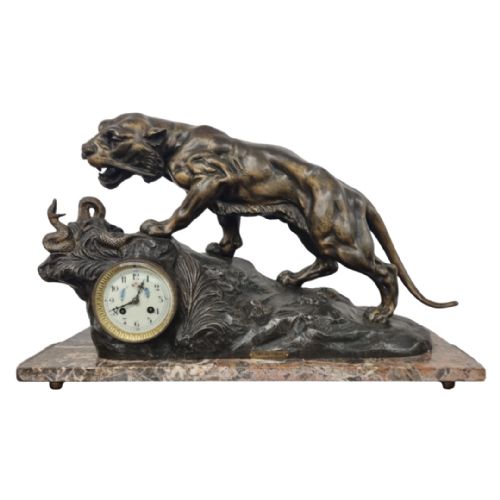
At least one bronze beast stands ready to tell the time, with an elephant and several eagles keeping watch over the hours.
Quality and Craftsmanship
The refinement of the bronze casting separates standard production from exceptional work, visible in the depth of chasing and the sharpness of cast botanical or figural details. Finer examples display meticulous hand-finishing across every surface, whereas simpler items retain softer, less defined contours from the mould.
The reputation of the maker and the complexity of the movement dictate the standing of a piece. Signed dials and movements from recognised Parisian workshops indicate higher standards of mechanical execution and material selection than unsigned alternatives.
Achille Brocot·Henry Marc·Charles a Orleans·Japy Freres·Samuel Marti·Paul Sormani·Vincenti·R Varnier·Siffel and Cartier·Canaillor of Paris·Henry Dasson·Etienne Lenoir
The French Bronze Table Clock Glossary
- Ormolu
- Gilded bronze produced by applying a mercury-gold amalgam to a bronze base and heating it to vaporise the mercury. This technique creates a durable, luminous golden finish characteristic of many nineteenth-century pieces.
- Garniture
- A set of matching decorative objects, typically comprising a central clock flanked by two matching vases, urns, or candelabra. These sets were designed to sit symmetrically on a mantelpiece.
- Champlevé
- An enamelwork technique where troughs or cells are hollowed out in the metal surface and filled with coloured vitreous enamel powder before firing. The piece is then polished smooth.
- Pendule d'Officier
- A portable carriage-style or small table clock originating in France, often fitted with a handle for transport between rooms. They typically feature striking mechanisms and visible escapements.
- Four-glass clock
- A mantel clock housed in a brass or gilt bronze frame with bevelled glass panels on all four sides, allowing the pendulum and movement to be viewed from multiple angles.
French Bronze Table Clock: Frequently Asked Questions
How do I wind a French bronze table clock?
Most mechanical clocks use a dedicated winding key inserted into small arbours on the enamel dial. Turn the key gently until you feel resistance, taking care not to overwind the mainspring.
Different movements require winding weekly or bi-weekly depending on whether they are timepieces only or include striking trains for the hours and halves.
Where should I place a heavy marble and bronze clock?
Position these heavy items on a sturdy, level surface such as a mantelpiece, sideboard, or dedicated table. Uneven placement can prevent the pendulum from beating evenly and cause the clock to stop.
Keep them away from direct sunlight, radiators, and damp areas to protect the gilt bronze surfaces, marble bases, and delicate enamel dials from environmental stress.
How do I identify the period of a French clock?
Examine the stylistic cues, such as the classical motifs of the Empire period, the asymmetrical curves of Rococo revival, or the geometric lines of Art Deco. Maker signatures on the movement backplate and dial also help narrow down the production decade.
Material choices further guide dating, as gilt bronze and porcelain combinations frequently align with mid-to-late nineteenth-century manufacturing trends in Paris.
What is a clock garniture?
A clock garniture is a matched decorative set featuring a central clock accompanied by two side pieces, which might be urns, candelabra, or vases. These pieces share identical materials, styles, and decorative motifs.
Placed across a mantelpiece or a large console table, they create a balanced, symmetrical arrangement typical of Victorian and nineteenth-century interior displays.