




Antique Mantel Clock Garniture
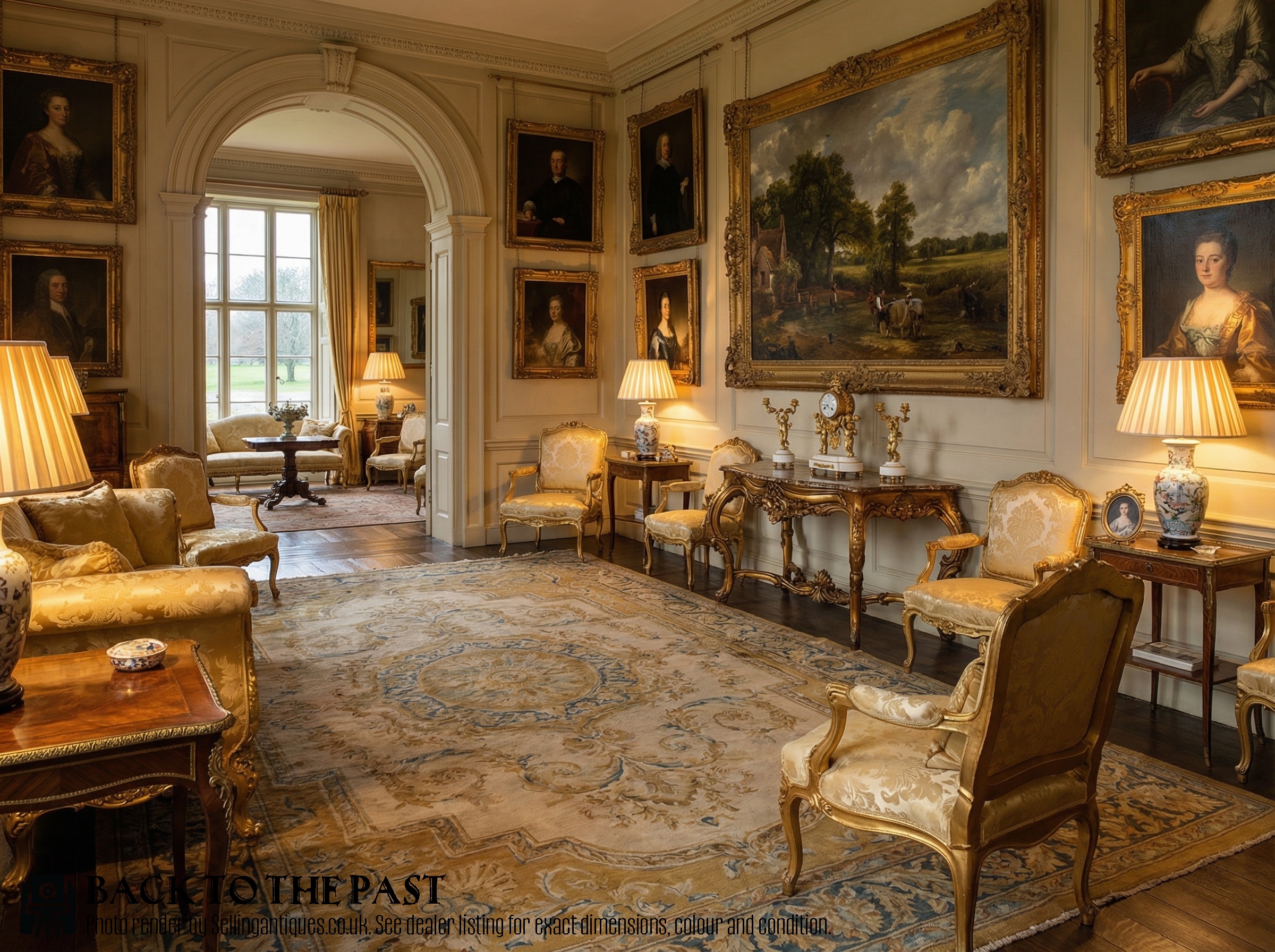
An antique mantel clock garniture brings together a central clock and matching side pieces to anchor a grand interior display.
Antique Mantel Clock Garniture
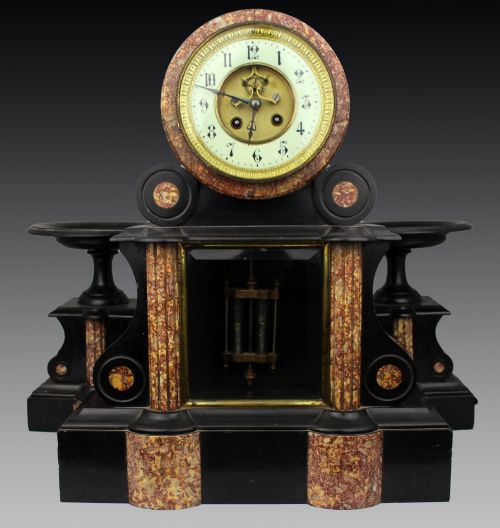
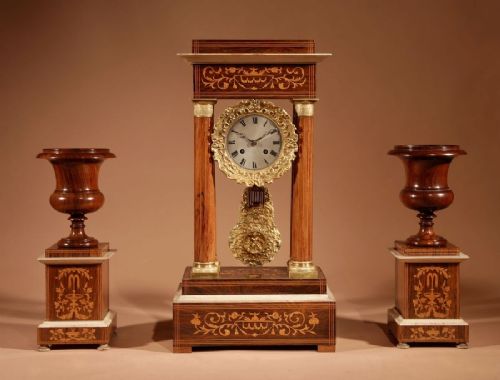
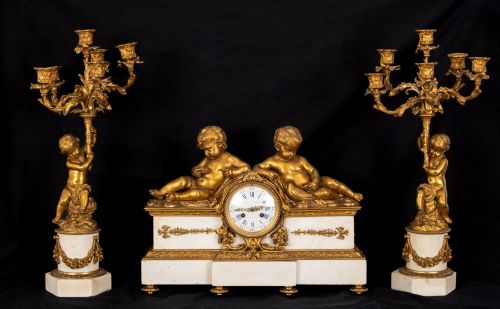
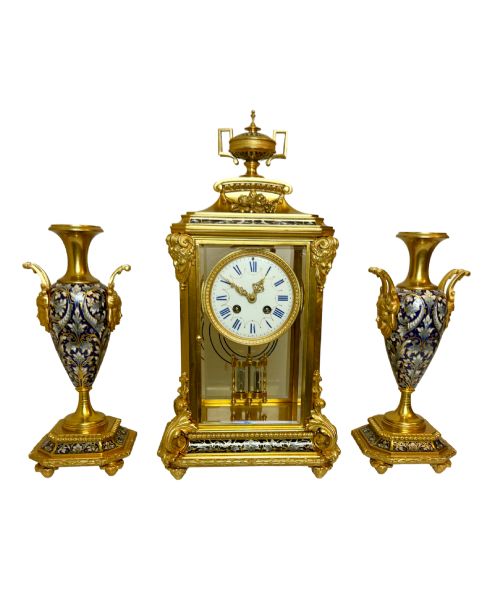
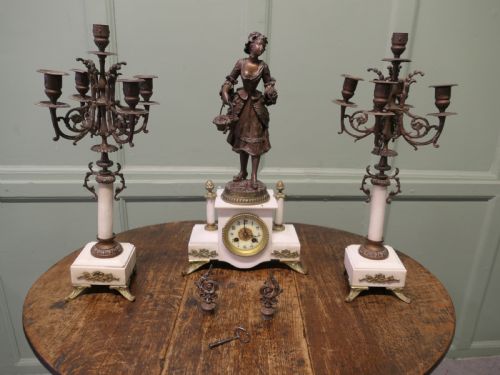
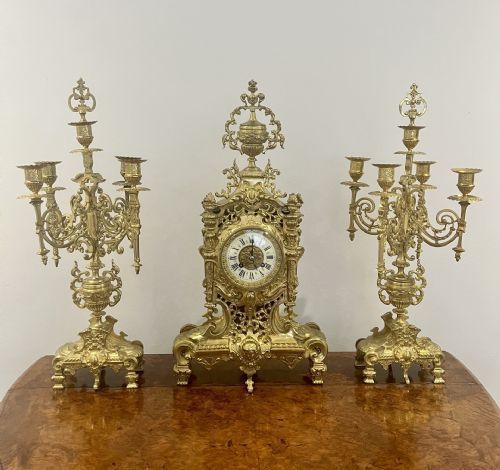
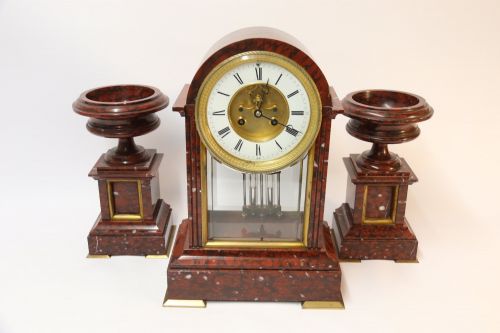
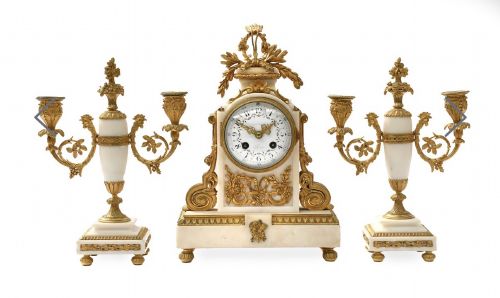
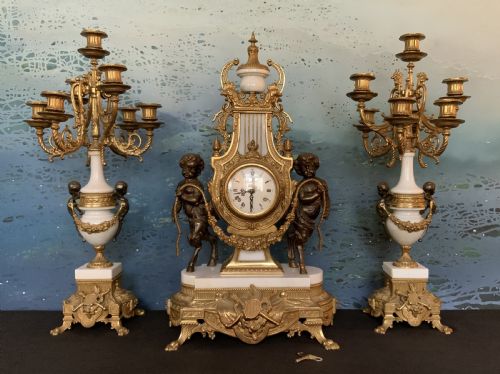
An antique mantel clock garniture consists of a central timekeeper accompanied by a matching pair of side ornaments, usually candelabra or urns, designed to sit together symmetrically on a fireplace mantel or console table. These three-piece ensembles appear frequently from the nineteenth century, reflecting a strong French taste for coordinated interior ornamentation that persisted from the Second Empire through the Art Deco period.
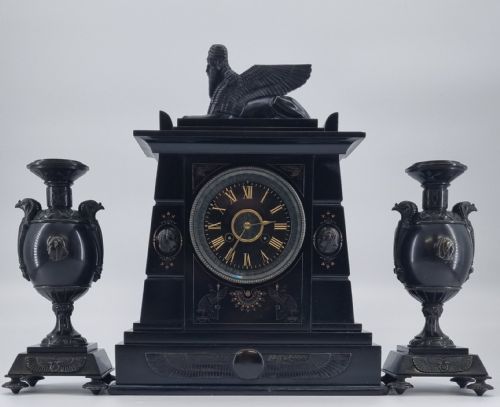
The most common examples encountered on this page originate from France during the nineteenth century, executed in heavy styles such as Louis XVI Revival, Rococo Revival, or Egyptian Revival. Collectors find these sets ranging from austere block marble designs to elaborate porcelain and ormolu configurations flanked by matching multi-light candelabra.
Materials and construction methods
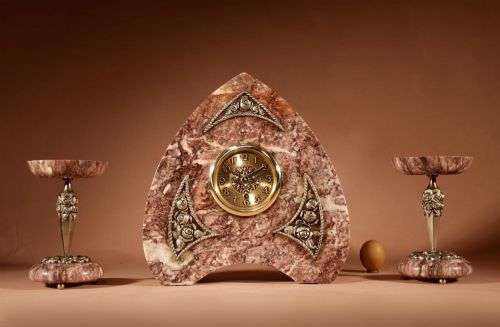
Maker workshops utilised dense stones such as black, red, pink, and white marble, alongside onyx, as the solid architectural base for both the clock housing and the matching garniture pieces. These heavy stone bodies were frequently combined with cast metals, including bronze, brass, and gilt ormolu, to create layered decorative effects.
Surface ornamentation relied heavily on hand-applied gilding, detailed bronze casting, and painted enamel dials or porcelain panels depicting classical scenes or floral motifs. Matching side garnitures were cast and finished using the same metallurgical and stoneworking techniques as the central clock to ensure a uniform appearance across all three items.
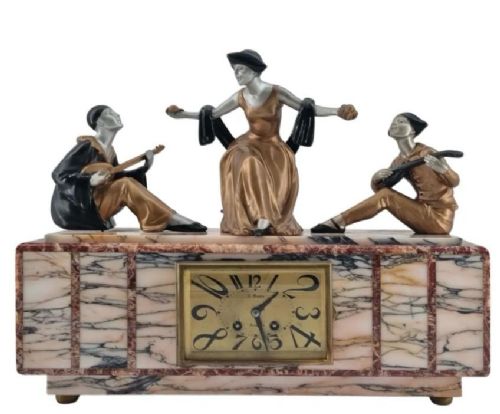
Listings feature nineteenth-century French pieces alongside later Art Deco examples executed in marble, bronze, porcelain, and enamel.
Distinguishing quality across sets
The division between standard and superior sets rests in the crispness of the bronze or ormolu casting and the weight and selection of the marble or onyx housings. Finer examples display deeply chased metalwork, substantial porcelain panels, and well-balanced proportions across all three matching objects rather than simpler cast fittings.
Another measure of quality involves the complexity of the movement and the presence of notable signatures on the dial or mechanism. Sets bearing the marks of established makers or incorporating intricate architectural elements like porticos or figural bronzes demand closer attention for their superior craftsmanship.
Japy Frères·Samuel Marti·Henry Dasson·Mougin·Sega
The Antique Mantel Clock Garniture Glossary
- Garniture
- A matched set of ornamental objects designed to be displayed together, typically comprising a central clock flanked by two matching candelabra or urns.
- Ormolu
- Gilt bronze produced by applying a fine gold-mercury amalgam to a cast bronze base, creating a rich golden surface finish common in French decorative arts.
- Champlevé
- An enamelwork technique where troughs are carved into a metal surface and filled with vitreous enamel before firing.
- Candelabra
- Branched candlesticks designed to hold multiple candles, frequently supplied as the matching side pieces in a clock garniture set.
Antique Mantel Clock Garniture: Frequently Asked Questions
What is an antique mantel clock garniture?
An antique mantel clock garniture is a decorative set composed of a central clock and two matching side ornaments designed to be displayed together on a mantelpiece.
These three-piece ensembles create a balanced decorative scheme, typically featuring matching materials and ornamental motifs across all components.
How were clock garnitures used historically?
Historically, these sets served as prominent status symbols and timekeepers in nineteenth-century formal reception rooms and parlours.
The central clock provided the functional time, while the flanking candelabra or urns completed a symmetrical visual arrangement on the mantelpiece.
How do I live with a marble clock set?
Living with a heavy marble and bronze clock set requires a sturdy mantel or console table capable of supporting significant stone and metal weight.
Placement should avoid direct sunlight and extreme temperature fluctuations to protect the delicate enamel dials and gilded finishes.
How do I tell nineteenth-century styles apart?
Nineteenth-century styles are identified by their distinct decorative vocabulary, ranging from the ornate scrolls of Rococo Revival to the strict symmetry of Louis XVI Revival.
Egyptian Revival pieces incorporate specific pharaonic motifs, while later Art Deco examples substitute geometric lines and figural subjects like Pierrot and Columbine.