


Antique Brass Clock Set
An antique brass clock set brings together a striking mantel timepiece and matching garniture ornaments to anchor a room with period weight.
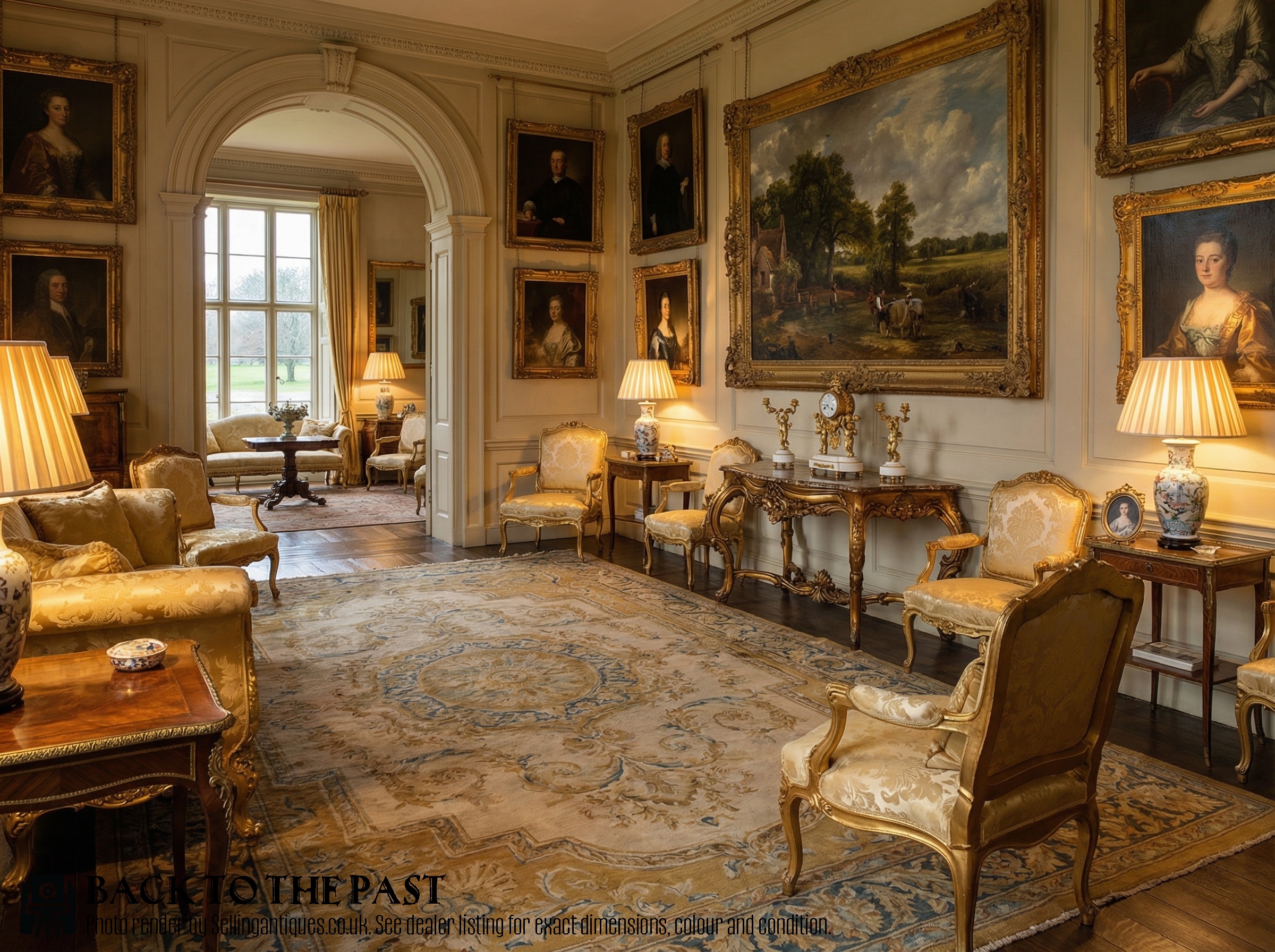
Antique Brass Clock Set
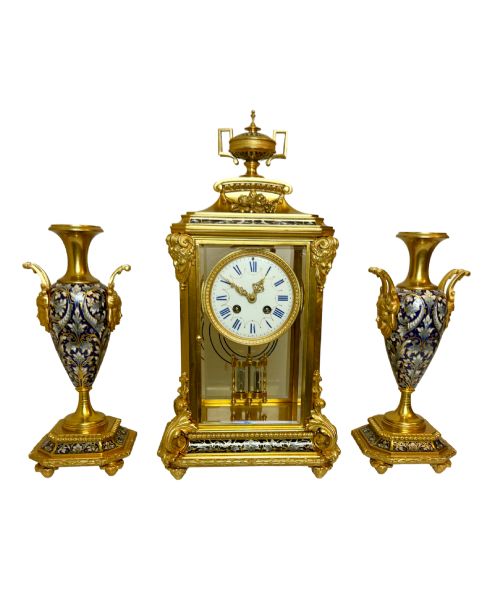
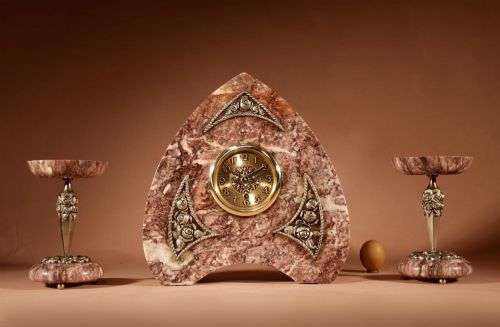
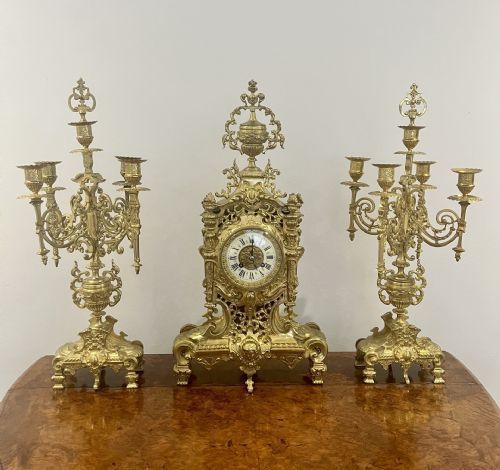
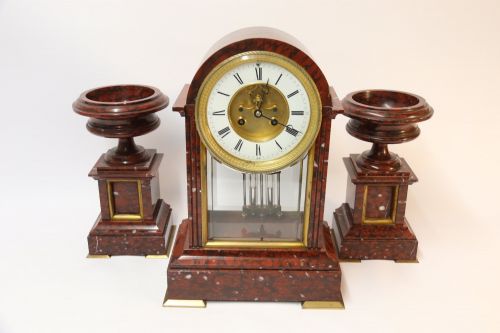
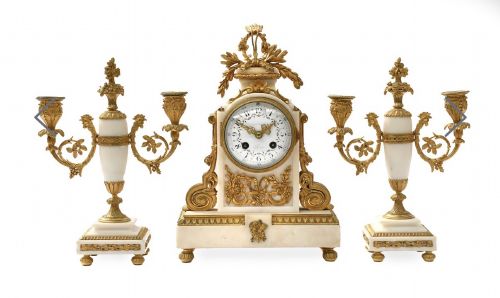
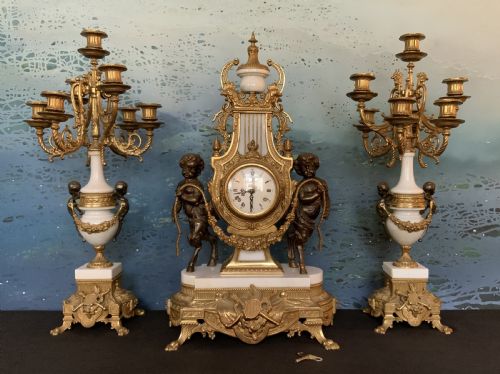
When searching for an antique brass clock set, buyers encounter multi-piece ensembles consisting of a central mantel timepiece flanked by matching candelabras, urns, or vases. These groups emerge predominantly from nineteenth-century French workshops, spanning styles from ornate Rococo revival and Louis XVI to solemn Gothic and restrained Art Deco.
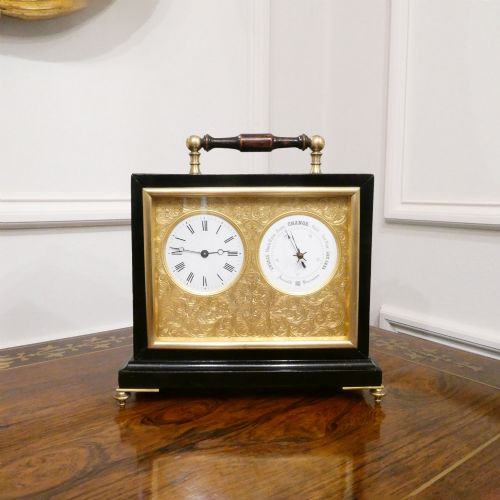
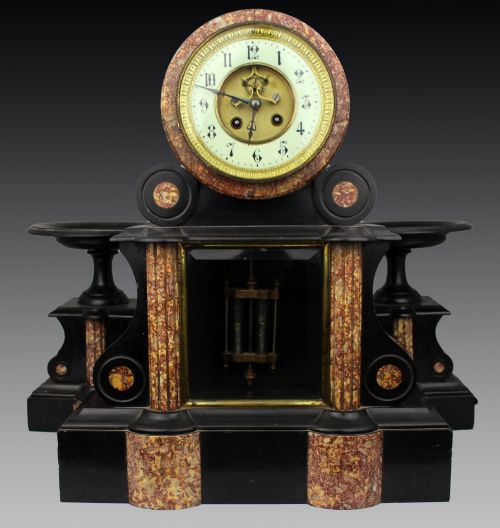
The configurations vary widely across the available pieces, including standard three-piece mantel arrangements, desk compendiums, and portico clocks with visible pendulums. Many of these sets pair polished brass or gilt ormolu cases with contrasting materials like dark marble, onyx, and porcelain panels.
Makers frequently integrated functional accessories into the broader ensemble, matching the central clock with barometers, inkwells, or matching side ornaments to create a unified display across a surface.
Materials and Construction
Foundry workers cast the structural components in brass or bronze before applying heavy gilding, ormolu finishes, or polished patinations to achieve the desired metallic gleam. These metal cases often house intricate mechanical movements driven by eight-day striking trains.
Craftsmen embedded delicate vitreous decorations such as champlevé and cloisonné enamels directly into the brass frameworks, alongside painted porcelain plaques depicting pastoral scenes or floral motifs. Heavy natural stone elements, particularly black marble and green onyx, provide substantial plinths and architectural surrounds for the metalwork.
Glass panels protect the enamel dials and expose the oscillating pendulums, while specialised escapements regulate the ticking mechanisms housed within the heavy cases.
Some sets hide secret compartments or incorporate working inkwells and chafing cutters directly into the heavy brass housings.
Distinctions in Craftsmanship
Quality rests heavily on the crispness of the bronze casting and the depth of the subsequent chasing work, where master founders achieved sharp relief and clean contours on scrollwork and human figures. Lesser examples exhibit softened details and generalized casting textures.
The reputation of the movement maker dictates the mechanical standing of the set, with signed works from established Parisian horologists commanding greater regard than unmarked mechanisms. The integration between the clock case and its matching side pieces also signals the original ambition of the commission.
Japy Freres·Samuel Marti·Vincenti et Cie·A.D Mougin·Deniere
The Antique Brass Clock Set Glossary
- Garniture
- A set of matched ornamental objects designed to be displayed together on a mantelpiece or sideboard. The central clock is typically accompanied by two matching candelabras or vases.
- Ormolu
- Gilded bronze produced by applying a finely ground high-carat gold-mercury amalgam to a cast bronze object and heating it to vaporise the mercury. This technique creates a rich, durable golden surface.
- Champlevé
- An enamelling technique where troughs or cells are hollowed out of the metal surface and filled with vitreous enamel powder before firing. The resulting design sits flush with the surrounding brass or bronze borders.
- Escapement
- The mechanical linkage that transfers energy to the pendulum and controls the unwinding of the clock spring. Different types, such as the chaff-cutter or platform escapement, regulate timekeeping accuracy.
- Portico
- A clock case architecture featuring architectural columns supporting a lintel, often framing a suspended pendulum that swings freely between the upright supports.
Antique Brass Clock Set: Frequently Asked Questions
What is a clock garniture?
A clock garniture is a matched decorative set comprising a central mantel clock accompanied by side ornaments like candelabras or urns. These pieces share identical materials, styles, and casting motifs to create a unified display.
Historically, they were placed on mantelpieces above fireplaces or upon large credenzas in formal reception rooms. The side pieces balance the visual weight of the central timepiece and complete the decorative scheme.
How do I wind an antique clock set?
Most antique mechanical sets utilise an eight-day movement driven by springs or weights, requiring a key to wind the arbors periodically. Care must be taken not to overwind the mainsprings, which can cause internal damage.
Many of these movements feature striking mechanisms that chime the hours and half-hours on bells or gongs. Setting the time safely involves moving the minute hand forward rather than backward through the sequence.
Are these clocks suitable for daily use?
These timepieces function well for daily timekeeping provided they are placed on a level surface and properly serviced by a professional horologist. Environmental stability, away from direct heat sources and drafts, helps maintain the mechanical integrity of the brass gears.
Periodic oiling and cleaning keep the escapements and striking trains operating smoothly over the years. Many collectors run them regularly while others maintain them primarily as decorative objects.
How do I identify the period of a set?
Stylistic clues within the brass casting, dial design, and accompanying materials help narrow down the manufacturing era. Rococo revival pieces feature asymmetric scrolls and naturalistic motifs, while Louis XVI sets lean toward neoclassical symmetry, urns, and strict geometry.
Signatures stamped on the back plates by makers provide direct chronological markers. The presence of materials like champlevé enamel or black marble also aligns with specific decades of production during the nineteenth century.