


Classical Brass Mantel Clock
A classical brass mantel clock brings nineteenth-century architectural dignity and precision timekeeping to a room.
Classical Brass Mantel Clock
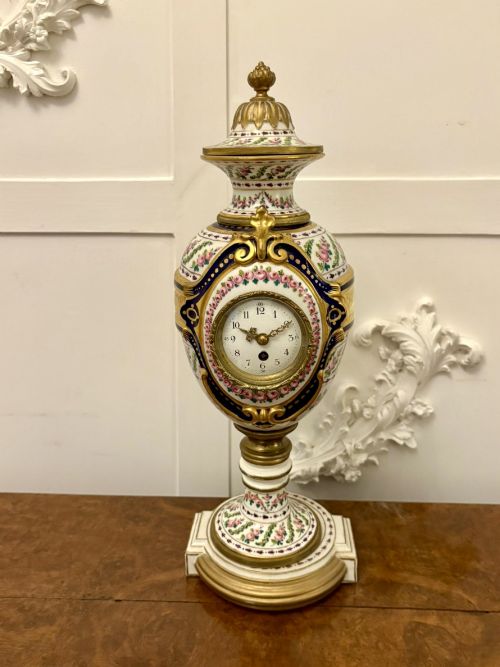
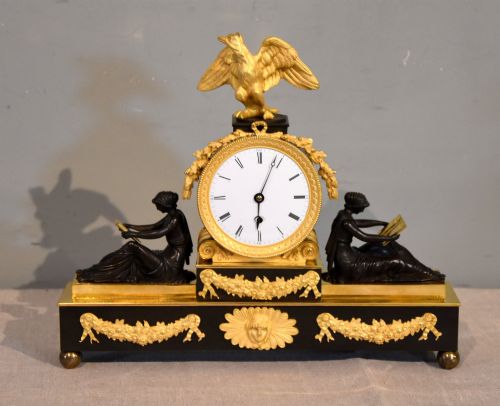
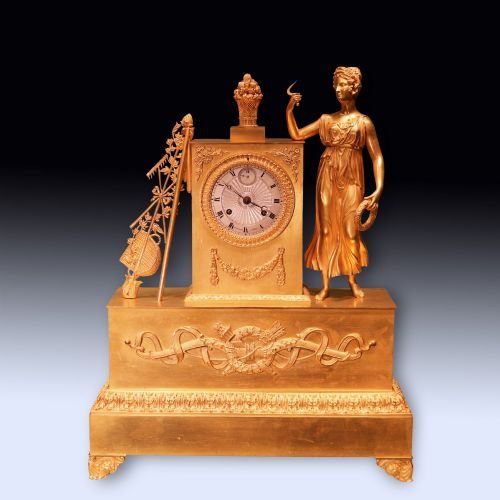
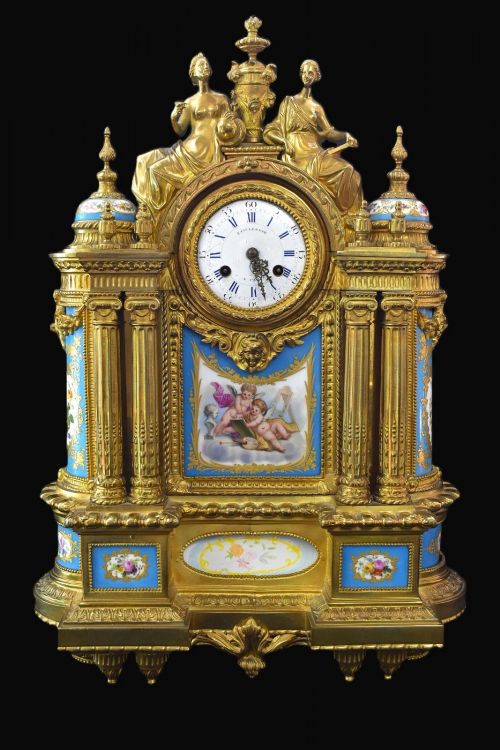
A classical brass mantel clock represents a distinct category of nineteenth-century timekeeper, often incorporating brass alongside gilt bronze, ormolu, and marble. Buyers searching for a classical brass mantel clock encounter robust architectural forms originating primarily from French and English workshops during the Victorian, Regency, and nineteenth-century periods.
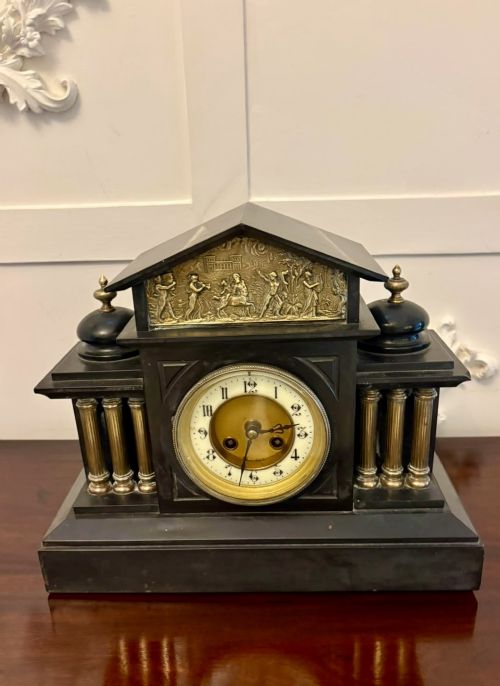
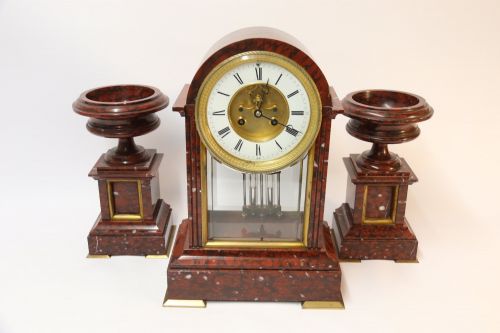
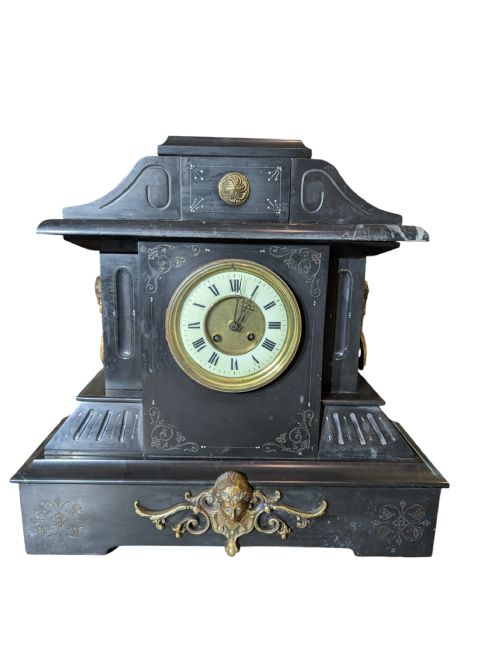
The most common examples on this page combine heavy stone bases in black slate, white or sienna marble with brass dials, bezels, and cast ornamentation. These pieces range from substantial architectural portico designs to ornate garnitures flanked by matching side urns or candelabra.
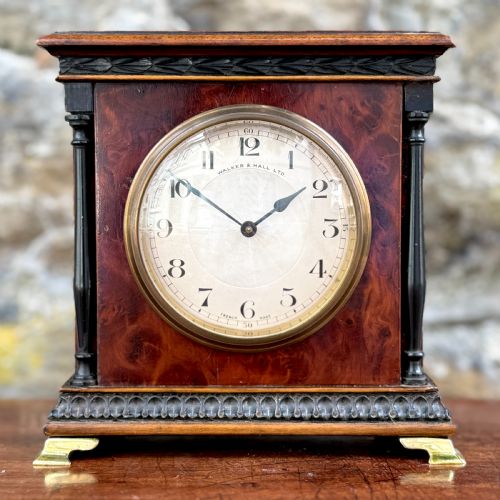
Makers such as Samuel Marti, Japy Freres, and A.D. Mougin dominate the heavier French output, while English makers contribute refined fusee movements housed in architectural wood and brass cases. Collectors look for complete clock sets that retain their original garniture pieces and unblemished enamel dials.
Factors of Quality
Quality separates through the crispness of the cast brass and ormolu mounts, where superior pieces retain deep, hand-chased relief rather than soft, rounded edges from worn moulds. The weight and selection of the underlying marble or onyx also distinguish finer examples, as dense natural stone provides a more substantial architectural presence.
Movement execution defines the upper tier of these timepieces, evident in signed brass backplates from established Parisian and London makers, precision escapements, and clean striking trains. Intricate garniture sets that maintain matching serial numbers across the clock and side pieces represent the highest standard of survival.
Object configurations range from single drum head clocks and portico designs to multi-piece clock garnitures with matching side ornaments.
Walker and Hall·Canaillor of Paris·Samuel Marti·Etienne Lenoir·Japy Freres·Philippes Paris·Baby and Jannings·A.D Mougin
The Classical Brass Mantel Clock Glossary
- Ormolu
- Gilded bronze produced by applying a mercury and gold amalgam to a cast bronze object and heating it until the mercury vaporised. This historic technique leaves a durable, rich golden surface sheen.
- Fusee
- A conical pulley connected to the mainspring by a chain or cord within English clock movements. It equalises the declining pull of the spring as it unwinds to maintain steady timekeeping accuracy.
- Garniture
- A set consisting of a central clock flanked by two matching decorative objects such as urns, vases, or candelabra. These sets were designed to sit symmetrically on a fireplace mantel.
- Enamel
- A glassy substance fused to a metal dial face through high-temperature firing. White enamel provided a smooth, clean background for painted numerals.
- Portico clock
- A distinct architectural clock style supported by four columns resembling a classical temple facade. They frequently utilised glass panels and visible pendulum swings.
Classical Brass Mantel Clock: Frequently Asked Questions
What is a classical brass mantel clock?
A classical brass mantel clock is a nineteenth-century timekeeper featuring brass framing, mounts, or bezels combined with heavy materials like marble, slate, or mahogany. These pieces reflect Victorian, Regency, and Empire design influences.
They serve both a practical timekeeping function and a decorative role, often featuring mechanical movements that require manual winding via a key.
How do I wind an eight-day clock?
Eight-day mechanical clocks require winding every week using a matching metal key inserted into the winding holes on the enamel dial face. Turning the key tensions the internal springs that power the gear train and striking mechanism.
Care must be taken not to overwind the mainsprings, stopping as soon as resistance increases to protect the internal brass gears.
What is a clock garniture set?
A clock garniture set includes a primary mantel clock accompanied by two matching side pieces, such as decorative urns, vases, or candelabra. These matched sets were manufactured together to create a balanced display on large fireplaces.
Materials used in these matched groupings typically mirror the central clock body, incorporating matching marble, onyx, or ormolu mounts.
How do I identify French movements?
French movements from the nineteenth century often feature stamped maker seals, round brass plates, and serial numbers engraved directly onto the backplate. Foundry marks frequently credit volume producers like Samuel Marti or Japy Freres.
These mechanisms commonly utilise a bell or gong strike for the hours and half-hours, driven by pendulum regulation.