






Empire Marble Clock
An empire marble clock brings heavy architectural stone and gilded metal together to anchor a room.
Empire Marble Clock
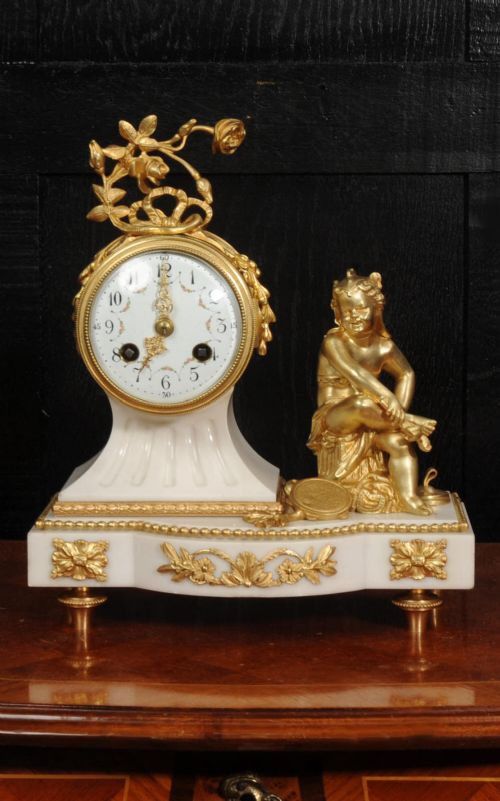
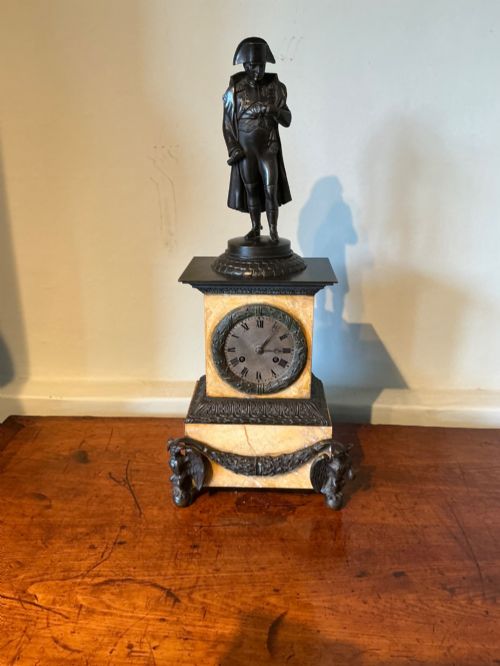
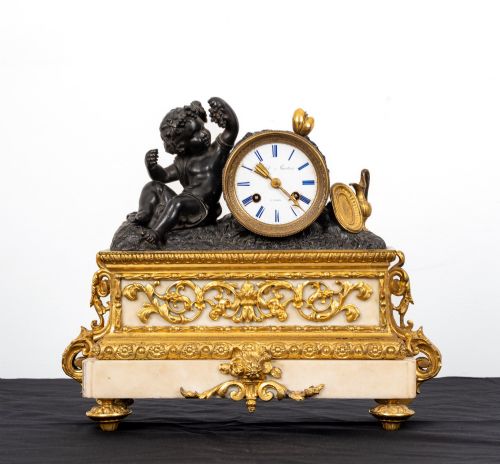
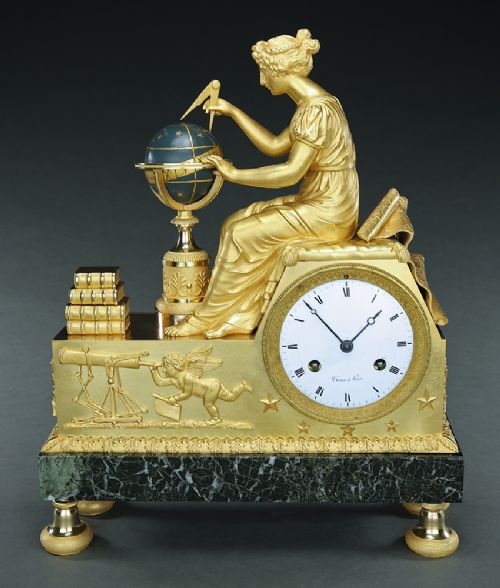
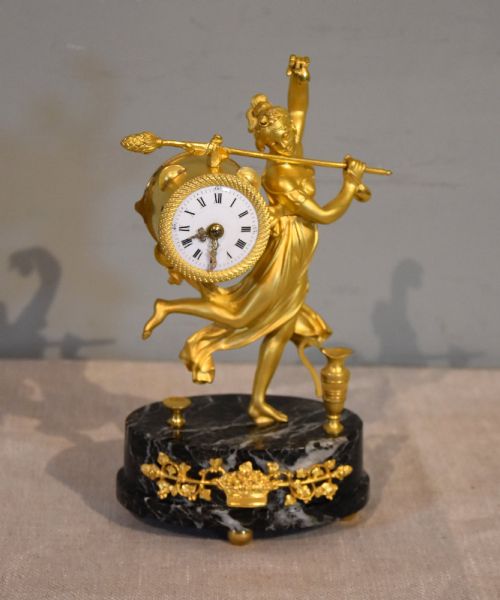
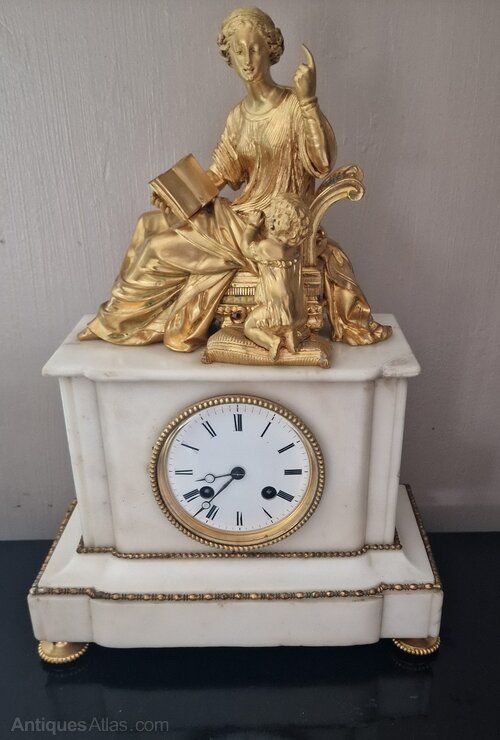
When you search for an empire marble clock, you encounter heavy stone mantel pieces shaped by French design traditions across the nineteenth century. These objects combine solid marble bodies with cast metal mounts and figures, ranging from simple architectural portico forms to elaborate figural clock garniture sets.
Green, white, rouge and sienna marble form the structural bodies of these items, frequently paired with ormolu and bronze. The selection on this page demonstrates how makers deployed classical motifs, Egyptian influences and figural subjects including Napoleon and cherubs upon heavy stone plinths.
Mantel clocks and multi-piece garniture sets dominate the offerings, spanning the Victorian era, the nineteenth century and the Regency period. Buyers find both simple timepieces and eight day striking movements housed inside marble housings.
What varies in quality
The integration between the stone body and the metal mounts defines the upper tier of production. Superior items align heavy marble sections cleanly with heavy gilded bronze components, using substantial movements signed by established makers.
Listings feature white, green, rouge and sienna marble varieties paired with gilt bronze and ormolu mounts across the nineteenth century.
Japy Freres·Victor Paillard·Deniere and Cailleaux·Siffel and Cartier
The Empire Marble Clock Glossary
- Ormolu
- Gilded bronze produced by applying a mixture of gold and mercury or through modern electroplating. This technique gives bronze mounts a bright golden finish.
- Garniture
- A set of matching decorative objects consisting of a central clock flanked by side pieces such as urns or candelabra. These sets created symmetrical mantelpiece displays.
- Portico clock
- A clock design featuring an architectural case supported by four columns, resembling a classical temple. The pendulum typically swings visibly within the open central space.
- Fusee
- A conical pulley connected to a cord or chain that equalizes the pull of the mainspring as it winds down. This mechanism helps the clock maintain consistent timekeeping.
- Enamel dial
- A clock face made by fusing powdered glass onto a metal substrate at high heat. These smooth surfaces carry painted Roman or Arabic numerals.
Empire Marble Clock: Frequently Asked Questions
How do I wind an empire marble clock?
Most of these movements require a key inserted into the dial holes to tension the springs every week or eight days. Care must be taken not to overwind the mechanism.
Moving the hands should be done slowly and strictly in accordance with the strike sequence to avoid damaging the internal gear train.
Where should I place an empire marble clock?
These heavy stone objects require a sturdy mantelpiece, console table or heavy chest capable of supporting considerable weight. Placing them away from direct sunlight and damp walls protects the marble and the gilding.
Level surfaces are essential because the pendulum requires an even beat to keep accurate time.
What is a clock garniture set?
A garniture set includes a central timepiece accompanied by matching side ornaments, such as decorative urns or candelabra. These pieces were designed to be displayed together on a fireplace mantel for visual symmetry.
Individual clocks often survived alone, while complete three-piece or multi-piece sets remained together in formal drawing rooms.