




Antique Drum Clock
An antique drum clock brings solid architectural presence to a mantel or hall, combining circular dial housings with polished brass, mahogany, and fine ormolu mounts.
Antique Drum Clock
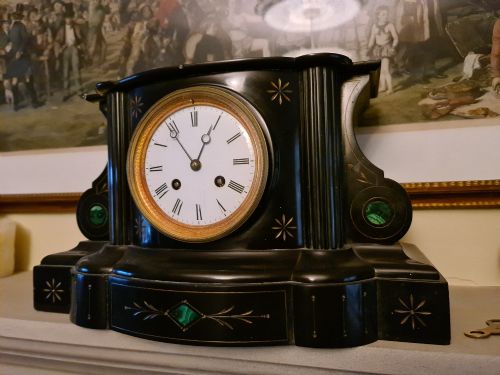
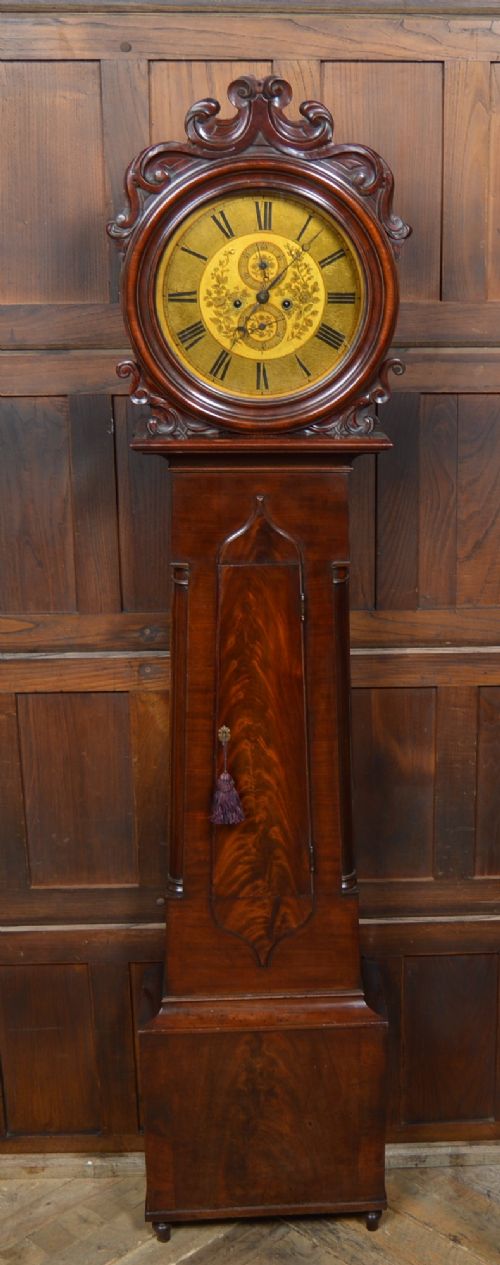
An antique drum clock takes its name from the prominent circular casing that encloses the movement, resembling a mounted drum set upon a plinth or tall wooden trunk. These pieces appear most frequently as mantel clocks in French ormolu and bronze, or as striking Scottish and English longcase clocks featuring a distinct drum-shaped head.
The materials span rich woods like mahogany and rosewood alongside heavy black slate, white marble, and cast brass. Makers housed these mechanisms in domestic settings ranging from formal Victorian drawing rooms to Regency libraries, adapting the circular dial motif for both desktop use and grand floor-standing grandfather clocks.
Originating largely from nineteenth-century workshops in Britain and France, the surviving examples demonstrate a remarkable variety of scales. Buyers encounter everything from compact table clocks with delicate enamel dials to tallcase longcase clocks where the drum head sits proudly atop flame mahogany trunks.
Materials and Construction Techniques
Horologists built these movements using durable brass and iron components, often incorporating fusee mechanisms to maintain steady tension on the gear train as the mainspring unwound. Cabinets and desk clocks utilised skilled joinery, shaping solid mahogany, rosewood, and burr walnut into tight circular housings designed to protect the delicate inner escapements.
Foundries cast decorative mounts in ormolu, gilt bronze, and brass, applying hand-chasing and gilding to enrich the architectural surrounds of French mantel models. Dials were typically formed from white enamel with painted numerals, protected behind bevelled glass panes fitted securely into heavy brass bezels.
Several clocks feature tiny putti resting atop the drum housing, apparently drifting on clouds while supervising the hours.
Distinctions in Execution and Finish
The refinement of the casting and chasing separates standard production pieces from exceptional works, particularly in the crisp detail found on ormolu mounts and lion mask ornaments. Superior examples display deeply incised case work, perfectly fitted glass bezels, and complex movements signed by renowned French and British makers.
The choice of materials dictates the visual weight and longevity of the piece, with dense marbles, rich green marble, and figured flame mahogany commanding greater visual presence than plain ebonised wood. Original gilding and untouched enamel dials without hairline fractures preserve the integrity of the design and indicate higher initial workshop standards.
Japy Freres·Louis Japy·Samuel Marti·L Morris·Whitelaw of Edinburgh·Pearson and Price·Henry Berkeley
The Antique Drum Clock Glossary
- Drum head longcase clock
- A tall grandfather clock featuring a distinctive circular dial enclosure at the top of the trunk rather than the traditional square hood. These pieces often originate from Scottish workshops.
- Fusee
- A conical pulley connected to the mainspring by a chain or cord, designed to equalise the driving force as the spring unwinds. This mechanical addition improves timekeeping accuracy across the duration of the eight-day run.
- Ormolu
- Gilded bronze produced by applying a mercury and gold amalgam to a cast bronze base and heating it until the mercury vapourised. This technique creates a rich, lasting metallic sheen characteristic of French decorative arts.
- Enamel dial
- A metal face covered with fused powdered glass, fired in a kiln to produce a smooth, glossy white surface. Numerals and minute tracks are painted onto this durable finish.
- Bezel
- The metal ring that holds the glass door in front of the clock face. It often opens on a hinge to allow hand-setting and winding of the movement.
Antique Drum Clock: Frequently Asked Questions
How do you wind an antique drum clock?
Most nineteenth-century drum clocks utilise an eight-day movement that requires winding through small holes on the enamel dial using a matching metal key. Care must be taken not to overwind the mainspring.
Keeping the clock on a level surface ensures the pendulum or balance wheel swings evenly, maintaining accurate time throughout the weekly running cycle.
Are French drum clocks different from British ones?
French drum clocks tend to focus on decorative mantel formats cast in gilt bronze, ormolu, and white marble, often featuring elaborate neoclassical motifs or lion mask mounts. Many house movements produced by volume makers like Japy Freres.
British examples more frequently appear as robust fusee desk clocks in mahogany cases or as tall Scottish longcase clocks built for domestic utility and formal hall display.
How can you tell the period of a drum clock?
Stylistic indicators and materials provide the clearest clues to dating, with Regency and French Empire models displaying crisp neoclassical ormolu mounts and architectural marble bases. Later Victorian iterations often incorporate heavy black slate or simpler mahogany surrounds.
Signatures inscribed on the backplate or dial, alongside the presence of fusee movements rather than spring-driven platforms, help narrow down the decade of manufacture.