




Mid 19th Century Clock
A mid 19th century clock brings the precise mechanical craft of the Victorian era into a room through brass, mahogany, and marble.
Mid 19th Century Clock
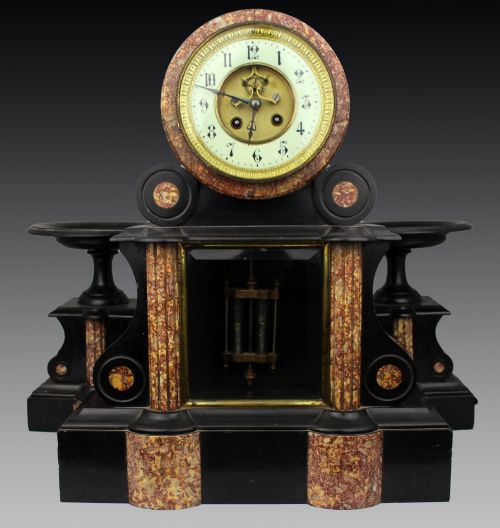
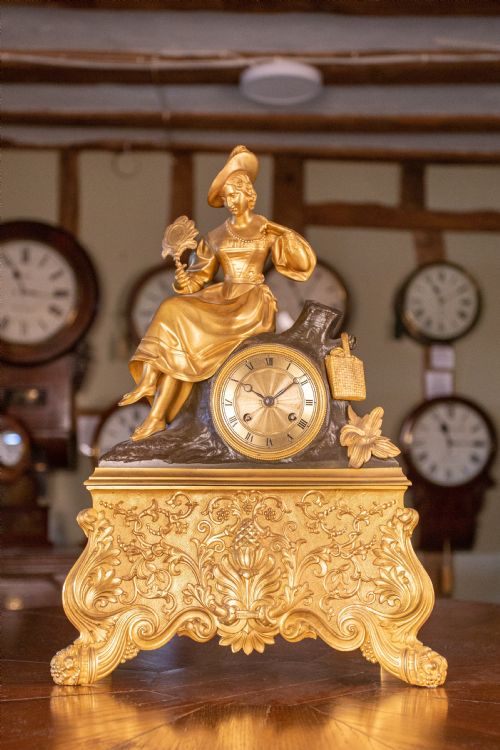
A mid 19th century clock spans several distinct domestic and public forms, including mantel clocks, wall clocks, and longcase clocks. Buyers seeking these horological pieces encounter both British fusee wall clocks and elaborate French gilt bronze mantel timepieces.
The selection ranges from architectural slate and marble mantel pieces to tall Swedish pine and English mahogany grandfather cases. Regional variations appear clearly, from Scandinavian country pine to polished London bracket designs and Vienna regulators.
Materials and construction
Horologists utilised traditional timber framing, employing solid mahogany, oak, pine, and maple woods for substantial wall and longcase bodies. Cases often incorporated brass bezels, glass domes, and enamel dials alongside delicate wood inlay.
Metalwork played a central structural and decorative role, featuring cast gilt bronze, patinated bronze, and ormolu mounts. Movement construction relied on durable brass plates, steel pinions, and fusee or spring-driven mechanisms.
Mid 19th Century Clock Retail Price Guide 2026
Typical asking prices for mid 19th century clock among the pieces listed under this phrase on Sellingantiques today, from the lower quarter to the upper quarter. They describe what is for sale here now, not the wider market.
Recorded periods cover the 19th century, Victorian era, 1850, 1860, and 1800.
Judging quality and craftsmanship
The distinction between standard production and top tier work rests on the crispness of the cast bronze ornament, the depth of the timber figuring, and the precision of the dial markings. Finer pieces demonstrate superior hand-finishing on both the exterior case and the internal movement components.
Japy Freres·Pearson and Price·Jump London·William Roberts Of Bath·John Cross·Lucien Paris·Augustus Allen·Petts Of Hertford·Charles Frodsham Of London
The Mid 19th Century Clock Glossary
- Fusee
- A conical pulley used in clock mechanisms to maintain even tension on the chain or cord as the mainspring unwinds. This mechanical device ensures consistent timekeeping accuracy throughout the power reserve.
- Gorge case
- A stepped brass carriage clock case style featuring a distinctive reeded handle and glazed panels. It represents a hallmark of fine French portable horology from the period.
- Garniture set
- A matched group consisting of a central clock flanked by matching ornamental side pieces such as urns or candelabra. These sets were designed to sit symmetrically on a mantelpiece.
- Escapement
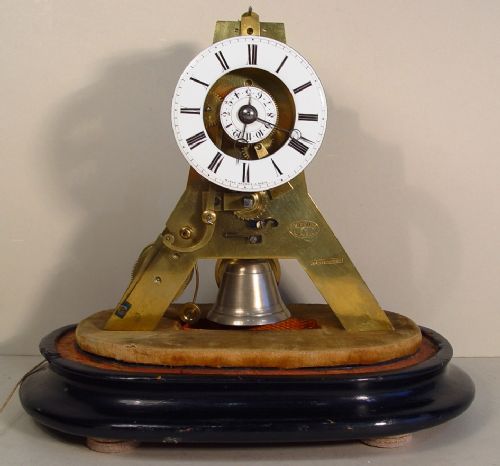
- The mechanical linkage that regulates the release of power from the gear train to the pendulum or balance wheel. Visible versions allow the observer to watch the working heartbeat of the movement.
- Cartel clock
- A wall-mounted clock housed in an ornate, decorative frame made of gilt bronze or carved wood. Originating in France, these pieces function as both timekeepers and wall ornaments.
Mid 19th Century Clock: Frequently Asked Questions
What is a fusee movement?
A fusee movement uses a conical drum to equalize the pulling force of the mainspring as it runs down over time. This clever mechanical design ensures the clock maintains steady timekeeping accuracy between windings.
Such mechanisms were particularly favoured in British bracket and wall clocks during this era to achieve reliable daily performance.
How do I maintain a mechanical clock?
Regular care involves winding the movement gently using the correct key and keeping the clock on a stable, level surface. Professional cleaning and oiling every few years will keep the brass gears and pivots functioning smoothly.
Avoid placing these timepieces in areas subject to extreme temperature fluctuations or direct sunlight to protect the wood and dial enamels.
Where were these clocks placed?
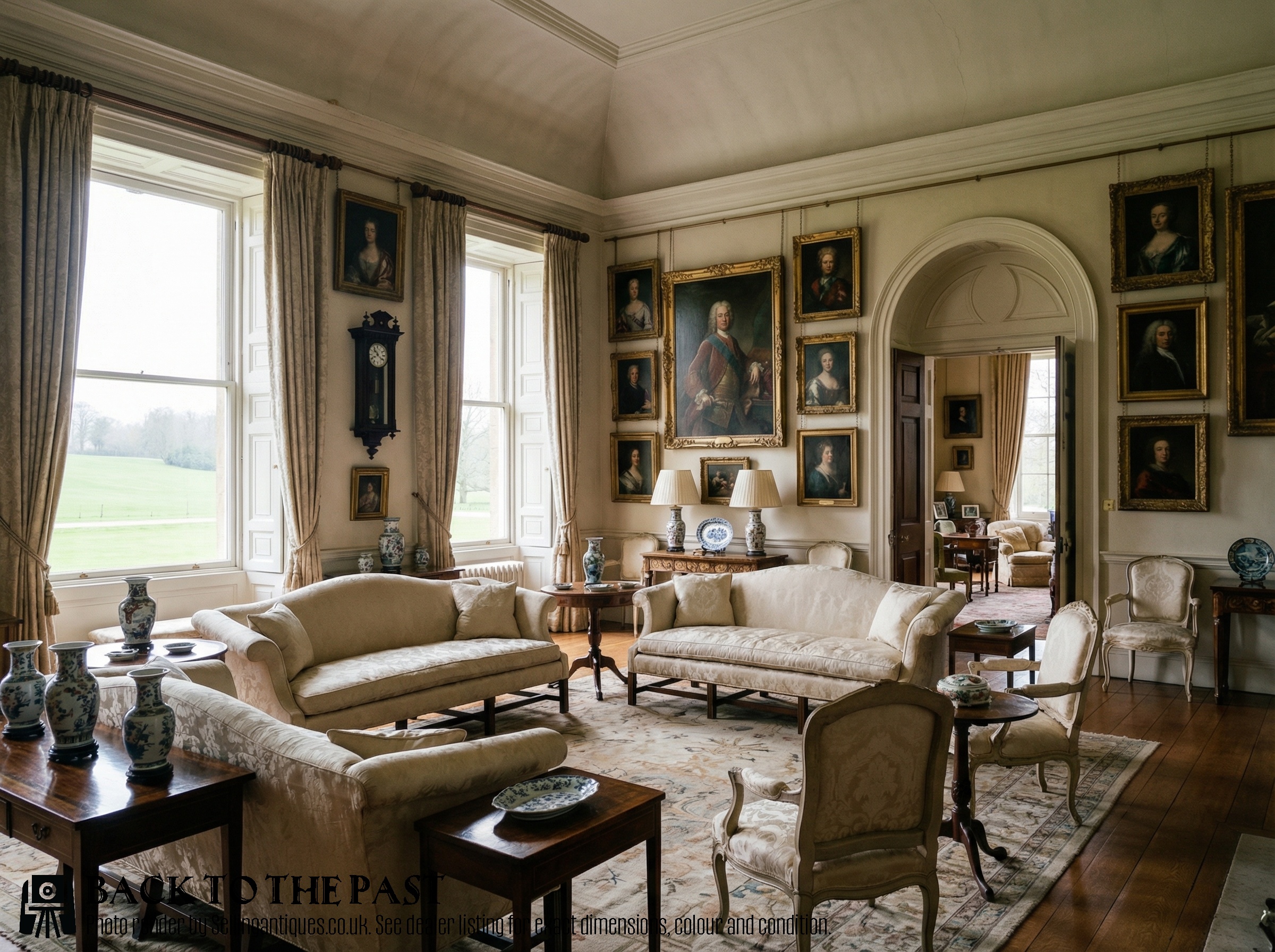
Mantel clocks and marble garnitures typically stood in drawing rooms upon fireplace mantels, framed by glass domes to protect their delicate ormolu surfaces. Wall clocks and drop dials hung in kitchens, hallways, or offices for public viewing.
Large longcase grandfather clocks occupied prominent hallways or living spaces where their resonant chimes could mark the hours.
How do I tell English and French clocks apart?
English pieces often feature mahogany or oak cases with precise fusee movements designed for understated domestic utility. French designs typically showcase gilt bronze, marble, or ornate porcelain panel details driven by spring movements.
Signatures on the enamel dials or backplates frequently reveal the specific workshop and national origin of the mechanism.