



19th Century French Garniture
When you search for 19th century french garniture, you find matching sets of ornamental objects designed to sit together on a mantelpiece.
19th Century French Garniture
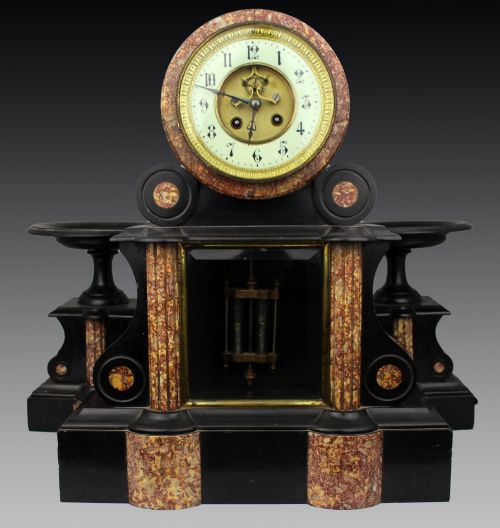
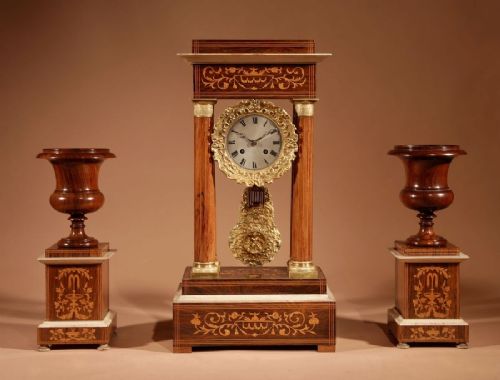
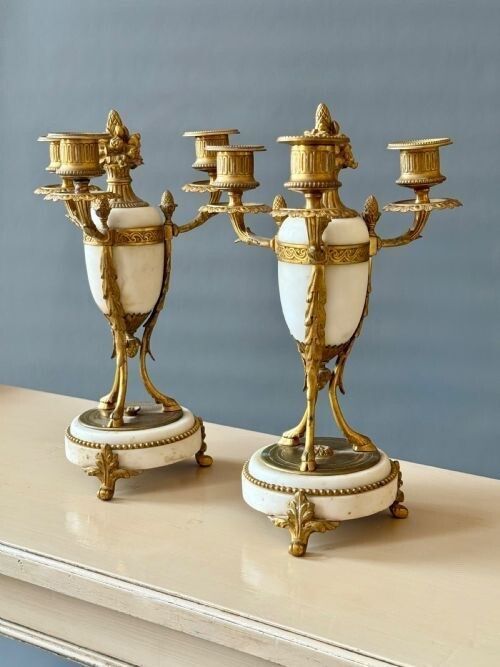
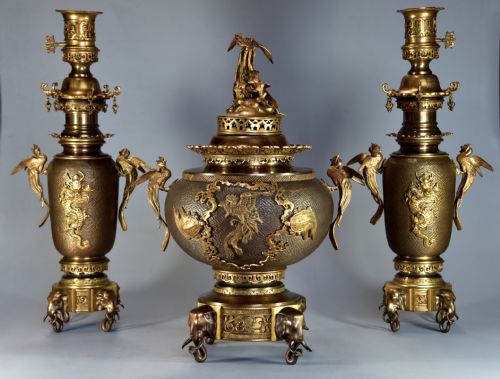
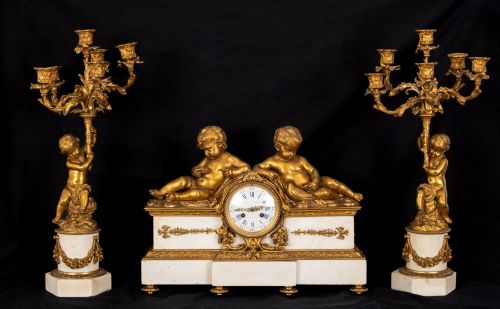
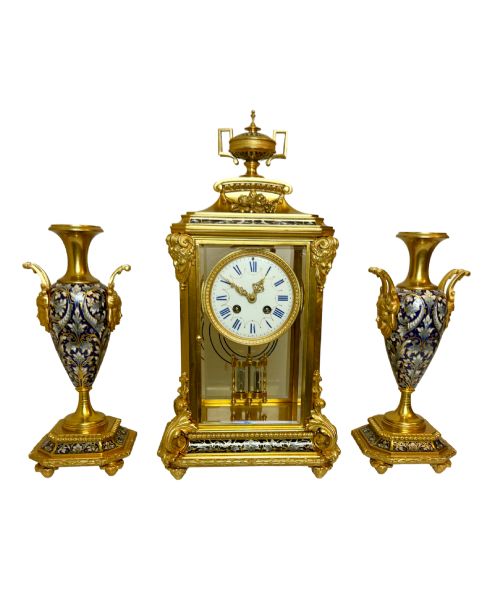
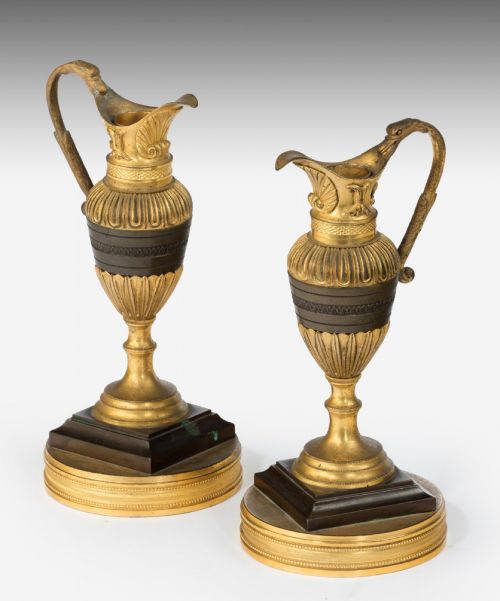
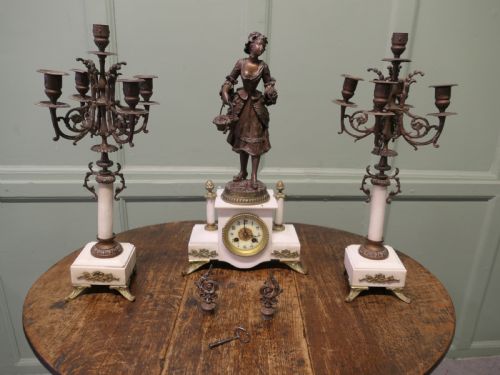
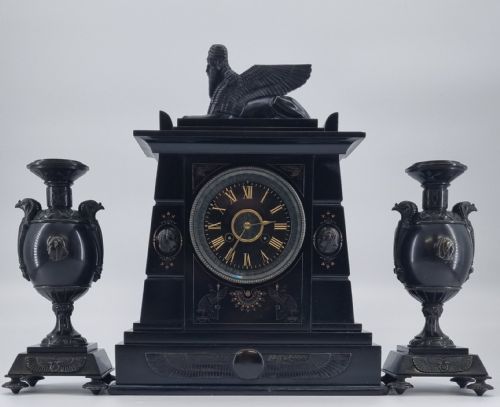
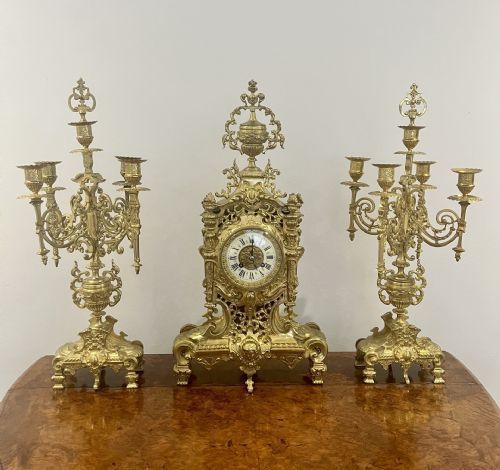
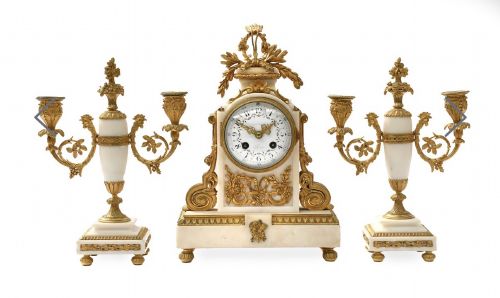
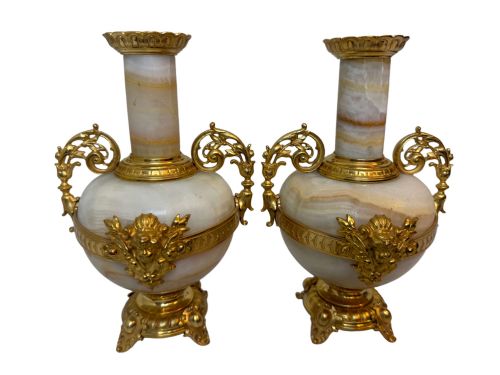
A 19th century french garniture typically consists of a central mantel clock flanked by a matching pair of decorative side pieces such as urns, vases, or candelabra. These three-piece arrangements stem from periods spanning the mid-nineteenth century through to the early twentieth century, reflecting classical revival tastes.
The forms originate in distinct design movements including French Empire, Louis XVI Revival, and Rococo Revival, alongside specific regional adaptations like Japonisme and Egyptian Revival. Buyers encounter matching sets executed in materials ranging from black marble and white onyx to gilt bronze.
Central clocks often contain eight-day striking movements, while the flanking companions mirror the architectural details and metal mounts of the main timepiece. Complete sets unify a fireplace surround by repeating the primary metalwork and stone across all three items.
Materials and construction
Maker workshops combined cast metals like ormolu, gilt bronze, brass, and spelter with natural stones such as white marble, red marble, black slate, and white onyx. Champleve enamel and porcelain panels provide colourful accents within the metal frames.
Foundries cast bronze and brass components before chasing the surfaces by hand to sharpen details like acanthus leaves and cherubs. Ormolu is applied through mercury gilding or electroplating, securing a bright golden finish upon the bronze armature.
Some nineteenth-century sets hid delicate porcelain panels behind lockable doors, giving polite Victorian visitors a secret peek at painted pastoral scenes.
Distinctions in craftsmanship
The standard of a garniture rests upon the crispness of the bronze casting and the depth of the hand-chasing. Lesser examples rely on soft, shallow surface details and thick, unrefined lacquer over base metals.
Cabinetmakers and bronze-workers who signed their movements or mounts, such as Japy Frères, Henry Dasson, or Deniere, produced sets with superior mechanical reliability and balanced proportions. Precision in the stone cutting and the precise alignment of marble sections further separate standard production pieces from masterwork suites.
Japy Frères·Henry Dasson·Deniere·KPM Berlin
The 19th Century French Garniture Glossary
- Garniture
- A matched set of ornamental objects designed for display together, usually comprising a central clock and two flanking vases or candelabra.
- Ormolu
- Gilded bronze produced by applying an amalgam of gold to a copper-alloy object and driving off the mercury by heat.
- Cassolette
- A decorative vessel shaped like an urn, featuring a reversible lid that functions as a candleholder or conceals an inner container.
- Champleve
- An enamelling technique where troughs are dug into a metal surface and filled with vitreous paste before firing.
- Spelter
- A zinc alloy utilised as an economical substitute for bronze in decorative figures and clock cases.
19th Century French Garniture: Frequently Asked Questions
How do you style a clock garniture?
Styling a clock garniture involves placing the central timepiece in the exact middle of a mantelpiece or console table. The matching side pieces stand symmetrically on either side to complete the display.
Keep the surrounding surfaces uncluttered so the matched bronze mounts and stone bodies remain the focal point. Ensure the objects sit safely away from heat sources that might affect sensitive marble or enamel surfaces.
How do you identify nineteenth-century periods?
Nineteenth-century periods are identified through a combination of stylistic revival motifs, metalworking techniques, and movement signatures. Empire and Louis XVI revival pieces display classical symmetry and restrained gilt-bronze mounts.
Later Victorian and Third Republic pieces often incorporate bolder eclectic styles such as Japonisme or heavier cast spelter. Checking the back of the clock movement for maker stamps provides a reliable manufacturing date.
Were these sets used to tell time?
These sets served both a practical timekeeping function and a high-status decorative purpose. The mechanical clock movements regulated the household hours while the flanking pieces added grandeur to the interior.
Most movements utilise an eight-day striking mechanism that requires periodic winding with a dedicated key. The side pieces often doubled as functional candleholders or cassolettes for burning perfumes.