
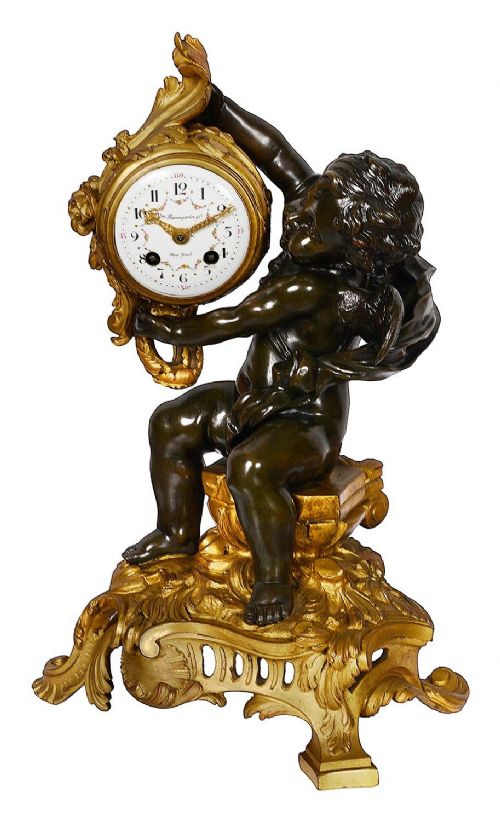
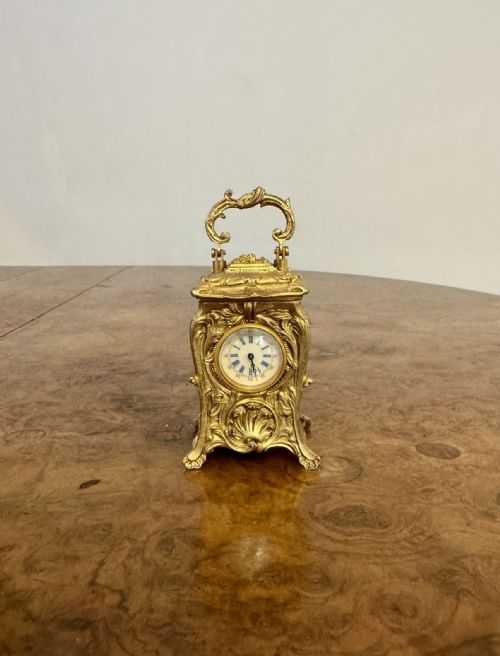


Rococo Bronze Clock
A rococo bronze clock brings exuberant asymmetrical curves and master metalwork into an interior, anchoring a room with nineteenth-century French artistry.
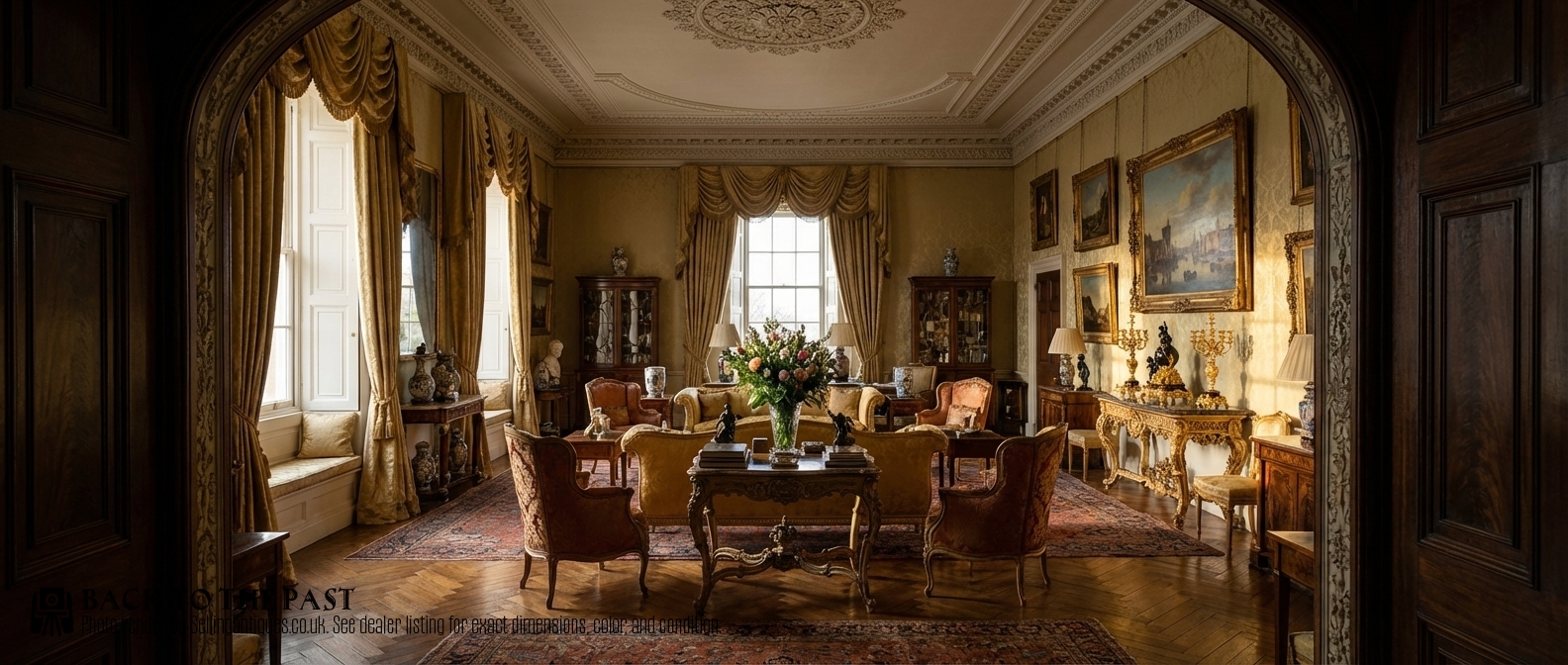
Rococo Bronze Clock
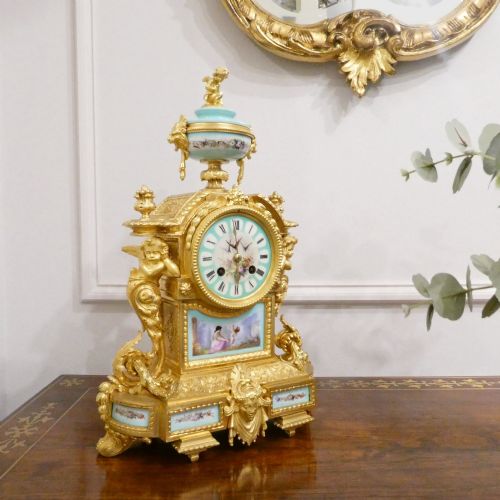
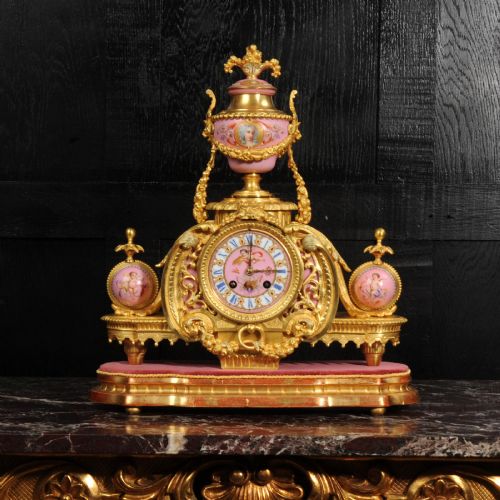
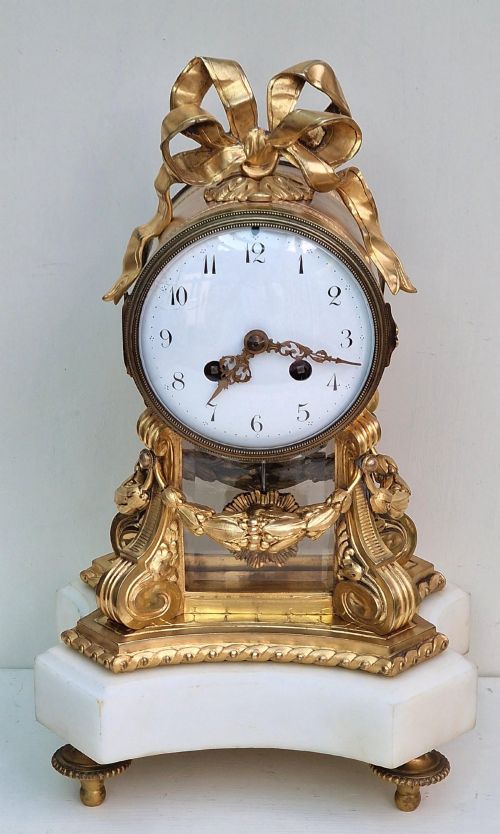
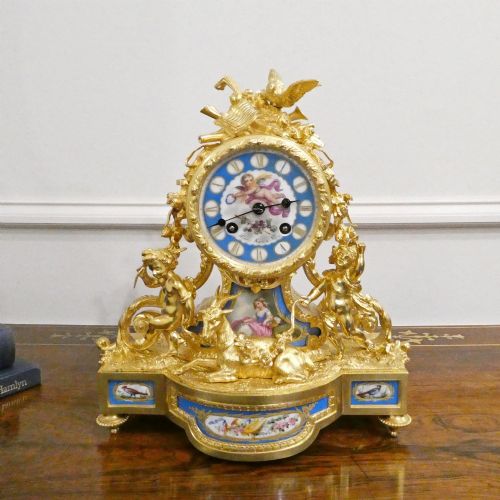
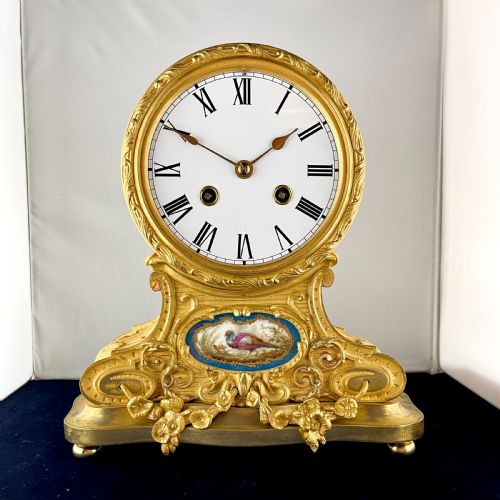
A rococo bronze clock embodies the ornate scrollwork, botanical asymmetry and sweeping C-scrolls of the Louis XV revival, predominantly originating from nineteenth-century French workshops.
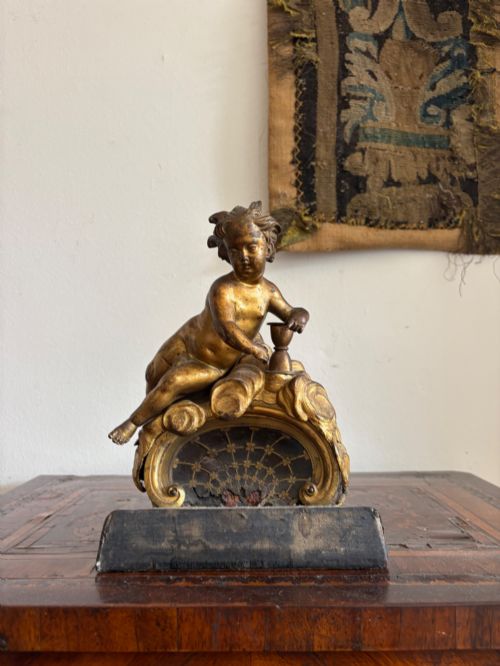
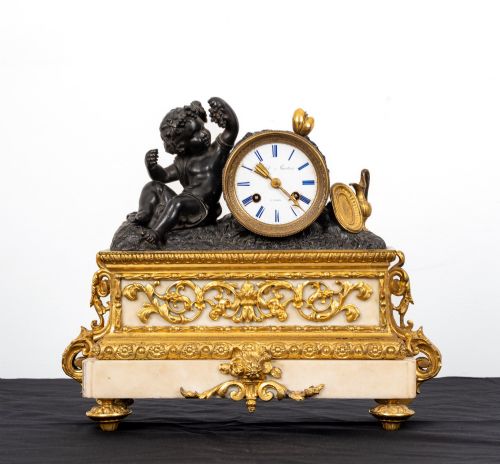
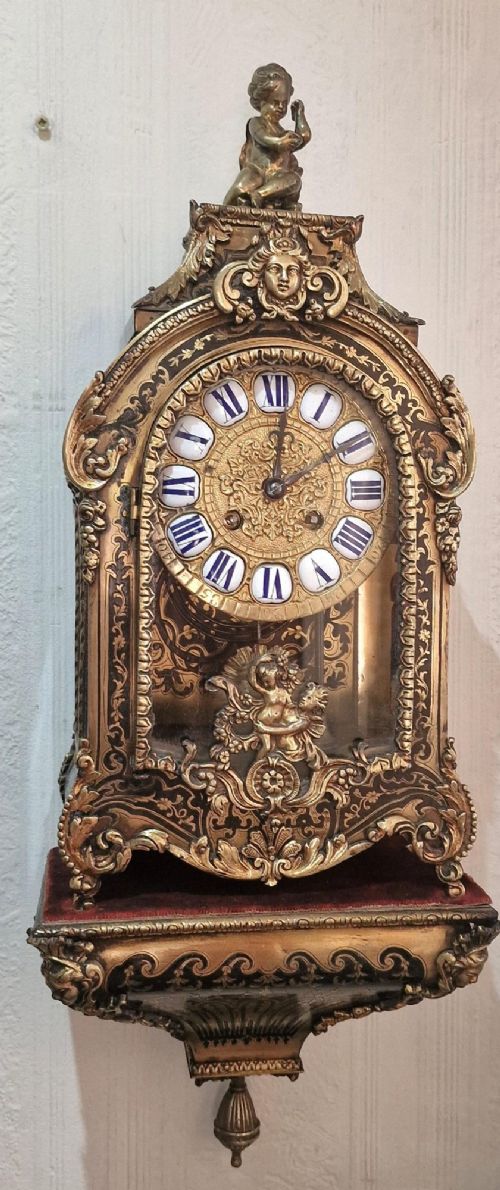
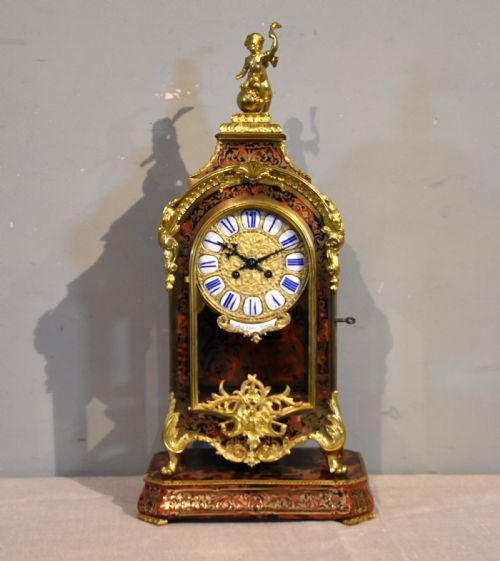
Most examples encountered here take the form of mantel clocks or cartel wall clocks, often accompanied by matching garniture sets or figural elements such as putti and animals.
Makers and horologists housed these intricate movements within cast bronze and ormolu cases, merging utilitarian timekeeping with high decorative sculpture.
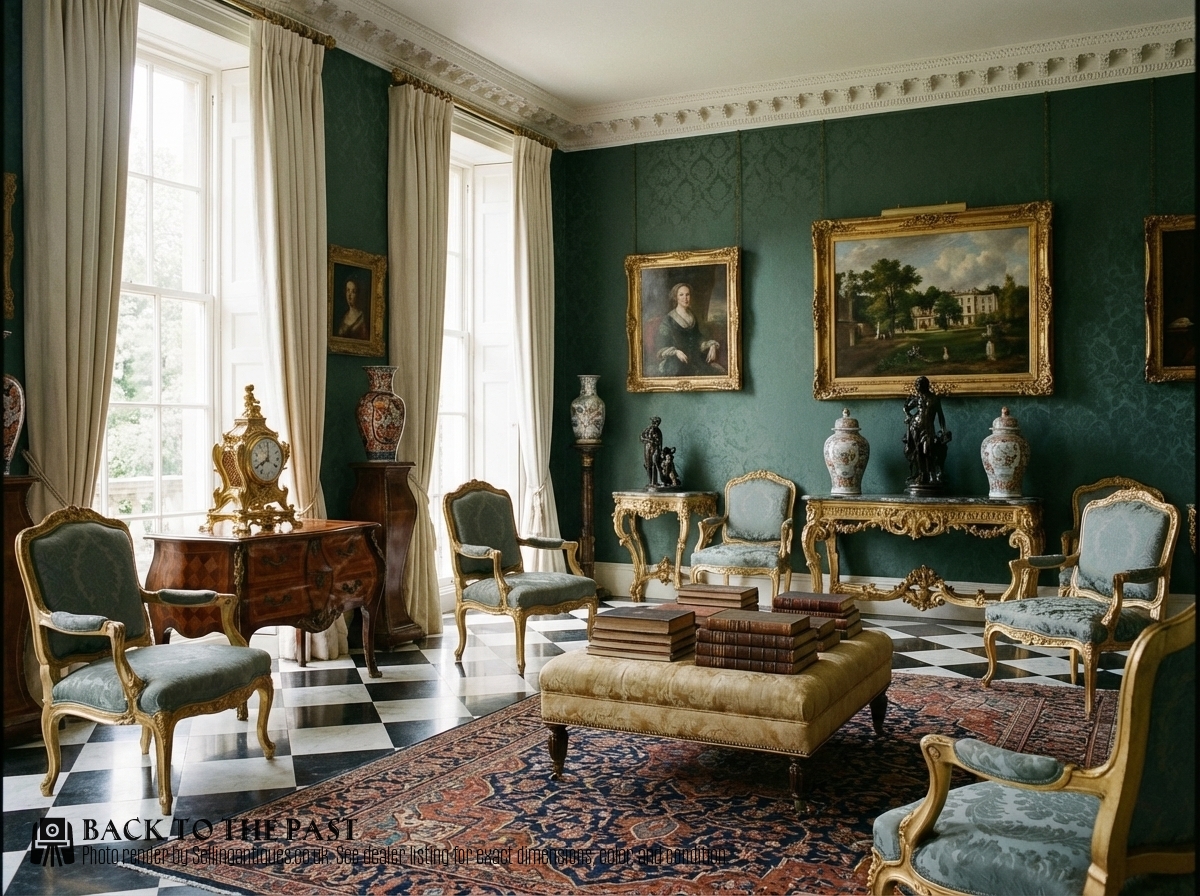
What varies in quality
The crispness of the chasing separates superior bronze and ormolu castings from softer, later reproductions, as skilled artisans hand-tooled the metal surfaces after casting to sharpen every leaf and scroll.
The integration of the movement with signature dial markers and high-grade porcelain panels, such as Sèvres inserts, dictates the distinction between standard production pieces and master atelier commissions.
The preservation of the original mercury gilding and the intact condition of delicate mounts, finials and figural attachments determine the overall architectural integrity of the piece.
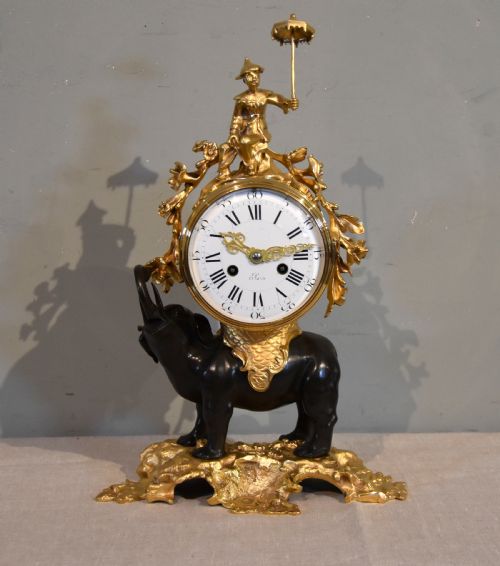
A few whimsical models substitute standard clock cases for life-size bronze elephants and tumbling harlequins.
Achille Brocot·Samuel Marti·Henry Marc·Japy Freres·Vincenti·Raingo Freres
The Rococo Bronze Clock Glossary
- Ormolu
- Finely chopped gold amalgamated with mercury and applied to a bronze base through heat diffusion, producing a durable golden surface. This technique defined French decorative metalwork.
- Cartel clock
- A wall-hung clock encased in an ornate, asymmetrical frame designed to match the wall scheme. These pieces relied on secure bracket fixings.
- Garniture set
- A matching ensemble comprising a central clock flanked by decorative side ornaments such as vases or candelabra. Such sets created symmetry on a mantelpiece.
- Champlevé
- An enamelling technique where troughs are dug into a metal surface and filled with vitreous paste before firing. This added vibrant colour to clock bezels and mounts.
- Four-glass clock
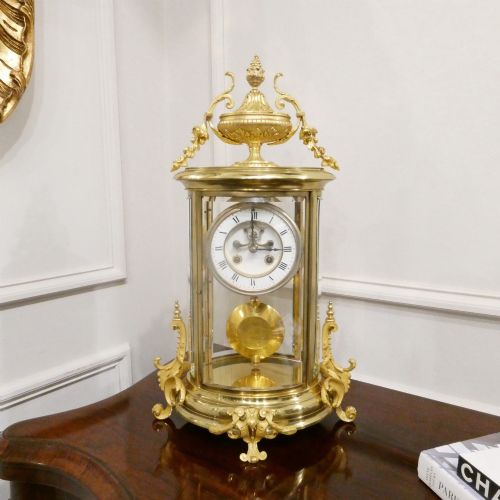
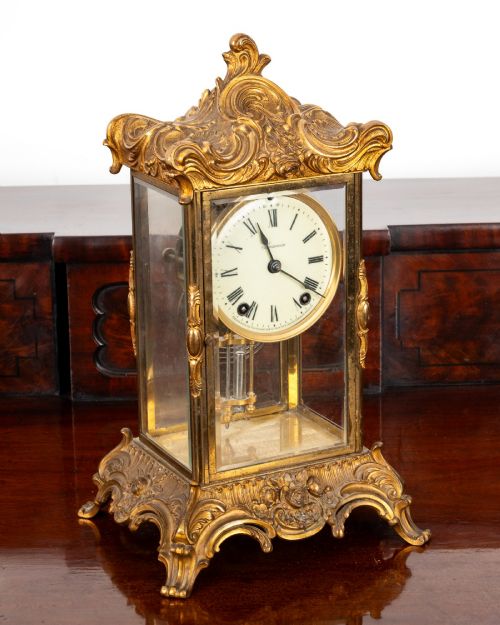
- A mantel clock housed within glass panels that revealed the intricate gear train from all angles. These often incorporated mercury pendulums for temperature compensation.
Rococo Bronze Clock: Frequently Asked Questions
Where should I place a heavy bronze clock?
Position the clock on a sturdy, level surface such as a slate mantelpiece or a reinforced wall bracket. Uneven foundations can cause the pendulum to catch and stop the mechanism.
Ensure the location avoids direct sunlight and damp environments to protect the delicate enamel dial and ormolu finish.
How do I identify a Louis XV revival clock?
Look for characteristic rococo motifs including asymmetrical scrollwork, C-scrolls, floral garlands, and naturalistic shell forms. The bronze cases avoid straight lines in favour of flowing curves.
Nineteenth-century makers adopted these eighteenth-century motifs during periods of historic revival, often pairing them with white enamel chapter rings.
What is a clock garniture?
A clock garniture is a matched decorative set featuring a central timepiece accompanied by matching side pieces such as urns, candelabra or figures. These items were designed to display together on a mantelpiece.
The side ornaments share the same bronze casting style, ormolu gilding and base materials as the main clock.