




Late Victorian Mantel Clock
A late victorian mantel clock brings nineteenth-century mechanical craft and heavy architectural presence directly to a room, measuring time with pendulum precision and brass gears.
Late Victorian Mantel Clock
A late victorian mantel clock sits heavily upon a shelf or fireplace, often taking the form of architectural wooden cases or polished black slate structures. These timepieces served domestic life in the late nineteenth century, combining utility with decorative gravity in the principal rooms of a house.
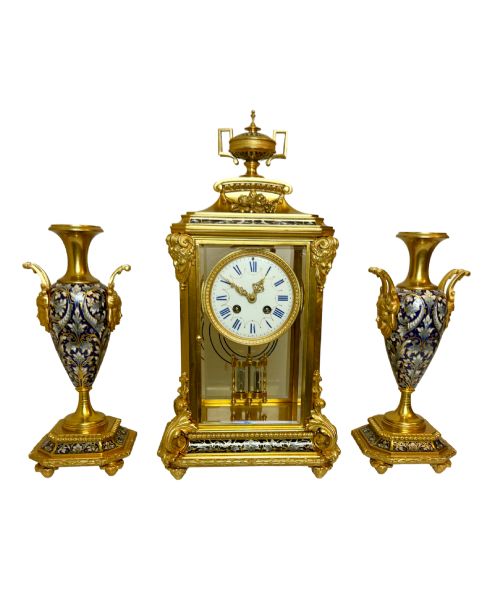
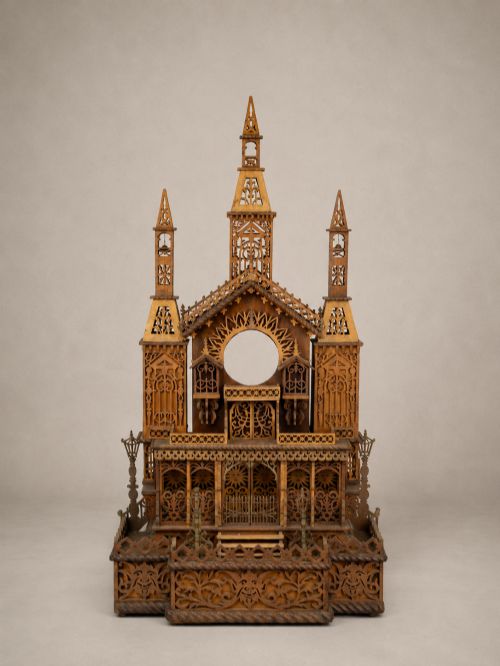
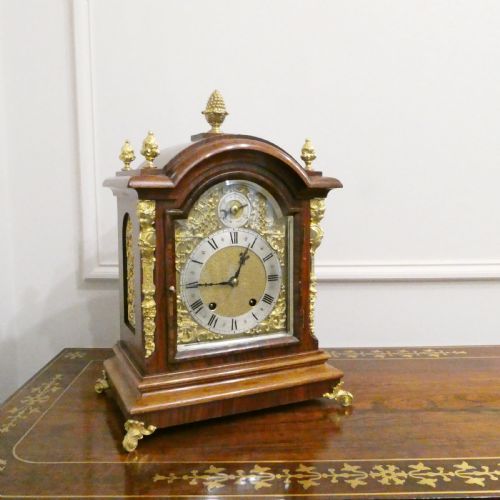
The varieties meeting a buyer on this page include mahogany balloon shapes, inlaid wooden lancet cases, and French brass-framed glass designs. Many share space with garniture sets, striking bells, and visible escapements that display the moving balance wheel to the observer.
Origins stretch across English workshops and French foundries, spanning the decades around 1890. Some examples follow earlier stylistic revivals like Neo-Classical or Rococo forms, while others employ starker geometric slate bodies or delicate wooden stringing.
Materials and construction
Heavy cases rely on natural timber, dense stone, or cast metal to house the delicate brass gear trains within. Mahogany, walnut, and carved oak provide wooden structures, whilst polished black slate and marble offer weight and solidity.
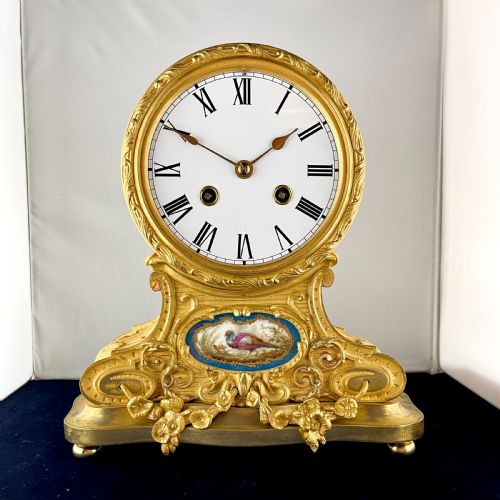
Surface decoration utilises gilt bronze, ormolu mounts, champleve enamel panels, and fine brass inlay to catch the light. Glass domes and four-glass panels protect the dials while exposing the intricate mechanics of the escapement and striking hammers.
Late Victorian Mantel Clock Retail Price Guide 2026
Typical asking prices for late victorian mantel clock among the pieces listed under this phrase on Sellingantiques today, from the lower quarter to the upper quarter. They describe what is for sale here now, not the wider market.
Some clocks feature visible escapements that let you watch the little heart of the clock beat while you argue about dinner.
Distinctions in craftsmanship
Quality reveals itself in the weight of the casting and the crispness of the carving upon wood or metal surfaces. Superior examples display hand-chased mounts, flawless enamel dials, and heavy brass movements signed by notable makers.
The integration of complex complications, such as Westminster chimes, grand sonnerie striking, or visible escapements, separates standard timepieces from ambitious workshop productions.
Winterhalder & Hofmeier·Henri Jacot Paris·Schneckenburger·Mappin & Webb·Samuel Marti·Lemerle Charpentier·Lenzkirch·Andre Guilmet
The Late Victorian Mantel Clock Glossary
- Escapement
- The mechanism that controls the unwinding of the clock spring by delivering regular impulses to the pendulum or balance wheel. This part produces the familiar ticking sound.
- Garniture
- A set consisting of a central clock flanked by matching ornamental pieces such as urns or vases. These arrangements were designed to sit symmetrically on a mantelpiece.
- Fusee
- A conical pulley used with a cord or chain to maintain an even pull on the gear train as the mainspring loses tension. It ensures steady timekeeping throughout the running cycle.
- Grand Sonnerie
- A striking train that sounds both the hours and the quarters automatically on every quarter hour. It represents a higher level of horological complication.
- Champleve
- An enamelling technique where troughs are dug into a metal surface, filled with vitreous enamel powder, and fired. The resulting coloured patterns sit flush with the surrounding metal.
Late Victorian Mantel Clock: Frequently Asked Questions
How do I wind the clock?
Most mechanical clocks use a dedicated winding key inserted into the dial holes to tension the internal springs or weights.
Care must be taken not to over-wind the mechanism, stopping as soon as resistance is felt.
Why does the clock run fast or slow?
Variations in timing usually stem from temperature changes or the pendulum needing slight regulation via its adjustment nut.
Moving the bob up or down alters the effective length of the pendulum and corrects the speed.
Where should I place the clock?
Mantel clocks require a stable, level surface away from direct sunlight, damp walls, and heavy vibrations.
Placing them securely on a firm fireplace shelf or bracket ensures the pendulum swings evenly.
How do I identify the period?
Dating relies on combining stylistic clues from the case architecture with any maker signatures stamped on the backplate.
Materials like slate and specific Revival styles point toward the late nineteenth century.