
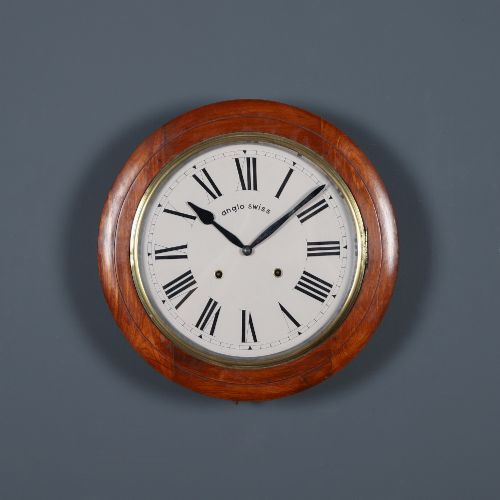
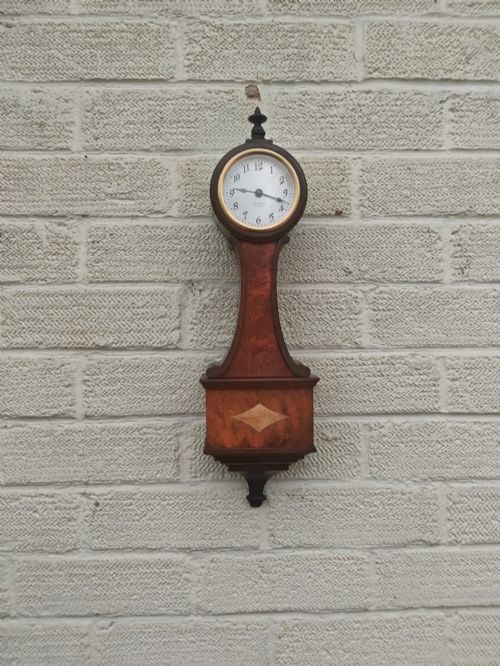
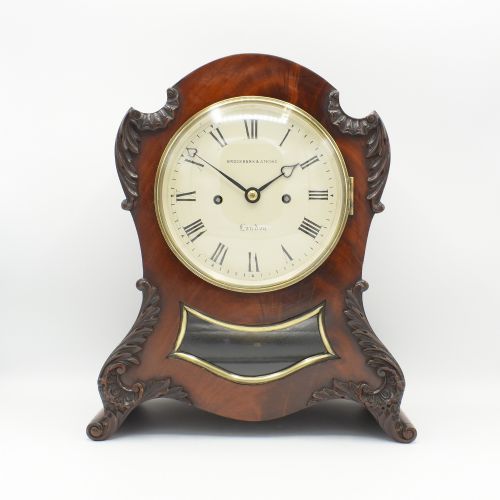
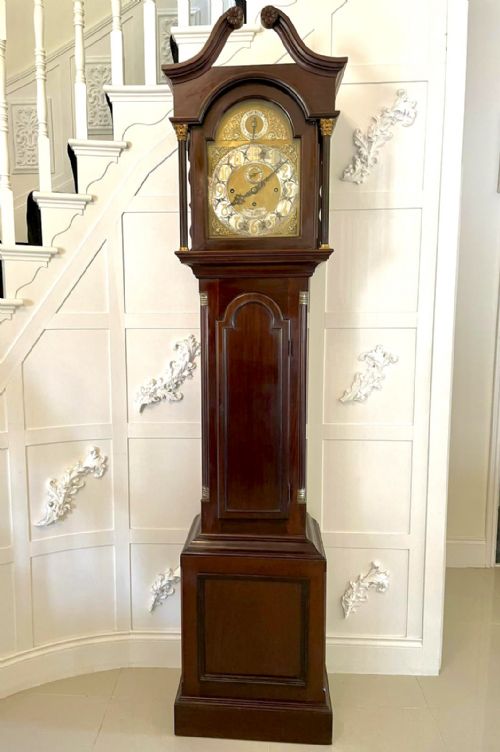

Mahogany Chiming Clock
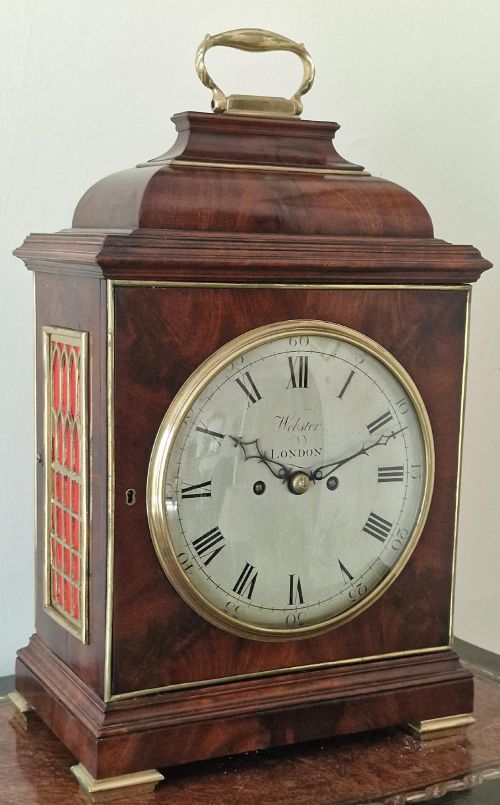
A mahogany chiming clock brings together dense tropical timber and intricate gear trains to mark the hours with musical precision.

Mahogany Chiming Clock
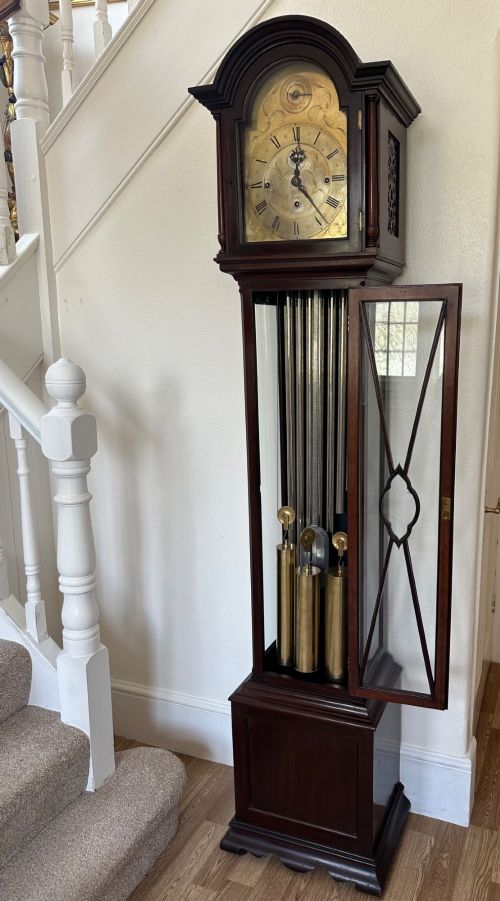
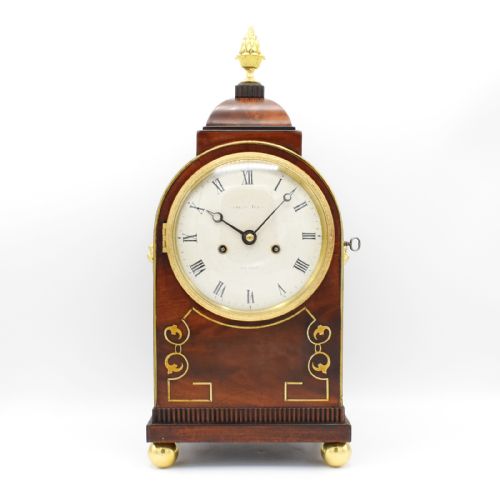
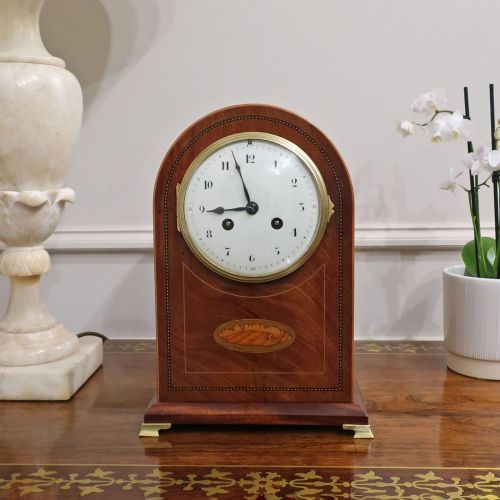
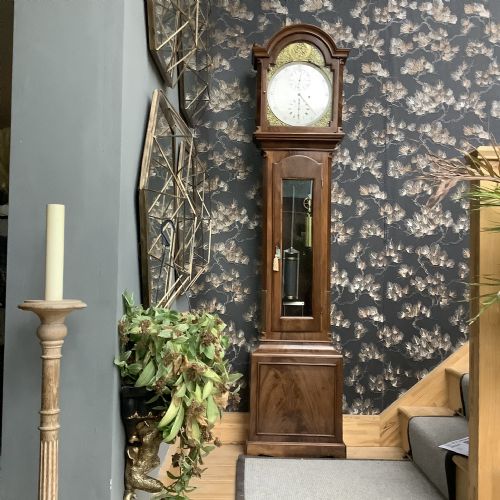
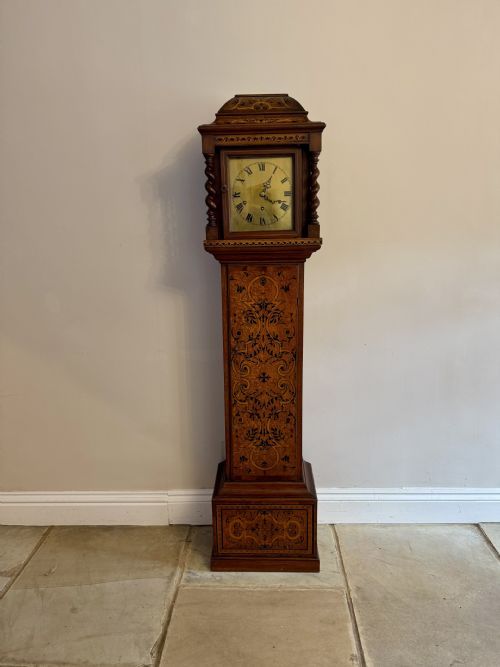
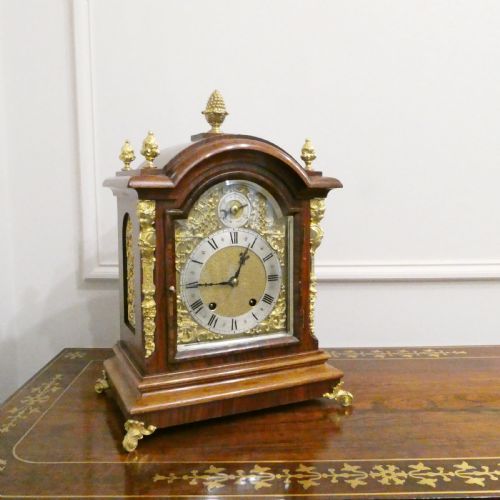
A search for a mahogany chiming clock leads to a diverse selection of timepieces, spanning compact mantel and bracket formats up to tall longcase grandfather and grandmother clocks.
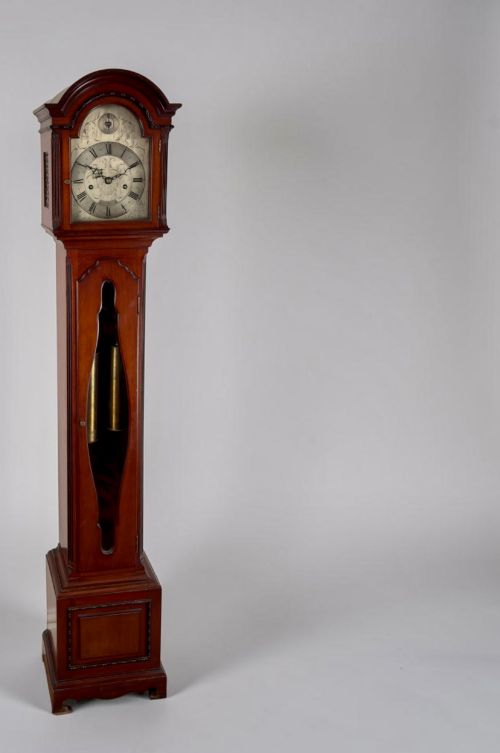
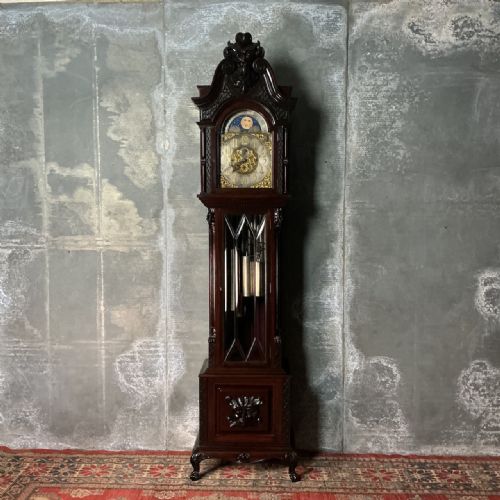
The most common examples on this page are Edwardian mantel pieces and tall Edwardian or Victorian grandmother clocks housed in polished mahogany cases.
Many of these instruments incorporate musical movements, ranging from simple gong strikes to multiple tubular bells playing Westminster or Whittington melodies.
Materials and Construction
Cabinetmakers utilised solid and veneered mahogany, frequently embellishing the timer cases with satinwood inlay, marquetry, or glass panels to reveal the pendulum and weights within.
Internal mechanisms rely on brass plates and steel gear trains, driven by spring barrels, weight drops, or fusee chains.
Dials combine brass bezels with silvered chapter rings, enamel numerals, or painted metal faces, paired with cast or hand-cut steel hands.
Mahogany Chiming Clock Retail Price Guide 2026
Typical asking prices for mahogany chiming clock among the pieces listed under this phrase on Sellingantiques today, from the lower quarter to the upper quarter. They describe what is for sale here now, not the wider market.
Some Edwardian mantel clocks ticked so reliably they served as the definitive domestic judge of whether dinner was genuinely late.
Assessing Standard and Craft
The sophistication of the internal movement dictates much of the standing, separating simple single-train strikers from complex triple-train mechanisms that drive multiple gongs or tubular bells.
Cabinet construction shows clear divisions in skill, from plain functional school clocks to exhibition-grade longcases featuring detailed hand-carving and intricate marquetry.
The reputation of the maker, whether individual London watchmakers like Francis Perigal or large industrial workshops such as Gillett & Johnston and Winterhalder & Hofmeier, influences the standing of the piece.
Gillett & Johnston of Croydon·Brockbanks & Atkins·Winsor Bishop Norwich·Charles Pratt London·Francis Perigal London·Cording of London·Schneckenburger·Mappin & Webb·Junghans·Winterhalder & Hofmeier·Gustav Becker
The Mahogany Chiming Clock Glossary
- Fusee
- A conical pulley designed to equalise the pulling force of the mainspring as it unwinds. This mechanism helps the clock maintain steady timekeeping throughout its run.
- Bracket Clock
- A portable clock originally designed to sit on a wall bracket. Later versions served as table or mantel timepieces.
- Longcase Clock
- A tall pendulum clock enclosed in a wooden case resting on the floor. These instruments are frequently termed grandfather or grandmother clocks depending on their height.
- Ting-Tang
- A two-hammer striking system that sounds on two bells or gongs at the quarters or hours. The sequence creates a distinctive dual-tone note.
- Marquetry
- Decorative woodwork formed by fitting thin pieces of wood veneer into a prepared ground. This technique creates detailed floral or geometric patterns on the clock case.
Mahogany Chiming Clock: Frequently Asked Questions
What is a grandmother clock?
A grandmother clock is a smaller, slender version of the traditional longcase grandfather clock, typically standing under six feet tall. They were produced extensively during the Edwardian period.
Despite their reduced proportions, these cases often house sophisticated quarter-chiming or musical movements driven by weights or springs.
How do fusee movements work?
A fusee movement uses a conical grooved pulley connected to the mainspring by a fine cord or chain. As the spring loses tension, the chain pulls on a wider part of the cone to maintain consistent torque.
This clever mechanical device ensures the clock maintains steady accuracy from the beginning to the end of its winding cycle.
Where were these clocks made?
The pieces originate from workshops across Britain, with many notable makers operating in London, Norwich, and provincial towns. Continental European makers, particularly German firms such as Winterhalder & Hofmeier and Junghans, also supplied movements and complete clocks.
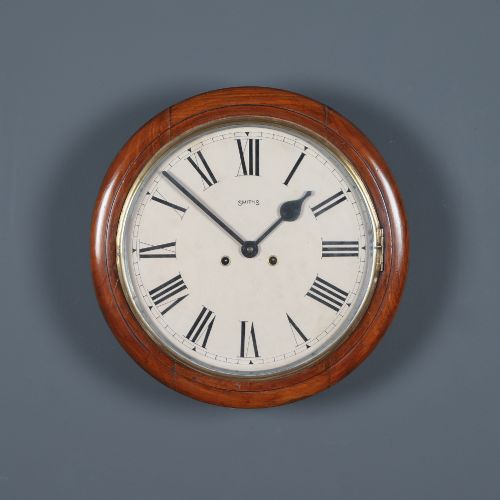
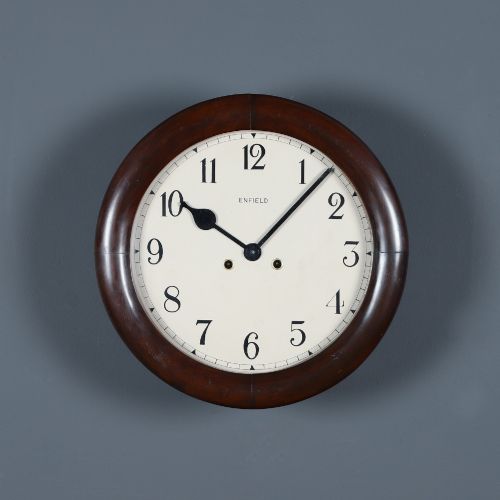
Railway station and school clocks often came from domestic industrial makers or specialised dial clock manufacturers.
How do I wind a chiming clock?
Winding requires inserting a matching key into the designated winding holes on the dial face and turning it slowly until resistance is felt. Chiming and musical models usually feature separate arbors for the time train, the strike train, and the chime train.
Care must be taken not to overwind the springs and to allow the chimes to complete their sequence without manual interruption.